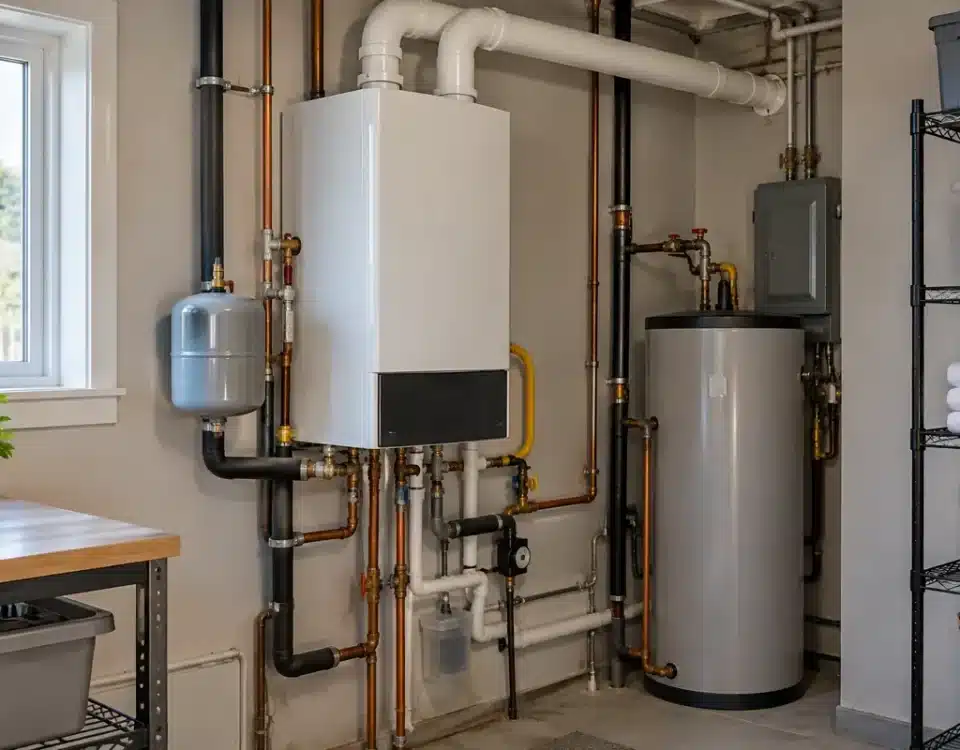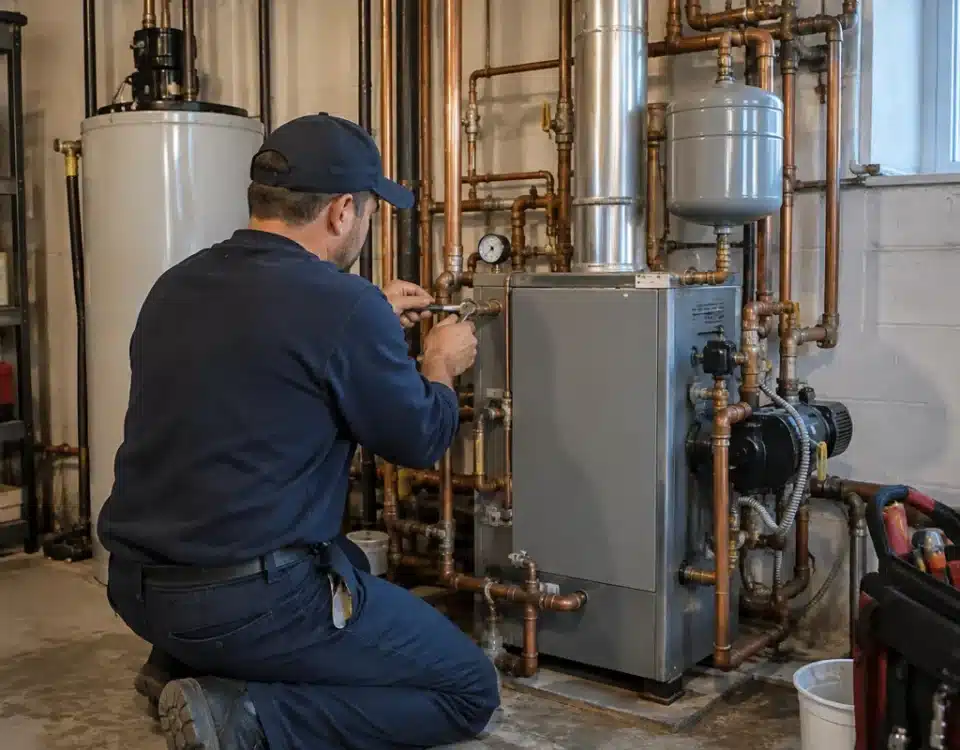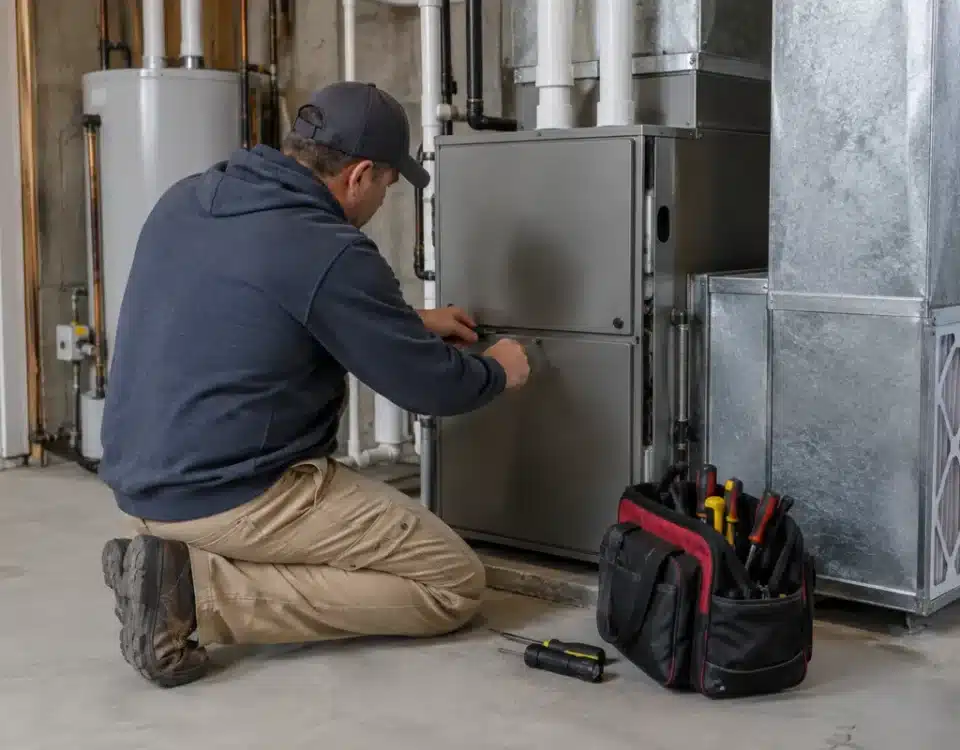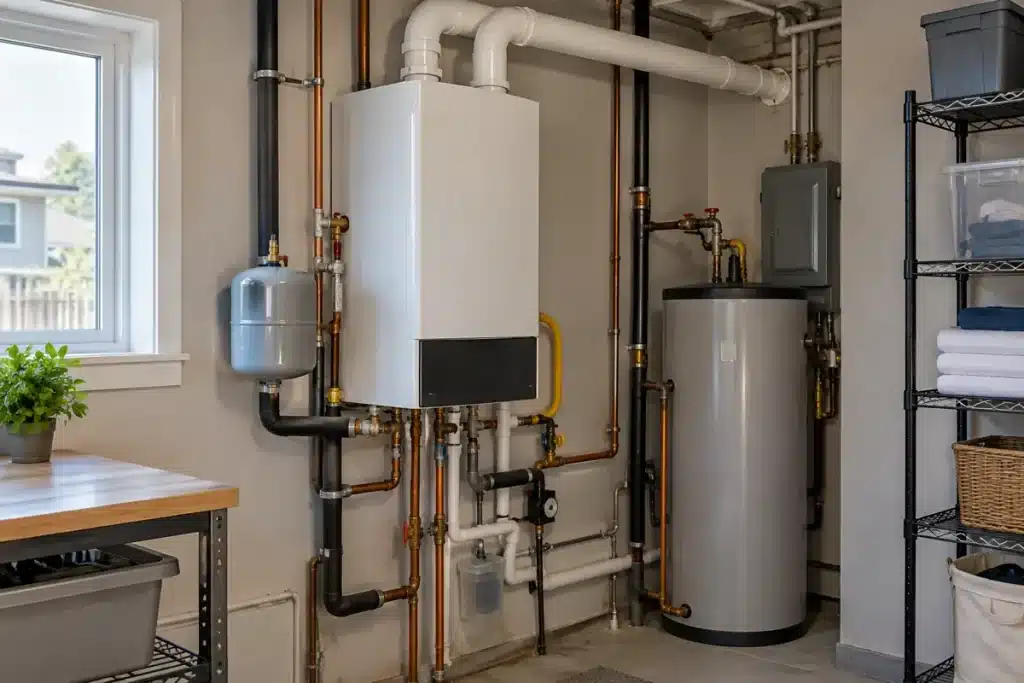
24/7 Emergency HVAC Response in Ocean County, NJ
November 10, 2026
Quick answer: When your heat stops working, check the thermostat settings, power switch, breaker, and air filter first, then look at the pilot light or boiler pressure gauge. If the furnace won’t restart or you smell gas or see signs of overheating, shut off the system and call a licensed HVAC professional like D.K. Sledzik right away.
Key takeaways
- Before calling for help, check the thermostat batteries and heat setting, the furnace power switch, the breaker panel, and the air filter.
- A high-efficiency furnace may shut down if its condensate drain is clogged or frozen; do not empty the trap, which normally holds water, and call a professional if the blockage is not easy to identify safely.
- For a hot-water boiler, compare the pressure gauge with the manufacturer’s specified range; for a steam boiler, check the sight glass and follow the manufacturer’s instructions.
- Never add water to an overheating boiler and never spray it with water, according to PSE&G, because steam can cause severe burns.
- N.J. Admin. Code § 5:27-4.6 requires covered rooming and boarding homes to maintain at least 68°F from October 1 through May 1; it is not a universal rule for every New Jersey rental unit.
Why Did My Heat Suddenly Stop Working?
A heating system can stop for many reasons, including a thermostat problem, a tripped breaker, a dirty filter, an extinguished pilot light, or a boiler water-level or pressure issue. Salt air along the Jersey Shore can also accelerate corrosion on outdoor components and electrical connections, which sometimes shows up as an intermittent failure rather than a dead system.
Before you panic or start taking things apart, it helps to work through a short checklist in order. These basic checks are generally quick and do not require tools. If you get through the list and still have no heat, that’s the point where you stop troubleshooting and call for professional help.
Step 1: Check the Thermostat First
Start with the thermostat because an incorrect setting or loss of power can prevent the heating system from starting. Make sure the thermostat is set to “Heat” and that the target temperature is set at least five degrees above the current room temperature, a simple test recommended by PSE&G’s gas heater safety guidance.
- Confirm the display is lit. If it’s blank, replace the batteries even if they seem fine.
- Wait one to two minutes after adjusting the setting. Furnaces and boilers have built-in delays before ignition.
- If you have a smart or Wi-Fi thermostat, check that it hasn’t lost its connection or reverted to a schedule you didn’t set.
If your home uses an older mechanical thermostat and you’re thinking about replacing it, our smart thermostat installation and optimization guide covers what to look for.
Step 2: Check Power, Breakers, and the Furnace Switch
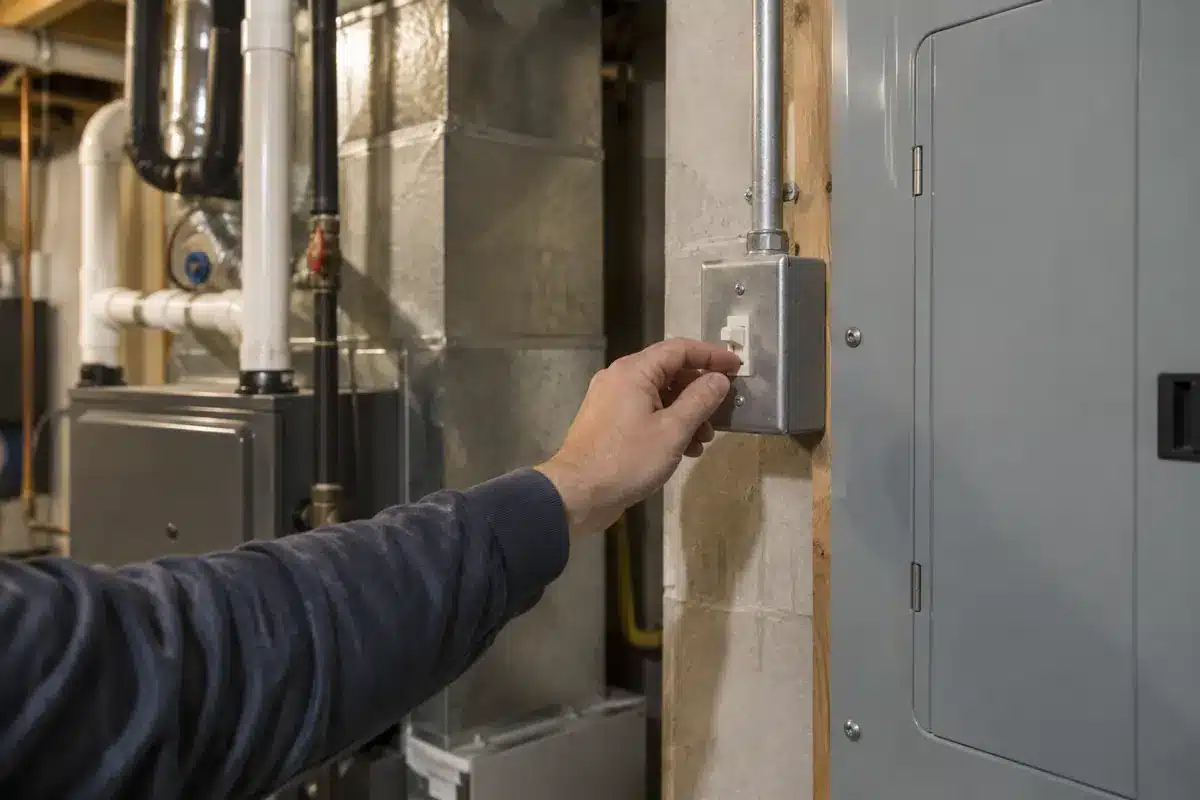
Gas furnaces still need electricity to run the blower, ignition system, and control board. Carrier’s furnace troubleshooting guidance recommends checking that the furnace’s power switch is in the “On” position and that the correct breaker hasn’t tripped.
- Find the furnace switch. It often looks like a regular light switch mounted on or near the furnace cabinet, sometimes in a basement, closet, or attic.
- Check your electrical panel for a tripped breaker labeled “furnace” or “heat.” Reset it once, fully off and then on.
- If the breaker trips again immediately, stop. A repeatedly tripping breaker points to an electrical fault that needs a licensed technician, not repeated resets.
Step 3: Inspect and Replace the Air Filter
A severely clogged filter restricts airflow across the heat exchanger, which can trigger a safety shutoff designed to prevent overheating. This is one of the most common, and easiest to fix, reasons a furnace runs briefly then quits.
Inspect the filter and replace it if it is visibly dirty or if it has reached the replacement interval specified by the filter or equipment manufacturer. Keeping a few spare filters on hand and swapping them on a schedule is one of the simplest things a homeowner can do; our safe DIY HVAC maintenance guide walks through filter sizing and change intervals in more detail.
Step 4: Check the Pilot Light or Ignition System
Older gas furnaces and boilers use a standing pilot light; newer systems use electronic ignition. If your pilot light is out, PSE&G advises following the relighting instructions printed on the unit or in the owner’s manual, which you can usually find online by searching the make and model with the phrase “pilot light.”
If you smell gas at any point during this process, stop immediately, do not attempt to light anything, leave the house, and call your gas utility’s emergency line from outside. This is not a DIY situation under any circumstances.
If the pilot relights but goes out again, stop relighting it and have a licensed technician diagnose the cause. That’s a repair job for a licensed technician; see our emergency and scheduled furnace repair page for what that visit typically involves.
Step 5: Check the Condensate Trap on High-Efficiency Furnaces
If your furnace is a newer high-efficiency model, it produces condensation as part of normal operation, and that water drains through a condensate trap and line. In cold weather, especially in an unheated crawlspace or garage along the shore, that line can freeze or clog, which trips a safety switch and shuts the whole system down.
- Look for a small plastic trap with a clear or white tube near the furnace’s exhaust venting.
- Ice, an overflowing trap, or water backed up around the drain may indicate a condensate blockage, but water inside the trap itself is normal.
- If the drain is frozen, repeatedly backs up, or is difficult to access, leave the furnace off and have a professional inspect the condensate drain and its routing.
Step 6: Check Boiler Water Pressure
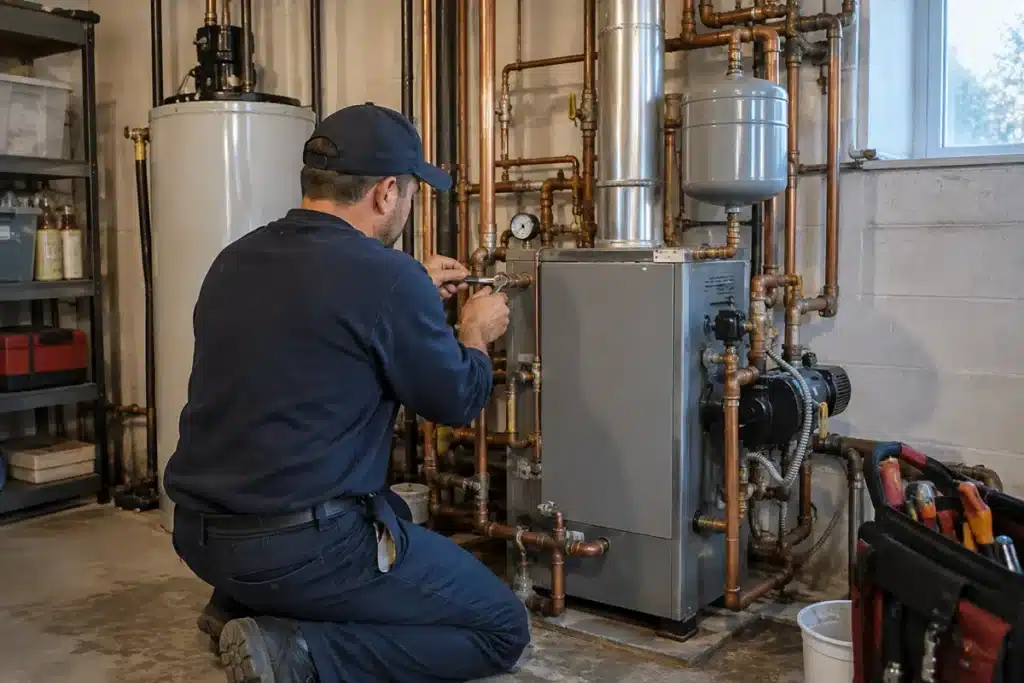
For a hot-water boiler, check the pressure and temperature gauge; for a steam boiler, check the sight glass and any pressure gauge, following the manufacturer’s instructions. PSE&G’s gas heater safety guidance notes that if the pressure is below the manufacturer’s recommended level, often around 12 PSI, you may be able to turn on the water supply valve to bring it back up, then shut that valve off again.
Watch closely for signs the system is overheating rather than underperforming: a boiler that won’t shut off, glows or discolors from heat, has peeling paint, or shows gauges pegged at the highest reading. If you see any of these signs, evacuate the home immediately, call the fire department, and then your gas utility’s emergency line. Never add water to a hot boiler and never spray it with water, since steam can cause severe burns.
If the level or pressure does not stay within the manufacturer’s specified range, arrange residential boiler repair and care rather than repeatedly adding water.
Temporary Measures to Stay Warm and Protect Your Home
While you wait for a technician, your two priorities are keeping people safe and keeping pipes from freezing. N.J. Admin. Code § 5:27-4.6 applies to covered rooming and boarding homes and requires at least 68°F indoors from October 1 through May 1. In any home, urgency depends on the indoor temperature, outdoor conditions, pipe-freezing risk, and whether occupants are especially vulnerable to cold.
| Situation | What to do |
|---|---|
| Indoor temp still above 60°F | Close doors to unused rooms, layer clothing and blankets, keep interior doors open to let warm air circulate from occupied rooms |
| Indoor temp dropping toward freezing | Open cabinet doors under sinks on exterior walls, let faucets drip slightly, and consider staying elsewhere overnight if you have young children or elderly family members |
| Using a portable space heater | Plug directly into a wall outlet, never an extension cord; keep it three feet from furniture, curtains, and bedding; never leave it running unattended or overnight |
| No heat during freezing weather or with cold-vulnerable occupants | Request emergency service promptly and move to a safe, warm location if indoor temperatures continue to fall |
Do not use unvented gas, propane, kerosene, or other fuel-burning portable heaters indoors; they can create serious fire and carbon monoxide hazards. Stick to electric space heaters only, and make sure you have working smoke and carbon monoxide detectors in the home regardless of what temporary heat source you use.
When To Call a Professional Instead of Troubleshooting Further
Some situations call for a technician right away, with no DIY steps in between. If you smell gas, leave immediately without operating switches or flames and call the gas utility or 911 from outside. If a carbon monoxide alarm sounds, move everyone to fresh air and call 911. Shut the heating system off and request prompt professional service for soot, scorch marks, or persistent unusual noises. Any of these signs means shutting down the system and getting professional eyes on it rather than continuing to troubleshoot.
D.K. Sledzik Heating & Air Conditioning has served Toms River and all of Ocean County, including Brick, Lakewood, Jackson, Manchester, Berkeley, Beachwood, Lacey, Whiting, and Point Pleasant, since 1974, and we offer emergency service within 24 hours, seven days a week, including holidays, often the same day you call. As a family-owned company for more than 50 years and a recommended contractor of New Jersey Natural Gas, we’ve converted thousands of homes from oil, propane, or electric heat to gas and provide heating repair throughout the area.
If your furnace or boiler needs a diagnosis, you can read more about what a typical repair visit covers on our furnace repair page or our 24/7 emergency HVAC response page, then schedule service online or call us directly. We offer a free service call when a heating repair is completed, and if your system is old enough that repair no longer makes sense, we can walk you through replacement options and current rebate and financing programs.
How To Prevent the Next No-Heat Emergency
Regular seasonal maintenance can identify worn ignition components, pressure problems, and dirty parts before they contribute to a breakdown. A seasonal check catches worn ignition components, pressure problems, and dirty parts before they turn into a cold house at 2 a.m.
If you want a head start on this fall, our fall furnace tune-up checklist for Toms River homeowners covers what a thorough pre-season inspection should include. D.K. Sledzik offers seasonal maintenance contracts for homeowners who want planned preventive care.
If your current furnace or boiler is old enough that repairs keep piling up, it may be worth asking about full replacement rather than another emergency visit; our residential furnace installation page and Navien combi boiler overview both explain what newer high-efficiency equipment offers for shore-area homes.
Frequently Asked Questions
How long can a house go without heat before pipes freeze?
Pipes in exterior walls or unheated spaces may freeze as temperatures fall, but the timing varies with outdoor conditions, insulation, air leakage, and pipe location. Letting faucets drip slightly and opening cabinet doors under sinks on exterior walls buys time, but a no-heat situation in freezing weather should be treated as urgent.
Is it normal for a furnace to smell when it first turns on after being off?
A faint dusty smell for the first few minutes is common, especially early in the heating season, as accumulated dust burns off the heat exchanger. A persistent burning smell, a smell of gas, or smoke is not normal and means you should shut the system down and call a technician immediately.
Can I run my oven to heat my house if the furnace breaks?
No. Gas ovens are not designed or vented for space heating and can produce dangerous levels of carbon monoxide when used that way. Use only electric space heaters plugged directly into a wall outlet as a temporary measure, and keep carbon monoxide detectors active throughout your home.
Why does my furnace turn on but blow cold air?
This often points to a thermostat set to “fan on” instead of “auto,” a flame or ignition failure, or in high-efficiency units, a blocked condensate line triggering a safety shutoff. Running through the thermostat, power, and filter checks first can rule out the easy causes before you call for repair.
What should I do if my boiler’s pressure gauge keeps dropping?
A boiler that repeatedly loses pressure may have a leak, a faulty valve, a problem with the expansion tank, or another system fault. Topping off the pressure temporarily can restore heat, but a recurring drop needs a licensed technician to find and fix the actual leak.
Sources
- Gas Heater and Boiler Safety – PSE&G
- N.J. Admin. Code 5:27-4.6 – Heating
- How To Fix a Furnace That’s Not Turning On – This Old House
- Furnace Troubleshooting Guide – Carrier
Talk to a Local HVAC Team You Can Reach
D.K. Sledzik Heating & Air Conditioning, Inc. has served Toms River and Ocean County homeowners since 1974, with service within 24 hours, 7 days a week, including holidays, at 732-349-0389. Schedule service online or contact us with a question about your system.
Written by the team at D.K. Sledzik Heating & Air Conditioning, Inc., a family-owned HVAC contractor in Toms River, NJ since 1974. NJ Master HVACR License #19hc00168400 · NJ Home Improvement Contractor #13VH01401100.