Ductless Mini-Split Systems: A Homeowner’s Guide for Toms River and Ocean County
September 8, 2026
Furnace Repair in Toms River: What’s Wrong, What It Costs, and When to Call a Pro
September 22, 2026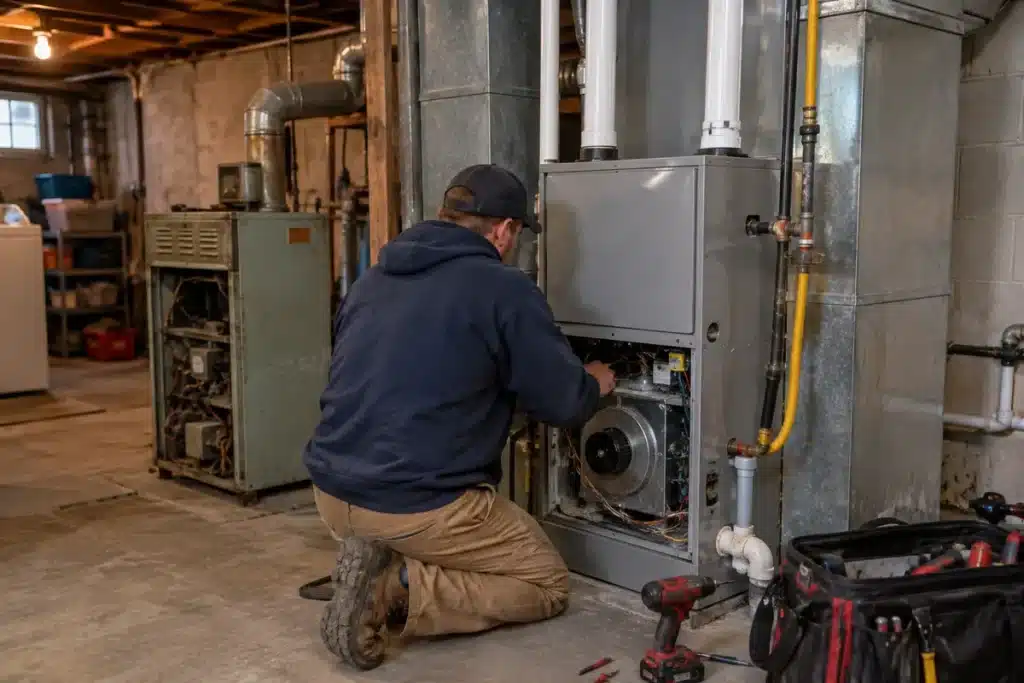
Quick answer: A home furnace installation in Ocean County typically takes one to two days and includes removing the old unit, setting the new furnace, connecting ductwork, venting, gas or electrical hookups, and startup testing. Cost depends on furnace size, AFUE efficiency rating, and venting needs, and D.K. Sledzik provides free estimates to determine the right fit.
Key takeaways
- Furnace sizing should be based on a load calculation, not just the square footage of your home, since an oversized unit cycles too often and wastes energy.
- Furnaces with AFUE ratings of 90% or higher are generally condensing models that require a manufacturer-approved venting system, often PVC, CPVC, or polypropylene, rather than a conventional chimney.
- Angi reports national average furnace installation costs between roughly $2,823 and $6,897, with fuel type, BTU capacity, and ductwork condition driving the final price.
- D.K. Sledzik, a recommended contractor of New Jersey Natural Gas, has converted thousands of homes from oil, electric, or propane to natural gas heat.
- New furnace installations from D.K. Sledzik include a 10-year manufacturer warranty and 5-year labor warranty, and financing is available upon request.
When Does a Furnace Need to Be Replaced Instead of Repaired?
Most furnaces give out somewhere between 15 and 20 years of service, though lifespan depends heavily on maintenance history, sizing, and how hard the unit runs each winter. A furnace that is cycling on and off frequently, making loud bangs or screeches, or needing repairs more than once a season is usually signaling that replacement will cost less over time than continuing to patch it.
Age alone is not the only factor. A furnace that is undersized for the home, has a cracked heat exchanger, or is still paired with an old metal chimney not rated for high-efficiency venting may need replacement sooner than the typical lifespan would suggest. If you are unsure whether repair or replacement makes sense, our HVAC FAQ page covers common questions homeowners ask before making that call.
Shore-area homes face an added wrinkle: salt air and humidity speed up corrosion on cabinets, burners, and electrical connections, which can shorten a furnace’s working life compared to inland New Jersey homes.
What Furnace Types Are Available for NJ Homes?
Ocean County homes run on a mix of fuel types, and the right choice depends on what is already feeding your home and what is available in your neighborhood.
- Gas furnaces are a common choice where natural gas service is available and can provide fast, even heat; operating costs depend on current utility rates and equipment efficiency.
- Oil furnaces are still found in older Jersey Shore homes, particularly in areas without gas service; they require fuel deliveries, and operating costs vary with oil prices and equipment efficiency.
- Propane furnaces work similarly to gas furnaces and are an option for homes off the gas grid, often serving shore and vacation properties.
- Electric furnaces cost less to install but generally run higher monthly bills in a cold-winter climate like ours.
D.K. Sledzik Heating & Air Conditioning is a recommended contractor of New Jersey Natural Gas and has converted thousands of homes from oil, electric, and propane heat to natural gas over the years. A conversion involves running new gas piping, installing the furnace, and properly venting and decommissioning the old fuel source, which is why it is worth having a licensed contractor evaluate feasibility and cost before committing.
What Is AFUE and Why Does It Matter?
AFUE stands for Annual Fuel Utilization Efficiency, and it tells you what percentage of the fuel a furnace burns is actually converted into heat for your home, with the rest lost as exhaust. A furnace rated at 95% AFUE turns 95 cents of every fuel dollar into heat, while an older 70% AFUE unit wastes nearly a third of the fuel it burns.
| AFUE Range | Typical Furnace Type | Venting Requirement |
|---|---|---|
| 80-83% | Standard-efficiency gas furnace | Metal flue vent, often through existing chimney |
| 90-98% | High-efficiency condensing furnace | Manufacturer-approved venting, often PVC, CPVC, or polypropylene, through a sidewall or roof |
| Below 80% | Older legacy furnaces (largely phased out) | Metal chimney, often oversized for the unit |
Higher AFUE units cost more upfront but lower monthly heating bills, which matters in a climate where furnaces run heavily from November through March. The common HVAC terms page on our site is a useful reference if you run across unfamiliar terms like AFUE, BTU, or static pressure while shopping.
How Do You Size a Furnace Correctly?
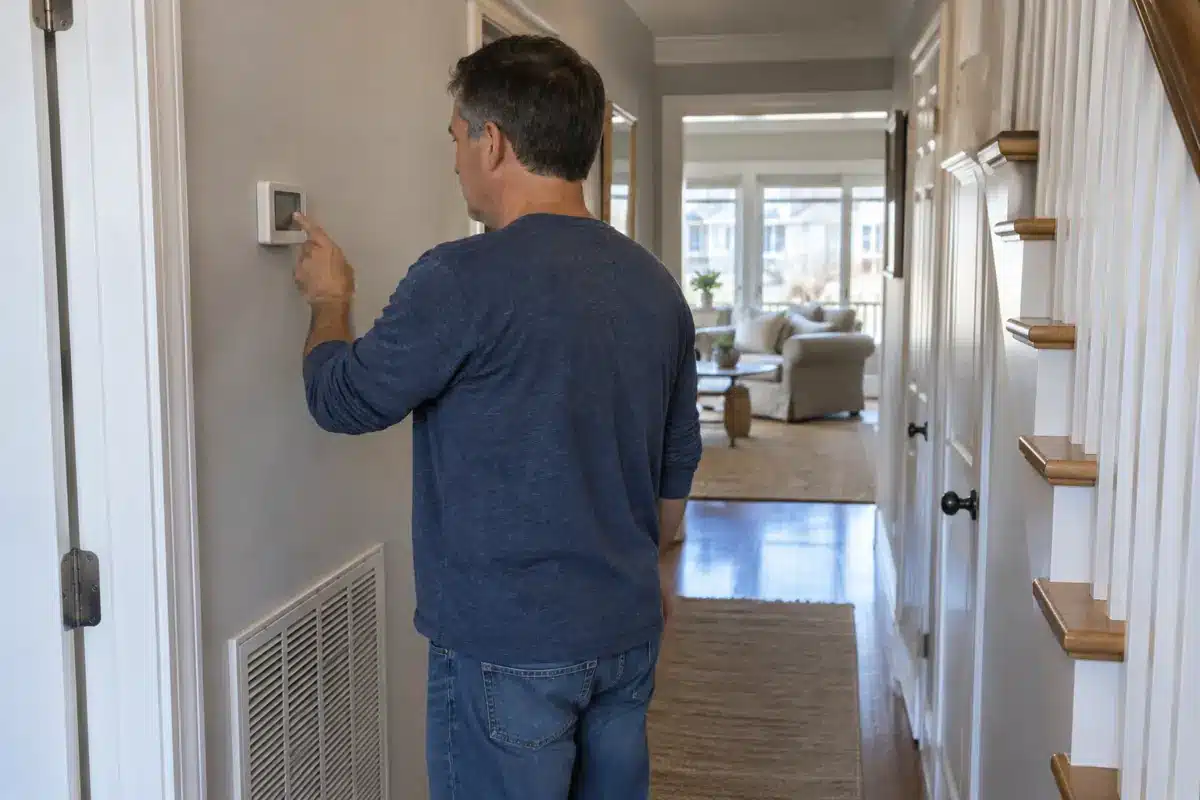
Furnace capacity is measured in BTUs per hour, and Angi notes that the average home needs roughly 80,000 to 100,000 BTUs, with a rough rule of thumb of 30 to 60 BTUs per square foot of living space. That range is a starting point only. The right number for your home depends on insulation levels, window count and orientation, ceiling height, air leakage, and local climate design temperatures.
A proper installer performs a Manual J load calculation rather than guessing from square footage alone. Oversizing is a common and costly mistake: a furnace that is too large heats the house quickly and shuts off before fully cycling air through the ductwork, which leaves rooms unevenly heated and increases wear on components from excessive on-off cycling. Undersizing causes the opposite problem, with the furnace running constantly and never quite catching up on the coldest nights.
- Have a technician measure your home’s square footage, ceiling height, and insulation condition.
- Account for window count, orientation, and age (older single-pane windows lose more heat).
- Factor in local design temperature for Ocean County winters.
- Review existing ductwork for leaks or restrictions that affect airflow.
- Match the calculated heating load to the furnace’s rated output at the applicable design conditions, following the equipment-selection standard used by the installer.
High-Efficiency Venting and Gas Conversions: What’s Different?
Furnaces rated 90% AFUE or higher are generally condensing furnaces, meaning they extract enough heat from combustion gases to use a manufacturer-approved venting system that is often made from PVC, CPVC, or polypropylene instead of relying on a traditional chimney. This is good news for homes with aging chimneys, since it often eliminates the need for costly chimney relining.
New Jersey’s Uniform Construction Code, which incorporates the International Mechanical Code and International Fuel Gas Code, governs how fuel-fired equipment must be vented and inspected, according to the New Jersey Department of Community Affairs. When a furnace continues to use an existing chimney, state rules require a chimney verification form or inspection to confirm it is still safe and properly sized for the replacement equipment. This is one reason DIY furnace swaps are risky: a licensed contractor documents code compliance as part of the installation.
For homes converting from oil or propane to natural gas, the project may include new gas piping, utility coordination or meter work, manufacturer-approved venting for a high-efficiency furnace, and proper decommissioning of the old oil tank or propane line. D.K. Sledzik handles these conversions regularly across Ocean County, including Toms River, Brick, Lakewood, Jackson, Manchester, Berkeley, Beachwood, Lacey, Whiting, and Point Pleasant.
What Does Furnace Installation Day Actually Look Like?
A straightforward furnace swap, where the new unit is a similar type and size and venting does not need to change, usually takes about one day. Conversions, chimney relining, ductwork modifications, or gas line extensions can stretch a project to two days or occasionally longer.
- Walkthrough and final sizing check. The technician confirms the load calculation and reviews the installation plan with you.
- Old furnace removal. The existing furnace is disconnected and removed; any oil-tank or propane-line work is handled separately if it is included in the project scope.
- New furnace placement and connections. The furnace is set, connected to ductwork, gas or electrical supply, and condensate drain if it is a high-efficiency model.
- Venting. PVC or metal venting is installed and sealed to code.
- Startup and safety testing. The technician checks gas pressure, airflow, temperature rise, and tests for carbon monoxide leaks before leaving.
- Thermostat setup and walkthrough. You get a quick orientation on the new controls and basic filter maintenance.
- Warranty registration. Confirm who will register the equipment, the registration deadline, and which manufacturer and labor-warranty documents you should keep.
New furnace installations from D.K. Sledzik include a 10-year manufacturer warranty and a 5-year labor warranty, so ask how and when the equipment registration and labor-warranty paperwork will be completed.
What Does Furnace Installation Cost, and What Moves the Price?
National cost data gives a useful starting range, though your actual number depends on local labor rates, the specific equipment chosen, and your home’s existing ductwork and venting. Angi reports an average furnace installation cost of about $4,814 nationally, with most homeowners paying between $2,823 and $6,897. This Old House cites a similar range of roughly $1,600 to $10,000 depending on furnace type and fuel source.
| Factor | How It Affects Cost |
|---|---|
| Fuel type | Electric furnaces tend to cost less upfront; oil furnaces tend to cost more, with gas typically in between, according to This Old House |
| AFUE rating | Higher-efficiency condensing furnaces cost more upfront but can lower monthly heating bills |
| Home size / BTU needs | Larger homes need higher-capacity furnaces, which raises equipment cost |
| Venting changes | Switching from metal chimney to PVC venting, or vice versa, adds labor and materials |
| Ductwork condition | Leaky, undersized, or damaged ducts may need repair or modification before a new furnace performs properly |
| Gas conversion | Converting from oil or propane adds piping, meter coordination, and tank or line decommissioning |
These are general industry figures, not a quote from D.K. Sledzik. We provide free estimates so you can get a number based on your actual home rather than a national average. We also offer financing upon request and can walk you through current NJ Clean Energy Program rebates and NJNG SAVEGREEN financing on our Upgrade and Save page, since program terms change and amounts should be confirmed directly.
How Do You Keep a New Furnace Running Well After Installation?
A new furnace is only as reliable as the maintenance behind it. Checking and replacing filters regularly prevents airflow blockage that reduces efficiency and strains the blower motor, and an annual tune-up before winter catches small issues before they become breakdowns or, in rare cases, a carbon monoxide hazard.
D.K. Sledzik offers seasonal maintenance plans, and has supported more than 10,000 maintenance-contract customers over the years across Ocean County. If you want a seasonal checklist to follow between professional visits, our Fall Furnace Tune-Up Checklist for Toms River Homeowners walks through what to check before cold weather sets in.
If you are also due for cooling system work, it often makes sense to plan furnace and air conditioner projects together, especially if you are considering a central air installation or want to compare high-efficiency air conditioning options for the same system. Homes with uneven heating in additions or finished basements sometimes benefit from a ductless mini-split as a supplement rather than extending ductwork.
Choosing a Licensed Furnace Installer in Ocean County
Furnace installation is regulated work in New Jersey. Contractors performing HVACR work must hold a license under the state’s Heating, Ventilating, Air Conditioning, and Refrigeration Contracting statute, according to the New Jersey Division of Consumer Affairs, and gas and venting work must comply with the Uniform Construction Code’s mechanical and fuel gas subcodes. Hiring an unlicensed installer, or attempting a DIY furnace swap, risks code violations, voided warranties, and real safety hazards like carbon monoxide leaks or gas line errors.
D.K. Sledzik Heating & Air Conditioning, Inc. has been family-owned and serving Toms River and Ocean County since 1974, and is run by Lynda Sledzik-Browne, who holds a NJ Master HVACR license. We carry NJ Home Improvement Contractor and Master HVACR licenses, and offer emergency service within 24 hours, seven days a week, including holidays, often same day, if your old furnace fails before a replacement can be scheduled.
Before hiring any installer, it is reasonable to ask for proof of licensing and insurance, a written load calculation rather than a square-footage guess, and a clear explanation of warranty terms. You can read more about our background on our company page, see feedback from past customers on our testimonials page, or schedule a consultation online when you are ready to get started.
Frequently Asked Questions
How long does it take to get a new furnace installed after ordering it?
Scheduling depends on equipment availability, project scope, and the installer’s calendar, so ask for a current timeline with your estimate. If your existing furnace fails unexpectedly, D.K. Sledzik offers emergency service within 24 hours, seven days a week, including holidays.
Can I install a furnace myself to save money?
DIY furnace installation is not recommended. In New Jersey, the work generally requires permits and inspections, and hiring a properly licensed HVACR contractor helps ensure that gas, electrical, and venting work meets Uniform Construction Code requirements. Improper installation risks carbon monoxide leaks, gas leaks, voided manufacturer warranties, and failed inspections, so the labor savings rarely outweigh the safety and liability risks.
Do I need a permit to replace my furnace in New Jersey?
Yes, furnace replacement in New Jersey typically requires a construction permit under the Uniform Construction Code, and existing chimneys or vents often need inspection or a verification form when fuel-fired equipment is replaced. A licensed contractor normally handles permitting as part of the installation process.
What is the difference between a furnace and a boiler?
A furnace heats air and distributes it through ductwork, while a boiler heats water or produces steam that circulates through radiators or radiant floor piping. Many older Jersey Shore homes still use boilers, and the right replacement choice depends on your existing distribution system rather than simply swapping types.
Is it worth converting from oil heat to natural gas?
Natural gas eliminates oil deliveries and oil-tank maintenance, but its operating-cost advantage depends on current fuel rates and equipment efficiency; conversion also involves upfront costs for piping, venting, and tank decommissioning. Availability of a gas line on your street and your home’s specific setup determine whether conversion makes financial sense.
How often should a new furnace be serviced?
Most manufacturers and HVAC professionals recommend a professional tune-up once a year, ideally before the heating season starts. Regular filter changes between visits and an annual inspection can help catch minor issues early and support compliance with any maintenance terms in the furnace warranty.
Sources
- How Much Does a New Furnace Cost in 2026? | Angi
- How Much Does a New Furnace Cost? (2026) | This Old House
- New Jersey Department of Community Affairs | Current Construction Codes
- State Board of Examiners of HVACR Contractors – Laws and Regulations
Talk to a Local HVAC Team You Can Reach
D.K. Sledzik Heating & Air Conditioning, Inc. has served Toms River and Ocean County homeowners since 1974, with service within 24 hours, 7 days a week, including holidays, at 732-349-0389. Schedule service online or contact us with a question about your system.
Written by the team at D.K. Sledzik Heating & Air Conditioning, Inc., a family-owned HVAC contractor in Toms River, NJ since 1974. NJ Master HVACR License #19hc00168400 · NJ Home Improvement Contractor #13VH01401100.