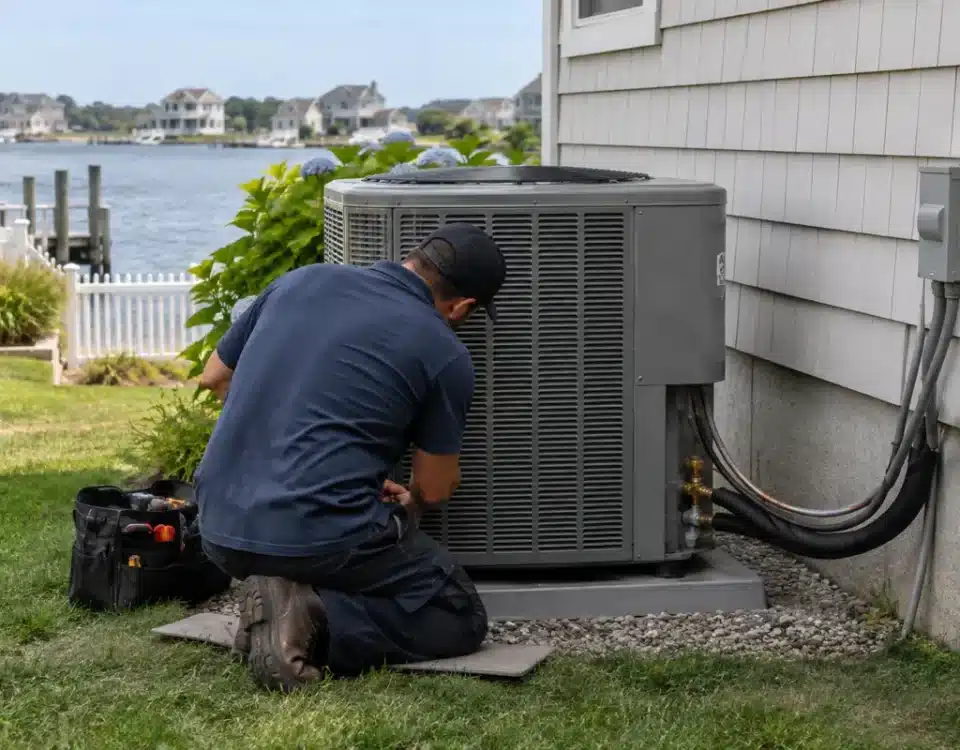
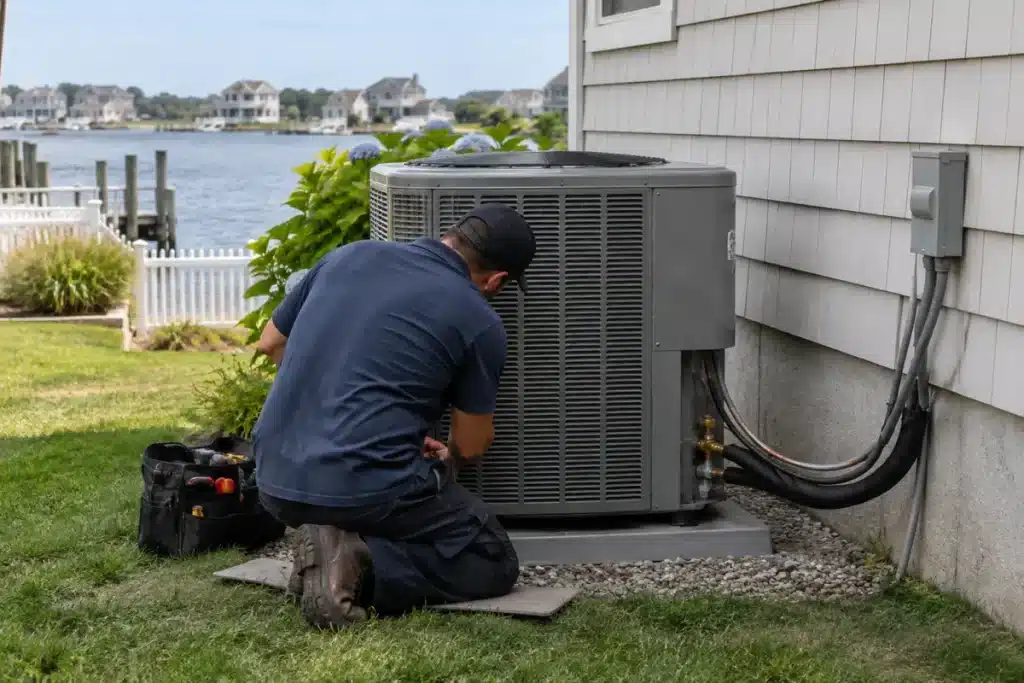
How Often Does HVAC Equipment Really Need Maintenance?
August 31, 2026
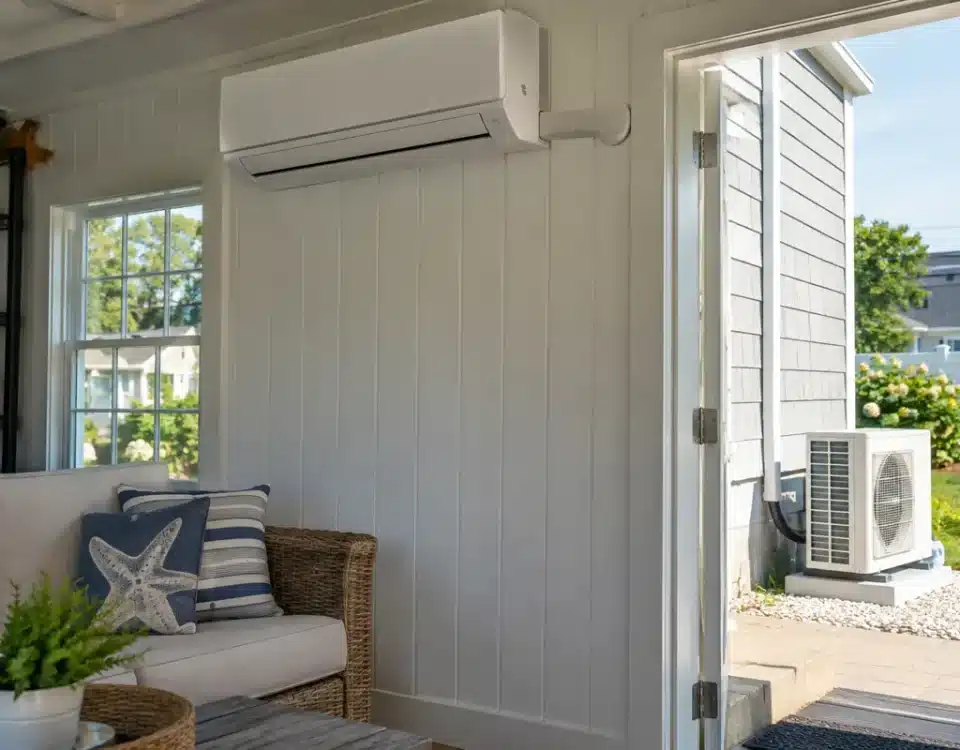
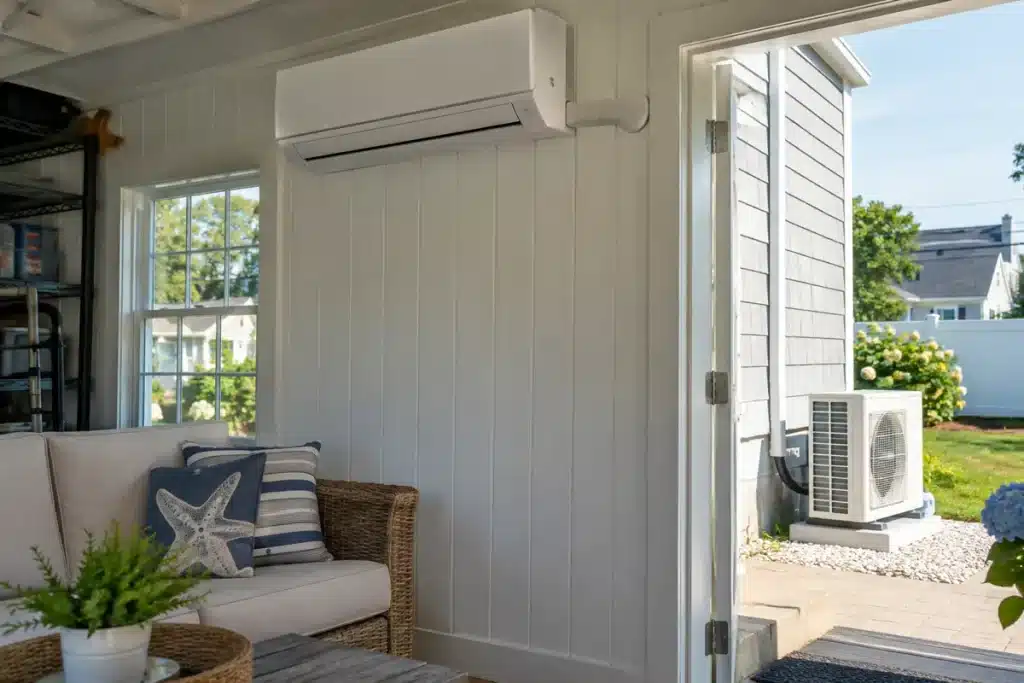
Ductless Mini-Split Systems: A Homeowner’s Guide for Toms River and Ocean County
September 8, 2026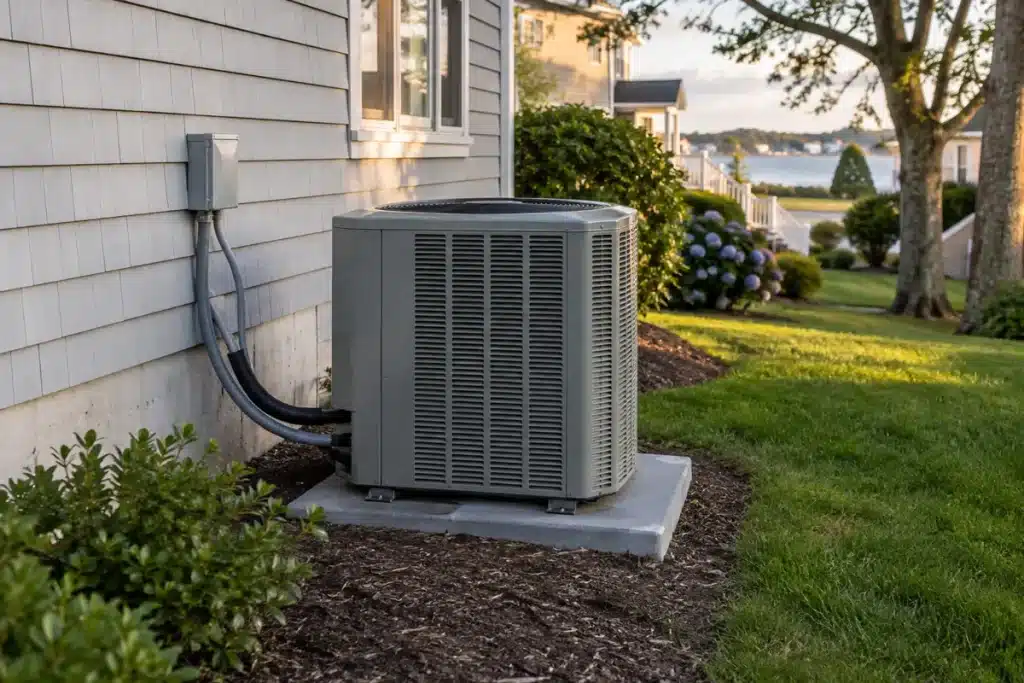
Quick answer: High-efficiency AC in New Jersey generally means equipment rated above the 13.4 SEER2 federal minimum for split-system central air conditioners in northern states; variable-speed models may also improve humidity control by running longer at lower output. Rebates through NJ utility programs and SAVEGREEN financing can offset the higher upfront cost. D.K. Sledzik helps Ocean County homeowners pick the right system for their home and budget.
Key takeaways
- The federal minimum for new split-system central air conditioners in New Jersey is 13.4 SEER2; higher-efficiency equipment exceeds that baseline.
- Variable-speed compressors run longer at lower output, which removes more humidity from Jersey Shore air than older single-stage units cycling on and off.
- Heat pumps can replace a central AC and furnace combination in some homes, but winter operating costs and cold-weather capacity should be evaluated for the specific house and utility rates.
- NJ utility and NJCEP rebate programs change their dollar amounts regularly, so always confirm current incentives before budgeting a project.
- New equipment now commonly uses lower-global-warming-potential refrigerants such as R-454B or R-32, so homeowners should confirm which refrigerant a proposed system uses.
What Does “High-Efficiency AC” Actually Mean?
When homeowners search for high efficiency AC, they usually mean a central air system that uses less electricity to produce the same amount of cooling as an older unit. The industry measures this with SEER2, short for Seasonal Energy Efficiency Ratio 2, which replaced the older SEER rating in 2023 testing standards. A higher SEER2 number means more cooling output per dollar of electricity, similar to how miles per gallon describes a car’s fuel economy, as noted by This Old House.
Under current federal minimum efficiency standards, new split-system central air conditioners sold in the northern United States, including New Jersey, must meet at least 13.4 SEER2, while many high-efficiency models now reach into the low-to-mid 20s. As a simple rating-based example, a 16 SEER2 system would use about 16% less electricity than a 13.4 SEER2 system to deliver the same seasonal cooling under test conditions; actual savings depend on installation quality, insulation, ductwork, weather and operating hours.
If some of these terms are new to you, our common HVAC terms explained page breaks down SEER2, EER2, and related ratings in plain language.
SEER2 vs EER2: Why Both Numbers Matter
SEER2 measures average efficiency across an entire cooling season, factoring in mild and hot days alike. EER2, or Energy Efficiency Ratio 2, measures efficiency at a specific high-temperature test condition, making it useful for comparing performance during hot outdoor conditions.
A system with a strong SEER2 rating but a lower EER2 rating may be less efficient at the EER2 test condition; proper sizing and latent-cooling performance are separate considerations for humid weather. When comparing equipment, ask about both numbers, not just the headline SEER2 figure on the yellow EnergyGuide label.
- SEER2: season-long average efficiency, useful for estimating annual electric costs
- EER2: peak-condition efficiency, useful for gauging performance during heat waves and high humidity
- HSPF2: applies to heat pumps and measures heating-season efficiency, relevant if you’re considering a heat pump instead of a standard AC
Heat Pump vs Central AC: Which Fits Your Ocean County Home?
A heat pump looks like a central air condenser from the outside but can run in reverse to provide heat in cooler months, using electricity instead of gas, oil, or propane. According to the New Jersey Department of Environmental Protection, air-source heat pumps can operate with efficiencies up to 265% higher than fossil fuel heating and cooling systems, based on 2024 research cited by the agency.
For many Ocean County homes, especially shore and vacation properties without existing gas service, a heat pump can replace both the furnace and the AC with one system. Homes already using natural gas may also consider a high-efficiency AC or a dual-fuel heat pump, but the best choice depends on equipment performance, utility rates, the home’s heating load and the selected backup-heat strategy.
This is a decision worth walking through with a technician who knows your specific home, duct layout, and gas versus electric situation. D.K. Sledzik has converted thousands of homes from oil, electric and propane heating to natural gas over the decades and can help you weigh the real tradeoffs rather than a one-size-fits-all answer. If a central air setup still makes the most sense for your home, our central air installation guide covers what that process looks like.
Variable-Speed and Two-Stage Compressors Explained
Older AC units are single-stage, meaning they’re either fully on or fully off. High-efficiency systems increasingly use two-stage or variable-speed compressors that adjust output to match the actual cooling load at any given moment.
This matters a lot along the Jersey Shore because our summers combine heat with heavy humidity. A single-stage unit cools the air quickly, shuts off, and leaves excess moisture behind. A variable-speed system runs longer at a lower, steadier output, which pulls more water vapor out of the air during each cycle and leaves a home feeling noticeably less sticky at the same thermostat setting.
Tradeoffs to Consider
- Variable-speed equipment typically costs more upfront than single-stage systems
- Quieter operation and more even temperatures are common benefits homeowners notice
- More complex electronics mean repairs may require specialized parts, so ask your contractor about parts availability before buying
The Refrigerant Transition: R-454B and R-32
Federal HFC rules ended manufacture and import of most new residential and light-commercial AC and heat-pump equipment using R-410A beginning in 2025, prompting manufacturers to adopt lower-global-warming-potential refrigerants such as R-454B and R-32. New central air systems manufactured going forward are increasingly built around these newer refrigerants.
For homeowners, the transition mainly affects new-equipment selection and refrigerant-specific installation and service requirements; existing R-410A systems can still be maintained and repaired. If your current system uses R-410A and is still working well, there’s no need to replace it purely because of the refrigerant change. But if you’re already planning a replacement, it makes sense to ask your contractor which refrigerant the new equipment uses and how that affects future service costs.
When Does a High-Efficiency Upgrade Actually Pay Off?
A high-efficiency system isn’t automatically the right choice for every home. The payoff depends on how many hours your AC runs each cooling season, your current unit’s age and SEER rating, local electric rates, and how long you plan to stay in the home.
Installed cost varies widely with capacity, efficiency, ductwork and electrical requirements; see our central air replacement cost guide for a fuller budgeting discussion. The best value often comes from comparing the estimated annual operating cost of properly matched systems against each upgrade’s installed price, available incentives and expected years of ownership.
| Scenario | Upgrade Priority | Why |
|---|---|---|
| AC is 15+ years old, low SEER rating | High | Biggest efficiency jump, highest savings potential, likely near end of service life anyway |
| AC is 8-12 years old, mid-range SEER | Moderate | Some savings available, but full replacement cost takes longer to recoup |
| Gas furnace is old, no AC installed yet | High for heat pump or dual-fuel review | Good opportunity to evaluate heat pump vs gas-plus-AC before committing to ductwork |
| Vacation or shore home, used seasonally | Lower unless replacing failed equipment | Limited run-hours reduce total savings from efficiency gains |
If your current system is still cooling adequately but you’re noticing weak airflow or warm spots, it may be a repair issue rather than an efficiency problem. Our article on why central air isn’t cooling walks through the most common causes before you assume a full replacement is necessary.
Rebates and Financing for High-Efficiency AC in NJ
New Jersey offers several paths to reduce the upfront cost of a high-efficiency AC or heat pump installation. The NJ Clean Energy Program (NJCEP) provides rebates for qualifying equipment, and the NJNG SAVEGREEN program offers 0% on-bill repayment financing for qualifying high-efficiency systems for natural gas customers. Separately, some electric utilities offer residential HVAC incentives tied to equipment and eligibility requirements, which change as programs are updated.
Because rebate amounts and eligibility rules shift from year to year, we recommend checking current terms directly at NJCleanEnergy.com or savegreenproject.com before finalizing a budget. D.K. Sledzik can also walk you through which current programs your household may qualify for as part of a free estimate. Our rebates and financing page has more detail on how these programs typically work.
Sizing and Installation: Why the Install Matters as Much as the Unit
Even the most efficient AC on the market will underperform if it’s sized wrong for your home or installed poorly. An oversized unit cools the air quickly but shuts off before it has time to remove enough humidity, which leaves rooms feeling clammy even at a comfortable temperature. An undersized unit runs constantly and still struggles to keep up on the hottest days.
Proper sizing accounts for square footage, insulation levels, window orientation, ceiling height, and duct condition, not just a simple tons-per-square-foot rule of thumb. This is also where an experienced local contractor matters: a technician familiar with older Ocean County homes, salt-air exposure on exterior equipment, and common duct layouts in the area can spot issues a generic calculation would miss.
D.K. Sledzik has served Toms River, Brick, Lakewood, Jackson, Manchester, Berkeley, Beachwood, Lacey, Whiting, and Point Pleasant since 1974, and our technicians size each system around the specific home rather than defaulting to a one-size-fits-all number. For a closer look at installation steps and what to expect on project day, see our central air installation guide, and for a detailed cost breakdown by home size and system type, visit our central air replacement cost guide.
Keeping a High-Efficiency System Running Efficiently
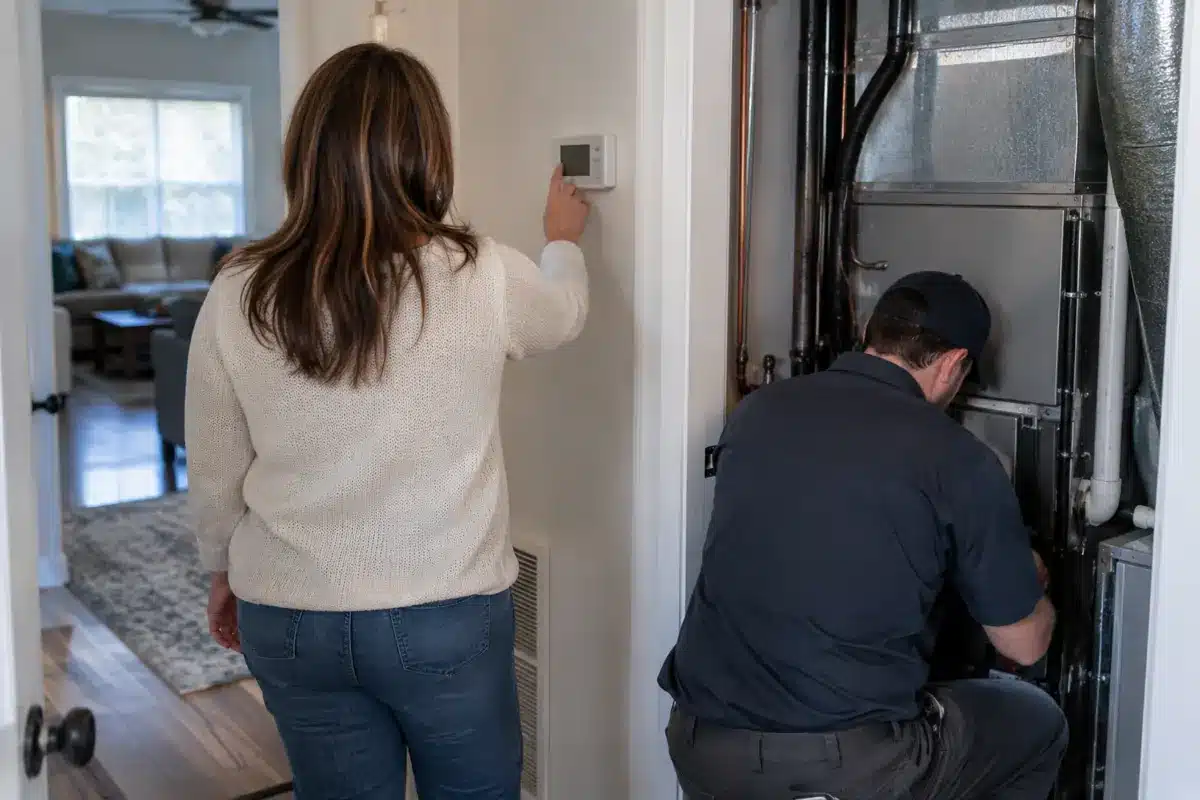
A high-efficiency AC loses much of its advantage if it isn’t maintained. Dirty filters restrict airflow and force the system to work harder, dirty condenser coils reduce heat transfer, and miscalibrated thermostats can spike electric usage even when the equipment itself is fine. Seasonal tune-ups also catch refrigerant leaks and failing capacitors before they turn into a mid-summer breakdown.
During cooling season, use the highest thermostat setting that remains comfortable and raise the setting when the home is unoccupied; savings vary with climate, equipment and how long the setback is maintained. Pairing that habit with a smart or programmable thermostat helps a high-efficiency system actually deliver the savings its SEER2 rating promises. Our spring AC tune-up checklist covers the specific steps worth doing before cooling season starts, and D.K. Sledzik’s seasonal maintenance plans are available for homeowners who want this handled on a regular schedule.
Frequently Asked Questions
Is a 14 SEER2 AC still worth buying in New Jersey?
Federal minimum efficiency standards already require most new split systems sold in northern states, including New Jersey, to meet at least 13.4 SEER2, so a 14 SEER2 unit sits near the low end of what’s currently available. It will cost less upfront than higher-rated models but will save less on electricity over its lifespan.
Do high-efficiency AC units cost more to repair?
Variable-speed and two-stage systems use more complex electronics than older single-stage units, which can mean higher parts costs for certain repairs.
Can I add a heat pump to an existing gas furnace setup?
Yes, this is called a dual-fuel or hybrid system, where the heat pump handles most heating and cooling while the gas furnace kicks in during the coldest stretches of winter. It can provide heat-pump efficiency while retaining a gas furnace as backup when controls call for it.
How long does a high-efficiency AC system typically last?
Central AC systems often last roughly 15 to 20 years, but climate, salt exposure, installation quality, usage and maintenance can shorten or extend service life. Proper sizing, consistent tune-ups, and avoiding extreme thermostat settings all extend equipment life.
Will a high-efficiency AC fix humidity problems in my house?
A variable-speed or two-stage high-efficiency system generally dehumidifies better than an older single-stage unit because it runs longer at lower output, pulling more moisture from the air. However, severe humidity issues tied to duct leaks, poor insulation, or oversized equipment may need separate repairs beyond just a new AC.
Sources
- NJDEP Clean Buildings: Air Source Heat Pumps
- How Much Does an Air Conditioner Cost? (This Old House)
- Atlantic City Electric HVAC Efficiency Program
- Best Central Air Conditioning Buying Guide (Consumer Reports)
Talk to a Local HVAC Team You Can Reach
D.K. Sledzik Heating & Air Conditioning, Inc. has served Toms River and Ocean County homeowners since 1974, with service within 24 hours, 7 days a week, including holidays, at 732-349-0389. Schedule service online or contact us with a question about your system.
Written by the team at D.K. Sledzik Heating & Air Conditioning, Inc., a family-owned HVAC contractor in Toms River, NJ since 1974. NJ Master HVACR License #19hc00168400 · NJ Home Improvement Contractor #13VH01401100.