High-Efficiency Air Conditioning Options for NJ Homes
September 1, 2026
Furnace Installation in Toms River & Ocean County: What Homeowners Need to Know
September 15, 2026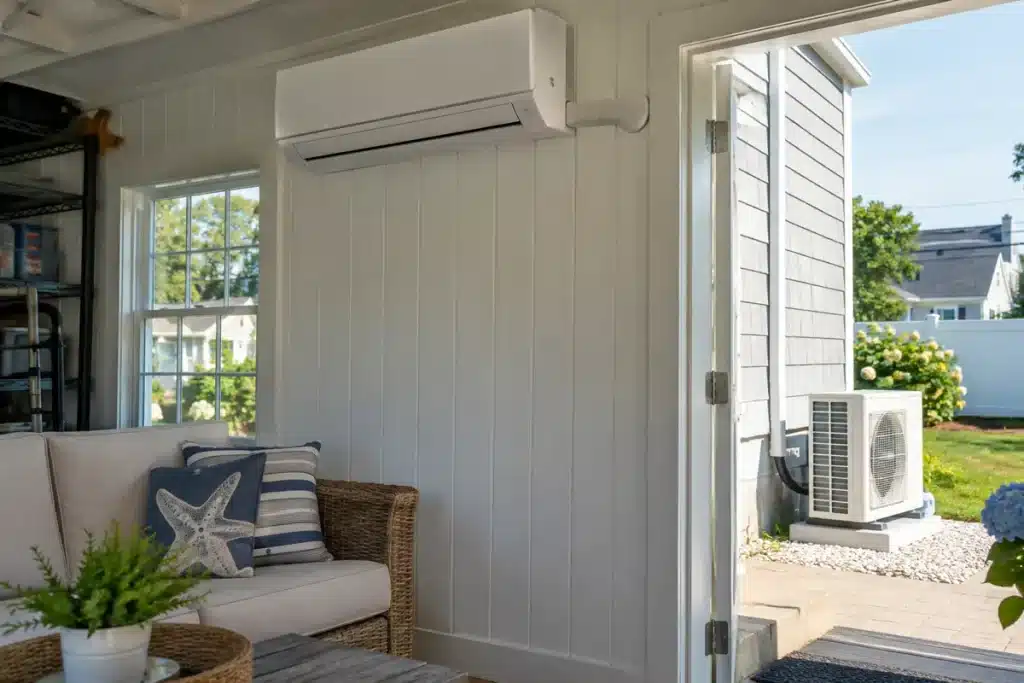
Quick answer: A ductless mini split is a zoned heating and cooling system with an outdoor compressor connected to one or more indoor wall or ceiling units, no ductwork required. It works well for additions, sunrooms, converted garages, and homes without existing ducts, including many older Jersey Shore properties.
Key takeaways
- Ductless mini splits heat and cool without ductwork, using refrigerant lines run through a small hole in an exterior wall.
- Single-zone units suit one room; multi-zone systems can condition several rooms from one outdoor compressor.
- Cold-climate heat pump mini splits can provide efficient heating well below freezing, which matters for New Jersey winters.
- Correct sizing (BTU capacity) matters more than brand; an oversized unit cycles too often and leaves rooms clammy.
- Installation cost varies widely with system capacity, the number of zones, electrical work, and site conditions; request a home-specific estimate before budgeting.
What Is a Ductless Mini Split and How Does It Work?
A ductless mini split is a heating and cooling system made up of an outdoor compressor/condenser unit and one or more indoor air-handling units, connected by a small set of refrigerant lines and electrical wiring run through a hole in an exterior wall. There is no ductwork involved, which is the whole point of the system. The indoor unit mounts on a wall or ceiling and blows conditioned air directly into the room.
Inside, refrigerant absorbs heat from indoor air during cooling mode and releases it outside, the same basic refrigeration cycle used in central air conditioning, just without the air handler and duct network moving the air. In heating mode, a mini split that is also a heat pump reverses the cycle, pulling heat energy from outdoor air (even cold air) and releasing it indoors. The New Jersey Department of Environmental Protection notes that ductless configurations can be single-zone, serving one room, or multi-zone, where several indoor units connect to a single outdoor unit to condition multiple spaces.
If you are not familiar with terms like BTU, SEER, or refrigerant line set, our common HVAC terms explained page is a good reference to keep handy while you plan a project.
Where Mini Splits Make the Most Sense in Ocean County Homes
Ductless systems can be a practical fit for many homes around the Jersey Shore. Many older homes in Toms River, Brick, and Lakewood were built without central ductwork, or have ducts that only reach part of the house. Additions, finished attics, converted garages, and sunrooms are classic candidates, since running new ductwork into these spaces is often expensive or structurally impractical.
Shore and vacation homes are another strong fit. A mini split lets you heat or cool just the rooms you are using, which matters for a property that sits empty much of the year but needs quick comfort when the family arrives for a weekend. Salt air and humidity along the coast also make it worth asking your installer about corrosion-resistant coil coatings on the outdoor unit.
- Home additions and bonus rooms without existing ductwork
- Sunrooms, three-season rooms converted to year-round use
- Finished basements and attics
- Garage workshops or home offices
- Shore homes used seasonally, where zoned comfort beats heating or cooling an entire house
- Older homes with boilers or radiators and no existing cooling at all
If your home already has central air that simply is not performing, it may make more sense to repair or replace that system rather than add a mini split. Our page on why central air isn’t cooling walks through common causes worth ruling out first.
Ductless vs. Central Air vs. Window Units: How Do They Compare?
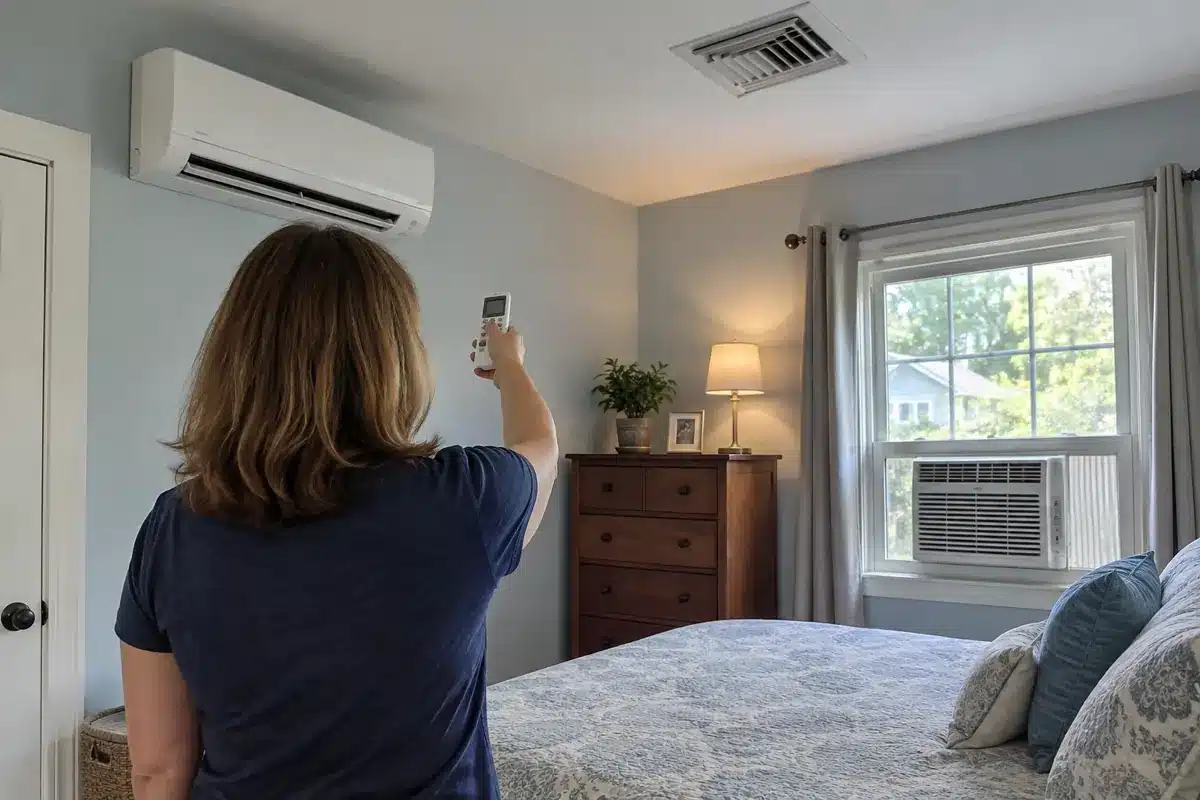
Homeowners weighing a mini split usually have two other options in mind: adding central air with new ductwork, or sticking with window units. Each has real tradeoffs.
| Factor | Ductless Mini Split | Central Air (new ducts) | Window Units |
|---|---|---|---|
| Ductwork required | No | Yes, new ducts must be installed | No |
| Zoned comfort | Yes, room by room | Only with a zoning system added | Yes, but one unit per room |
| Heating capability | Yes, with a heat pump model | Not with central AC alone; a furnace, boiler, or heat-pump system can provide heat | Some models provide heat |
| Typical install disruption | Low, small wall penetration | High, ceiling and wall openings for ducts | Low, but seasonal removal needed |
| Noise level indoors | Low, often similar to a quiet refrigerator | Low, noise mostly at vents | Higher, compressor is in the room |
| Whole-home coverage | Possible with multiple zones, but costly for large homes | Best suited for whole-home coverage | Impractical for whole home |
For a home that already has ductwork in reasonably good shape, replacing or upgrading central air is usually the more cost-effective path for whole-house comfort. Our central air installation and central air replacement cost guide pages cover that route in detail.
Sizing a Mini Split: Why Bigger Isn’t Better
Mini splits are sized in BTUs (British Thermal Units per hour of cooling or heating capacity), and getting this number right matters more than almost any other decision in the project. An oversized unit cools a room quickly but shuts off before it has properly removed humidity from the air, which leaves the space feeling clammy even though the thermostat reads a comfortable number. It also cycles on and off more frequently, which wears components faster and wastes electricity.
Correct sizing depends on square footage, ceiling height, insulation level, window area and orientation, and how many people typically use the room. A sunroom with west-facing glass needs more capacity per square foot than an interior bedroom, for example. Available capacities vary widely, so an installer should match each indoor zone and the outdoor unit to a room-by-room load calculation rather than relying on square footage alone.
- A technician measures the room(s), checks insulation and window exposure, and performs a load calculation.
- The load calculation determines required BTU capacity for each zone.
- Indoor unit style and location are selected (wall-mounted, ceiling cassette, or floor console).
- Outdoor unit capacity and number of zones per compressor are matched to the total load.
- Electrical capacity is checked, since most installations need a dedicated circuit.
A proper load calculation is also the reason to avoid buying a mini split based on square footage alone from a big-box retailer. If you are unsure what your existing system’s remaining lifespan looks like before deciding whether to add ductless zones, our HVAC FAQ page has background on typical equipment life expectancy.
Installation Steps: What to Expect on Install Day
A single-zone mini split installation is usually a one-day job; multi-zone systems with several indoor units can take longer. According to HomeAdvisor, installation time typically runs five to 16 hours depending on the number of zones and the complexity of running line sets.
- Site assessment: the installer confirms where the indoor and outdoor units will go, checks wall construction, and verifies the wall can support the indoor unit’s weight.
- Electrical check: most mini splits need a dedicated electrical circuit run to the panel; older homes sometimes need a panel upgrade to handle the added load.
- Wall penetration: a small hole (often 3 inches or less) is drilled for the refrigerant lines, electrical wiring, and condensate drain line.
- Mounting: the indoor unit is hung on a bracket, and the outdoor unit is secured on a pad or wall bracket with the manufacturer-required clearances for airflow and service.
- Refrigerant line connection and vacuum: lines are connected and evacuated to remove air and moisture, and the refrigerant charge is verified or adjusted according to the manufacturer’s instructions.
- Startup and testing: the technician checks refrigerant charge, airflow, and thermostat or remote function, then walks the homeowner through operation.
Because this work involves electrical connections and refrigerant handling, it is not a DIY project. Angi specifically notes that a licensed professional should handle mini split installation for this reason. D.K. Sledzik has served Toms River and Ocean County homeowners since 1974, and our technicians can walk you through site evaluation, sizing, and installation as part of a full consultation. You can schedule service online to get started.
Do Mini Splits Work in Cold New Jersey Winters?
A common question is whether mini splits work through a New Jersey winter, and the answer is generally yes with properly selected equipment. Standard heat pumps lose efficiency as outdoor temperatures drop, but manufacturers now build cold-climate heat pump mini splits specifically engineered to keep producing usable heat output at much lower outdoor temperatures than older models could manage. These units use variable-speed compressors and enhanced defrost cycles to stay effective through a typical Jersey Shore winter.
That said, a cold-climate mini split used as a home’s sole heat source is a different decision than one used to supplement an existing gas furnace or boiler. Some Ocean County homeowners keep an existing gas system as their primary heat source and use ductless zones for an addition or shoulder-season comfort, reducing reliance on the mini split during the coldest weather. If your home runs on an older oil, electric, or propane system and you are weighing options, it is worth discussing a gas conversion alongside any ductless plans. D.K. Sledzik is a recommended contractor of New Jersey Natural Gas and has converted thousands of area homes from oil, electric, and propane to gas heat.
Noise, Humidity, and Salt Air: Practical Considerations
Indoor mini-split units are generally quiet, often in the range homeowners describe as similar to a quiet refrigerator hum, which is one reason they work well in bedrooms and home offices where a window unit’s compressor noise would be disruptive. The compressor noise happens outdoors instead, so placement of the outdoor unit away from a neighbor’s window or your own bedroom wall is worth planning for.
Humidity control is a genuine strength of a properly sized mini split, since the variable-speed compressors found in most modern units run longer at lower speeds rather than short, aggressive cycles, which pulls more moisture out of the air over time. That matters a great deal in the humid summers common along the Jersey Shore.
Salt air is the tradeoff to manage. Outdoor condenser units near the coast are exposed to airborne salt that can accelerate corrosion on coils and fins faster than it would inland. Ask about coastal or corrosion-resistant coil options, and plan on routine rinsing of the outdoor unit and a seasonal check as part of normal upkeep, similar to what we recommend for central air condensers in our spring AC tune-up checklist.
Efficiency, Rebates, and Weighing the Investment
Ductless mini splits are often marketed as a high-efficiency option, and that reputation is generally earned when the system is sized correctly and installed well. Because there is no ductwork, you also avoid the energy losses that come from air leaking out of duct joints before it reaches the room, which the U.S. Department of Energy has identified as a common source of wasted conditioned air in homes with ducted systems.
On cost, Angi reports that professional ductless system installation nationally runs from about $4,350 to $12,250, with many homeowners landing around $7,500, while single-zone projects alone can range from roughly $2,000 to $14,500 depending on BTU size, number of zones, and site conditions such as electrical upgrades or difficult line-set runs. These are national estimates, not a quote, and your actual cost depends on your home’s specifics. If you are also comparing ductless against upgrading your whole-house system, our high-efficiency air conditioning options page covers SEER ratings and other efficiency factors for central systems.
New Jersey homeowners should also check current incentive programs before finalizing a decision. The NJ Clean Energy Program and NJNG’s SAVEGREEN financing have offered rebates and 0% on-bill repayment options for qualifying high-efficiency equipment, though program amounts and eligibility change over time. Our rebates and financing page explains how to check current terms, and we are happy to walk you through what may apply to your project.
When a Mini Split Is Not the Right Fit
Ductless systems are not automatically the best answer for every situation. If your home already has good ductwork throughout, replacing a failing central air system is often simpler and more cost-effective than adding several ductless zones to match whole-home coverage. Large, open floor plans can also require more indoor units than homeowners expect, since each unit generally serves one room or open area rather than casting air broadly the way a ducted system can.
Homeowners who dislike the look of a wall-mounted indoor unit sometimes find ceiling cassette or floor console styles more acceptable, though these typically cost more to install. And if your main goal is replacing an aging whole-house system rather than adding zoned comfort to one or two rooms, it is worth getting a straightforward comparison of central air replacement before committing to a multi-zone ductless retrofit.
A short consultation is usually the fastest way to find out which direction fits your home and budget. D.K. Sledzik offers free estimates and can walk through both ductless and central options so you are comparing real numbers for your house, not national averages. You can read about our approach on our about us page or see what past customers have said on our testimonials page.
Frequently Asked Questions
Can a ductless mini split heat and cool the same room?
Yes, most ductless mini splits sold today are heat pumps, meaning the same indoor and outdoor unit pair provides both heating in winter and cooling in summer. The system simply reverses the refrigerant cycle depending on the mode selected, so you do not need separate equipment for each season.
How many indoor units can one outdoor compressor support?
A multi-zone outdoor unit can support several indoor units, but the maximum depends on the specific model, its capacity, and the combined load of the connected zones. Larger designs may require additional outdoor units.
Do mini splits need regular maintenance like central air?
Yes. Filters should be cleaned regularly, and the outdoor unit benefits from periodic clearing of debris and, in coastal areas, rinsing off salt buildup. A seasonal professional check helps catch refrigerant or drainage issues before they become bigger repairs.
Is a mini split a good option for a whole house instead of central air?
It can be, but whole-home ductless setups require multiple indoor units and careful planning, and costs can approach or exceed a central air system for larger homes. For a home with usable existing ductwork, central air may be the simpler whole-house option, but the best choice depends on the duct condition, layout, comfort goals, and project cost.
Will a mini split lower my electric bill?
It can, especially when replacing inefficient window units or supplementing a system that currently conditions unused space. Actual savings depend on your home’s insulation, local electricity rates, correct sizing, and how the system is used, so results vary by household.
Sources
- NJDEP Clean Buildings: Air Source Heat Pumps
- Angi: Most Common Questions About Installing a Ductless Mini Split
- Angi: 2026 Ductless Heating and Cooling Systems Cost
- HomeAdvisor: How Much Does a Ductless Heat Pump Cost to Install?
Talk to a Local HVAC Team You Can Reach
D.K. Sledzik Heating & Air Conditioning, Inc. has served Toms River and Ocean County homeowners since 1974, with service within 24 hours, 7 days a week, including holidays, at 732-349-0389. Schedule service online or contact us with a question about your system.
Written by the team at D.K. Sledzik Heating & Air Conditioning, Inc., a family-owned HVAC contractor in Toms River, NJ since 1974. NJ Master HVACR License #19hc00168400 · NJ Home Improvement Contractor #13VH01401100.