Furnace Repair in Toms River: What’s Wrong, What It Costs, and When to Call a Pro
September 22, 2026
Navien Combi Boiler Installation and Benefits for Ocean County Homes
October 13, 2026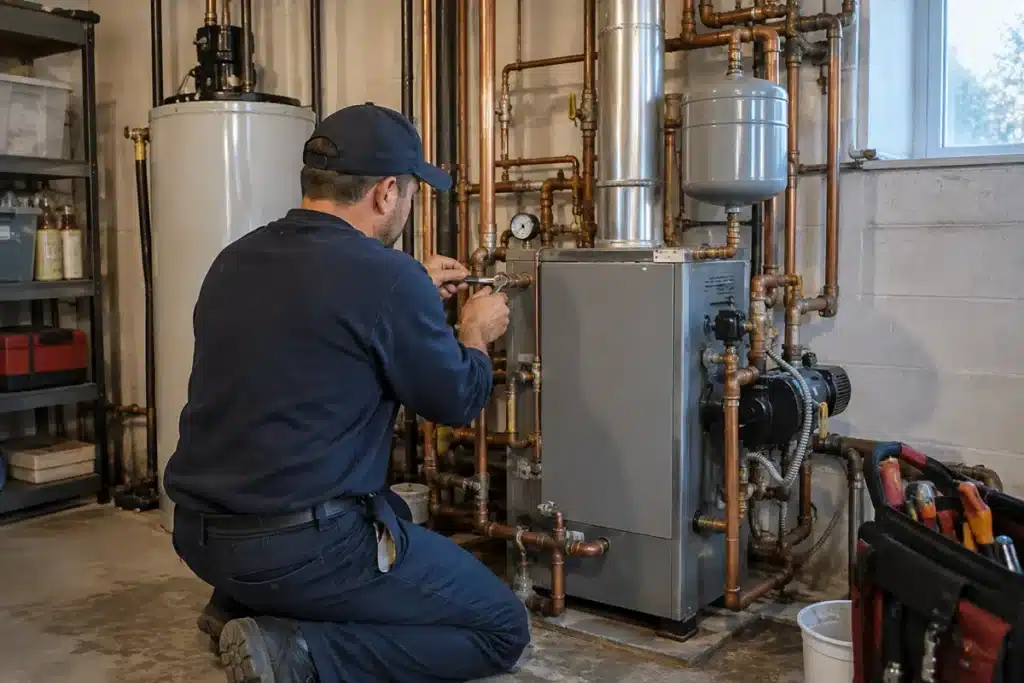
Quick answer: Most boiler repairs cost between $95 and $1,500 depending on the problem, with routine annual service running $150-$500, according to Angi. Common fixes include pressure issues, pilot/ignition failures, banging noises, and leaks. Annual maintenance and knowing your boiler’s age help you decide when to repair versus replace.
Key takeaways
- Boiler repairs typically run $95 to $1,500 and routine annual service costs $150 to $500, according to Angi, with gas boilers generally cheaper to fix than oil or electric units.
- Common boiler complaints include no heat, low or fluctuating pressure, kettling or banging noises, leaks, and pilot or ignition failures.
- For boilers subject to N.J.A.C. 12:90, New Jersey requires periodic testing and maintenance under ASME CSD-1, including testing and written records after applicable service or repair work.
- A well-maintained boiler can last 15 to 25+ years, while neglected systems often fail well before 15 years.
- If an older boiler needs a major repair, compare its condition, efficiency, expected remaining life, and repair cost with suitable replacement options.
Why Boilers Still Make Sense in Many Ocean County Homes
Plenty of older homes in Toms River, Brick, Lakewood, and along the Barnegat Bay side of Ocean County still run on hot water boilers, especially homes built before forced-air systems became standard. Boilers heat quietly, distribute warmth through radiators or baseboards, and can provide many years of service when properly maintained.
That said, boilers are mechanical and hydraulic systems with moving parts, pressure vessels, and combustion components, so they need routine attention just like a furnace or central air system. D.K. Sledzik Heating & Air Conditioning has served Toms River and Ocean County since 1974 and services boilers from Burnham, Weil-McLain, and other residential brands.
Common Boiler Problems in New Jersey Homes
Most boiler problems fall into a handful of categories. Knowing what each symptom usually means can help you describe the problem accurately when you call for help.
No Heat or Weak Heat
A boiler that won’t fire or produces lukewarm radiators usually points to a failed ignition system, a tripped high-limit switch, a clogged burner, or a circulator pump that has stopped moving water through the system.
Pressure Problems
Hot water boilers should hold a steady pressure, typically shown on a gauge near the unit. Pressure that keeps dropping often signals a leak somewhere in the system or a failing expansion tank. Pressure that climbs too high can trip the relief valve and cause water to drip from the boiler.
Banging, Kettling, or Gurgling Noises
A banging or kettling sound is frequently caused by mineral scale buildup inside the heat exchanger, trapping steam pockets that bang against the metal as they collapse. This is more common in areas with hard water and in older boilers that have never been flushed.
Leaks
Water around the base of the boiler, at pipe fittings, or near the pressure relief valve should never be ignored. Leaks can come from a cracked heat exchanger, worn valve, corroded pipe, or failing pump seal, and left unaddressed they can cause structural damage and eventually a full breakdown.
Pilot Light or Ignition Failures
Older standing-pilot boilers can lose their flame due to drafts, a dirty thermocouple, or a failing gas valve. Newer electronic ignition models can fail to light due to sensor issues or control board faults. Either way, repeated ignition failures are a sign the system needs professional diagnosis, not repeated relighting.
| Symptom | Likely Cause | Urgency |
|---|---|---|
| No heat at all | Ignition failure, dead circulator, tripped limit switch | High – call same day |
| Pressure keeps dropping | System leak, failing expansion tank | Moderate – schedule soon |
| Banging or kettling noise | Mineral scale buildup in heat exchanger | Moderate – schedule service |
| Water pooling at base | Cracked heat exchanger, worn valve, corroded pipe | High – shut down and call |
| Pilot won’t stay lit | Dirty thermocouple, draft, failing gas valve | High – possible gas safety issue |
What Does Boiler Repair Typically Cost?
Repair costs vary widely depending on the part involved and whether your boiler runs on gas, oil, or electricity. According to Angi, boiler repairs nationally range from about $95 for simple fixes to around $1,500 for major component replacements, with the average service call landing near $425. Repair cost depends on the boiler’s design, fuel type, required parts, accessibility, and the underlying problem.
Routine annual maintenance is typically far less expensive than reactive repairs. Angi reports roughly $150 to $500 for routine maintenance or annual servicing, while after-hours charges vary by contractor and location. Remember these are national estimates, not a quote from D.K. Sledzik; actual costs depend on your specific boiler, access, and parts needed, so ask for a written estimate before any work begins.
D.K. Sledzik offers free estimates and a free service call when a heating repair is completed, which can help offset the cost of diagnosing the issue.
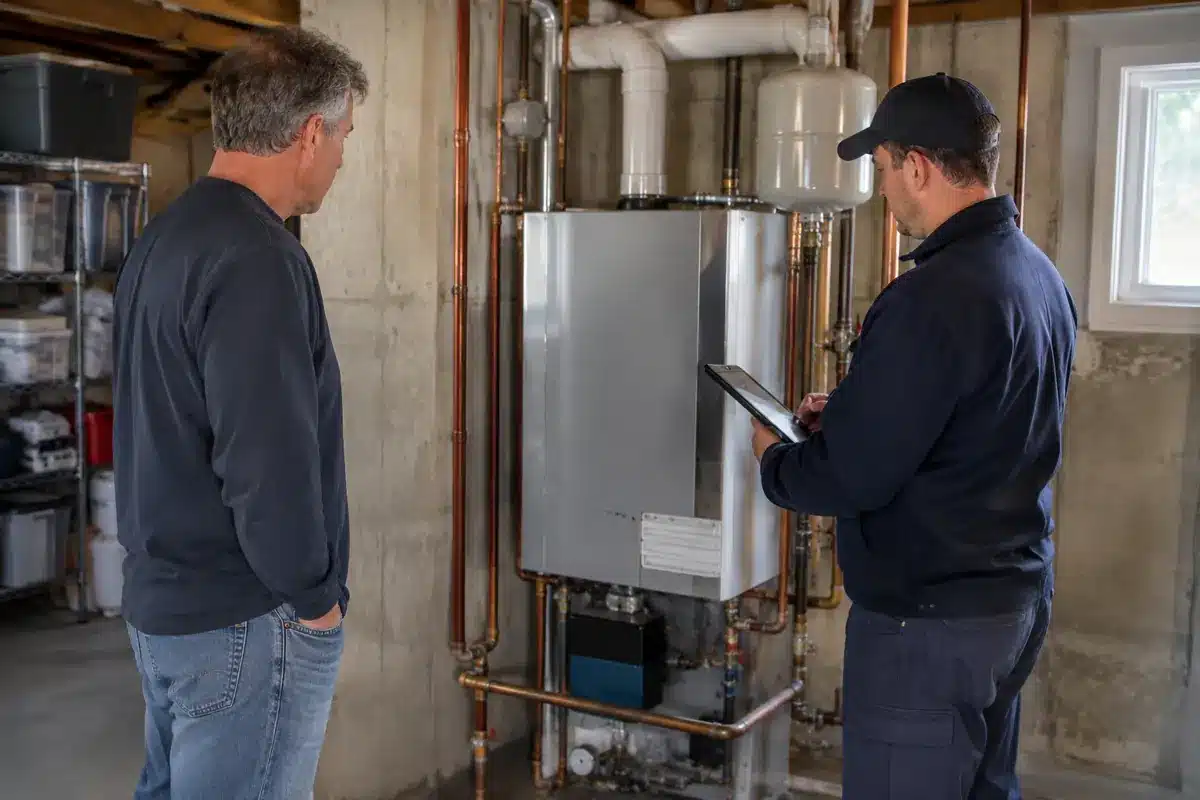
Annual Boiler Maintenance Checklist
A yearly tune-up before heating season, ideally in early fall, is the single best way to avoid an unexpected breakdown during a cold snap. A thorough service visit should include these steps.
- Inspect and test the pressure relief valve and pressure/altitude gauge for proper operation.
- Check the expansion tank and overall system pressure, correcting as needed.
- Inspect the heat exchanger and clean or flush it only when the boiler manufacturer or system condition calls for it.
- Inspect the flue and venting for blockages, corrosion, or improper clearance to combustible materials.
- Test the pilot, ignition system, and all safety controls and limit switches.
- Check for leaks at valves, pipe joints, and the circulator pump seal.
- Verify the thermometer and temperature controls are accurate and functioning.
- Bleed radiators or baseboards to remove trapped air that causes cold spots and noise.
For boilers subject to N.J.A.C. 12:90, ASME CSD-1 calls for periodic testing and maintenance at least as often as the manufacturer requires, with applicable results recorded; New Jersey’s Mechanical Inspection Bureau has warned regulated owners and contractors about failures to test after maintenance or repair. Keeping a service log is good practice even for a residential unit. For broader seasonal planning, see our guide to how often HVAC equipment needs maintenance.
How Long Should a Boiler Last?
Boilers are generally durable appliances. With regular maintenance, a residential boiler can last 15 to 25 years, and some well-cared-for systems reach 25 to 30 years. Neglect can shorten a boiler’s service life and increase the risk of premature failure. Factors that affect lifespan include proper sizing for your home, water quality, how hard the system is run during extreme weather, and whether small issues get repaired promptly instead of ignored.
If your boiler is approaching the 15-year mark, it is worth having a technician assess its overall condition, efficiency, and safety before you invest in a major repair. For background on how different equipment types compare, our page on common HVAC terms explained can help you understand what a technician means by terms like heat exchanger, circulator, or expansion tank.
Repair or Replace: How to Decide
Homeowners often face this question once a boiler starts needing frequent attention. There is no single rule, but a few guidelines help most Ocean County homeowners make a sound decision.
- For a relatively new boiler in otherwise good condition, a moderate repair may make sense.
- For an older boiler needing an expensive repair, compare the repair cost and expected remaining life with the installed cost and benefits of replacement.
- Repeated major repairs can be a sign that replacement deserves consideration.
- If natural gas is available, compare conversion and installation costs with current fuel rates, efficiency, and expected usage before deciding whether a gas boiler could reduce operating costs.
D.K. Sledzik is a recommended contractor of New Jersey Natural Gas and has converted thousands of Ocean County homes from oil, electric, or propane to natural gas heat. If replacement makes sense for your home, our team can walk you through boiler replacement options or a modern combi boiler that handles both heat and hot water. Learn more on our heating and AC services page.
Should You Consider a Navien Combi Boiler Instead?
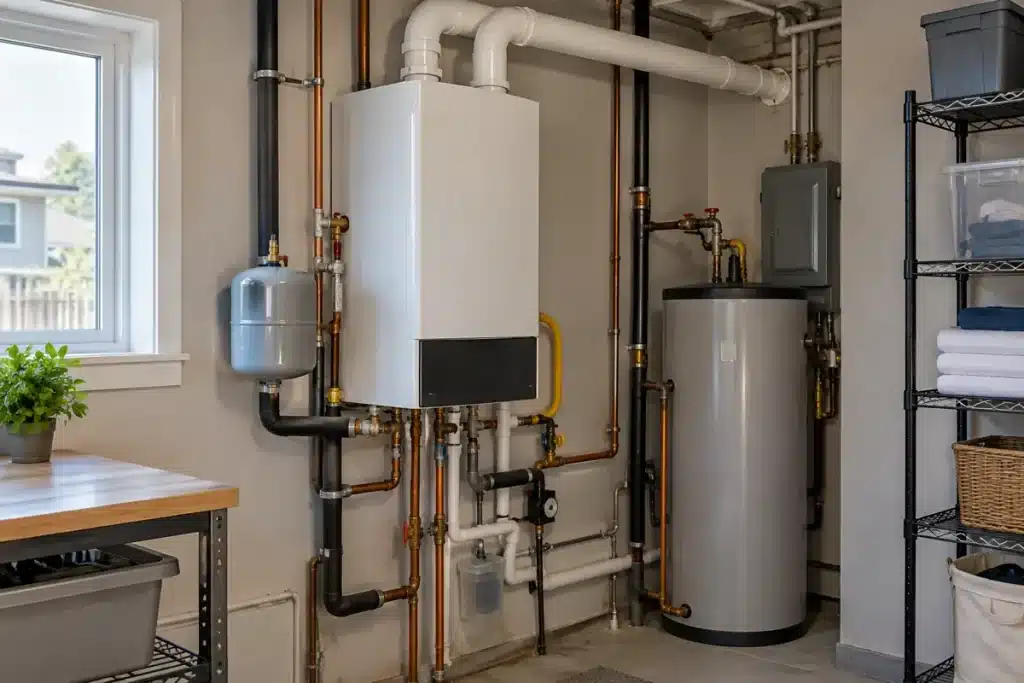
If your existing boiler is near the end of its service life, or if you are also dealing with an aging water heater, a Navien combi boiler is worth a look. A combi unit provides both space heating and on-demand hot water from one compact, high-efficiency appliance, which can be a good fit for shore homes and smaller mechanical rooms where space is tight.
D.K. Sledzik services and installs Navien equipment among the brands it works with, alongside Burnham and Weil-McLain boilers more commonly found in older Ocean County homes. For a full breakdown of how combi systems work and their advantages, ask our team about Navien combi boiler installation and benefits, and ask about current rebates and financing through the NJ Clean Energy Program and NJNG SAVEGREEN financing, since program terms and amounts change and should be confirmed directly.
When to Call a Licensed Professional
Boilers involve combustion, gas lines, pressurized water, and electrical controls, which means some tasks are not safe or legal for a homeowner to handle alone. Bleeding a radiator or checking a pressure gauge is reasonable DIY territory. Relighting a pilot repeatedly, adjusting gas valves, opening the heat exchanger, or troubleshooting a suspected leak is not.
If you smell gas or suspect carbon monoxide, leave the home immediately without operating switches or equipment, then call 911 or your gas utility from a safe location. For soot or an abnormal flame, turn the boiler off only if it is safe to do so and call a licensed professional. Boilers subject to N.J.A.C. 12:90 must receive applicable testing after maintenance or repair work by a qualified professional familiar with ASME CSD-1 requirements. D.K. Sledzik Heating & Air Conditioning is licensed and insured (NJ Master HVACR #19HC00168400) and offers emergency service within 24 hours, seven days a week, including holidays, across Toms River, Brick, Lakewood, Jackson, Manchester, Berkeley, Beachwood, Lacey, Whiting, and Point Pleasant.
For more on what to do when your heat goes out unexpectedly, see our related guide, or schedule service online any time.
Protecting Your Boiler Between Service Visits
A few simple habits between professional visits can extend the life of your boiler and reduce the odds of a mid-winter breakdown.
- Keep the boiler area clear and follow the manufacturer’s required service and combustible-material clearances; never store boxes, cleaning supplies, or flammable items nearby.
- Watch the pressure gauge occasionally during heating season and note any sudden changes.
- Keep flue vents clear of leaves, debris, or nesting insects, especially after storms common to our coastal area.
- Listen for new noises such as banging, gurgling, or hissing, and schedule service before the sound gets worse.
- Test carbon monoxide detectors near the boiler room regularly, since CO leaks are a known risk with any fuel-burning appliance.
If you would rather not track all of this yourself, a seasonal maintenance plan takes the guesswork out of it. D.K. Sledzik has supported more than 10,000 maintenance-contract customers over the years and offers current plans that cover both heating and cooling systems. Read more customer experiences on our testimonials page or reach out through our contact page with questions.
Frequently Asked Questions
How often should a residential boiler be serviced?
Most manufacturers and HVAC professionals recommend one full inspection and tune-up per year, ideally in early fall before heating season begins. Homes with hard water, older boilers, or heavy daily use may benefit from more frequent checks of pressure, scale buildup, and safety controls between annual visits.
Why does my boiler keep losing pressure?
Gradual pressure loss can point to a system leak, a failing expansion tank, or a leaking automatic air vent. A technician can pressure-test the system to find the source, since repeatedly refilling the boiler without fixing the leak can cause corrosion and larger problems over time.
Is it dangerous to relight a boiler pilot myself?
Relighting a pilot once following the manufacturer’s label instructions is generally fine. If the pilot keeps going out, stop trying to relight it yourself and call a licensed technician, since repeated failures can indicate a gas valve, thermocouple, or venting problem that affects safety.
Can a boiler be converted from oil to gas?
Yes, oil-to-gas conversions are common in Ocean County and typically involve installing a new gas-fired boiler along with the necessary gas piping and venting. D.K. Sledzik has converted thousands of homes from oil, electric, or propane to natural gas heat; potential savings depend on equipment efficiency, fuel rates, installation cost, and household usage.
What is boiler kettling and is it serious?
Kettling is the banging or rumbling noise caused by mineral scale trapping steam pockets inside the heat exchanger, similar to a kettle boiling. It is not an emergency, but it signals scale buildup that reduces efficiency and can eventually damage the heat exchanger if left unaddressed, so a descaling service is worth scheduling soon.
How do I know if I need a new boiler instead of another repair?
Consider replacement when an older boiler needs repeated or expensive repairs, has significant safety or reliability concerns, or compares poorly with an appropriate new system after installation and operating costs are considered. A technician can inspect the unit’s overall condition and help you weigh repair cost against expected remaining lifespan.
Sources
- September 6, 2023 Advisory on Reporting Boiler Incidents and Testing of Boilers | NJ Department of Labor
- Pre-Inspection Checklist for Hot Water Heating or Hot Water Supply Boilers | NJ Department of Labor
Talk to a Local HVAC Team You Can Reach
D.K. Sledzik Heating & Air Conditioning, Inc. has served Toms River and Ocean County homeowners since 1974, with service within 24 hours, 7 days a week, including holidays, at 732-349-0389. Schedule service online or contact us with a question about your system.
Written by the team at D.K. Sledzik Heating & Air Conditioning, Inc., a family-owned HVAC contractor in Toms River, NJ since 1974. NJ Master HVACR License #19hc00168400 · NJ Home Improvement Contractor #13VH01401100.