Furnace Installation in Toms River & Ocean County: What Homeowners Need to Know
September 15, 2026
Boiler Repair and Maintenance Guide for Toms River and Ocean County Homeowners
October 6, 2026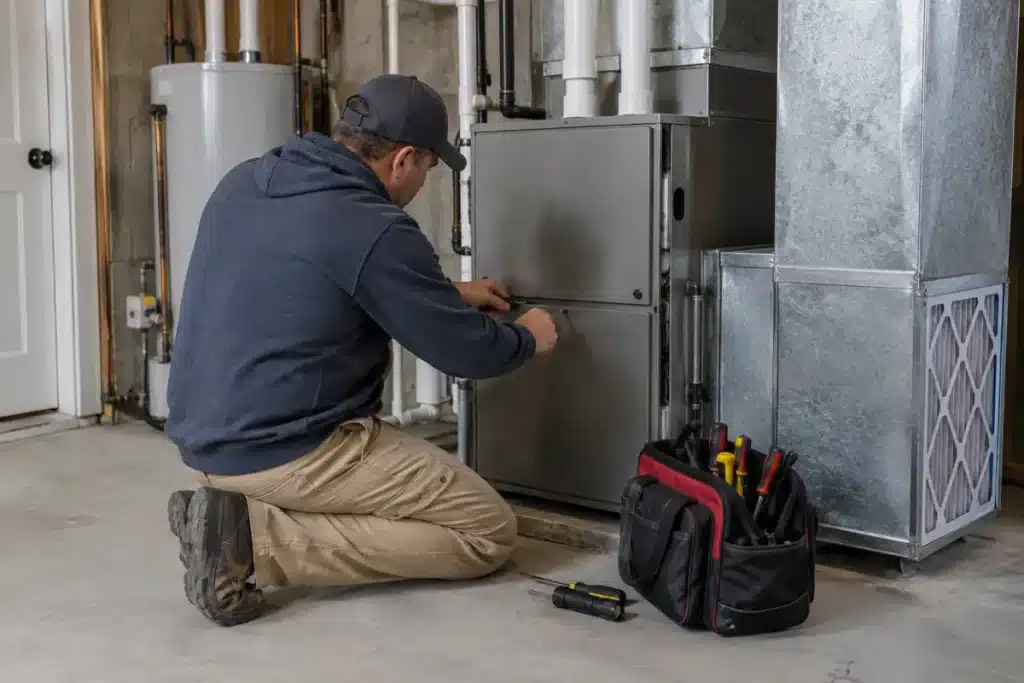
Quick answer: Angi reports that most furnace repairs cost between $133 and $505 nationally, depending on the failed part, with emergency service often costing more. Common causes of no-heat calls include dirty filters, ignition or pilot problems, faulty thermostats, worn blower motors, and cracked heat exchangers. D.K. Sledzik offers scheduled furnace repair and emergency service within 24 hours, seven days a week, throughout Toms River and Ocean County.
Key takeaways
- Angi reports that most furnace repairs run $133 to $505 nationally, with emergency or after-hours calls often costing more.
- Dirty filters, ignition failures, thermostat problems, and worn blower motors are among the most common causes of a furnace that won’t heat.
- A cracked heat exchanger or repeated major repairs on an older unit are strong signs it’s time to replace rather than repair.
- Gas smells, carbon monoxide alarms, or scorch marks near the furnace are safety emergencies that require shutting off the system and calling a licensed technician immediately.
- D.K. Sledzik has served Toms River and all of Ocean County since 1974, offering scheduled furnace repair and emergency service within 24 hours, seven days a week.
Why Is My Furnace Not Heating? Common Causes
A furnace that runs but doesn’t produce heat, or won’t start at all, usually points to one of a handful of familiar problems. The same short list of culprits commonly affects furnaces across Toms River and Ocean County each winter.
- Dirty or clogged air filter: Restricted airflow forces the furnace to work harder and can trip a safety switch that shuts the unit down entirely.
- Ignition or pilot light failure: A dirty flame sensor, faulty igniter, or gas supply issue can prevent the burners from lighting.
- Thermostat problems: Dead batteries, miscalibration, or wiring issues can make a perfectly good furnace seem broken.
- Worn blower motor or capacitor: If the burners light but no warm air comes out of the vents, the blower assembly is a frequent suspect.
- Tripped limit switch or clogged condensate line: Common on high-efficiency furnaces, especially after a power outage or heavy rain.
- Cracked heat exchanger: A serious safety issue, discussed below, that usually signals the furnace needs replacing rather than repairing.
Furnaces in shore and vacation homes can develop problems that go unnoticed when the property sits vacant for long periods. If your system has been cycling oddly or smells unusual since you last opened the house up, it is worth a professional look before you need it on a cold night.
Safe Checks Before Scheduling Furnace Repair
Before scheduling service, note the thermostat setting, filter condition, furnace model, and any unusual sounds or odors so you can describe the problem clearly. If any of these point to something beyond simple maintenance, it is time to call in a professional.
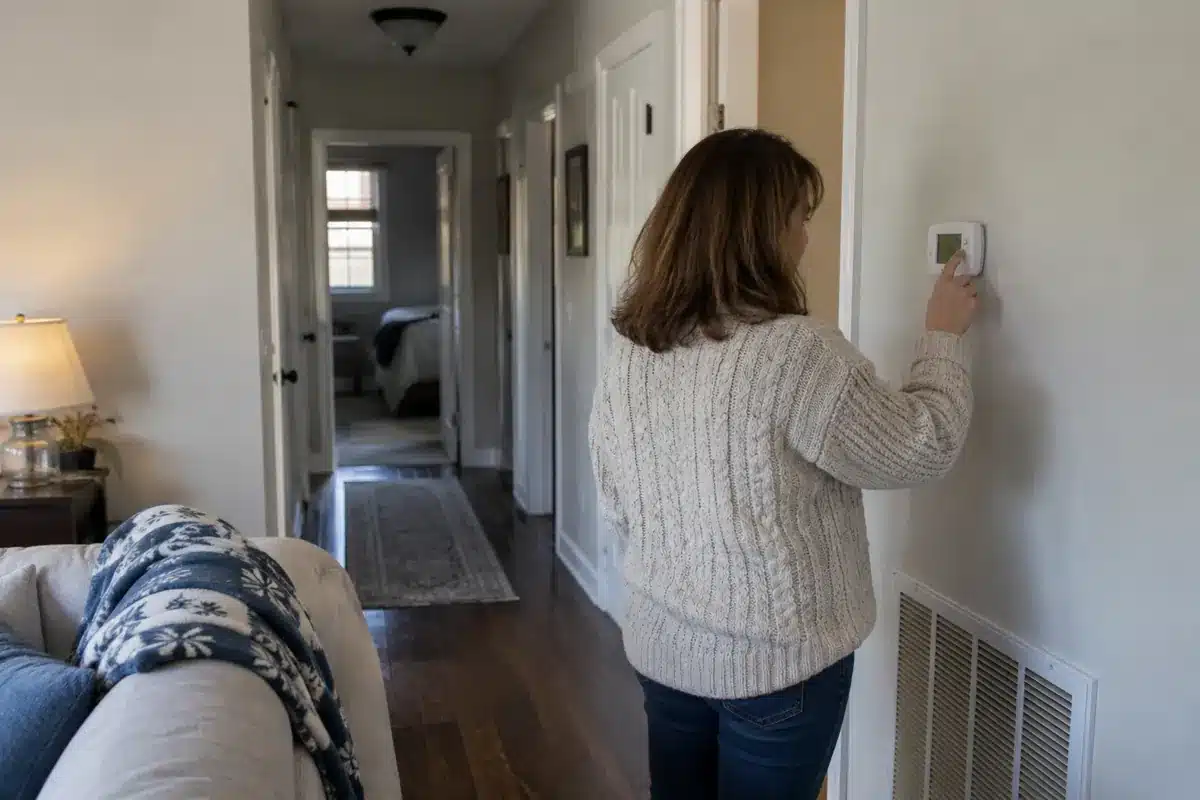
- Check the thermostat. Confirm it is set to “heat” and the temperature is above room temperature. Replace batteries if it is a battery-powered model.
- Check the filter. Hold it up to a light. If you cannot see light through it, replace it. A dirty filter is one of the most common, and easiest to fix, causes of a furnace not heating.
- Check the power switch and breaker. Furnaces have a dedicated switch, often near the unit, that looks like a light switch. Make sure it has not been bumped off, and check your electrical panel for a tripped breaker.
- Listen and smell. Unusual banging, screeching, or a persistent gas odor means stop troubleshooting and call a professional immediately.
If you have worked through this list and the furnace still is not heating, our HVAC FAQ page covers more background, and our common HVAC terms guide can help you describe the problem accurately when you call.
When Is a No-Heat Situation an Emergency?
Not every furnace problem needs a middle-of-the-night call, but some situations cannot wait. Treat the following as emergencies. For a gas odor or carbon monoxide alarm, leave the home immediately, call 911 or the gas utility from a safe location, and do not re-enter until responders say it is safe. For smoke or fire, leave and call 911.
- A carbon monoxide detector is sounding, or anyone in the home has headache, dizziness, or nausea symptoms consistent with CO exposure.
- You smell gas near the furnace or gas piping.
- You see scorch marks, soot, or smoke around the unit.
- There is no heat at all during a hard freeze, especially with young children, older adults, or anyone with a health condition in the home.
- Water is actively leaking near electrical components.
D.K. Sledzik Heating & Air Conditioning provides emergency service within 24 hours, seven days a week, including holidays, often the same day, throughout Toms River and Ocean County. If you need urgent help, call 732-349-0389; D.K. Sledzik’s phone line is available 24/7.
What Happens During a Professional Furnace Repair Visit
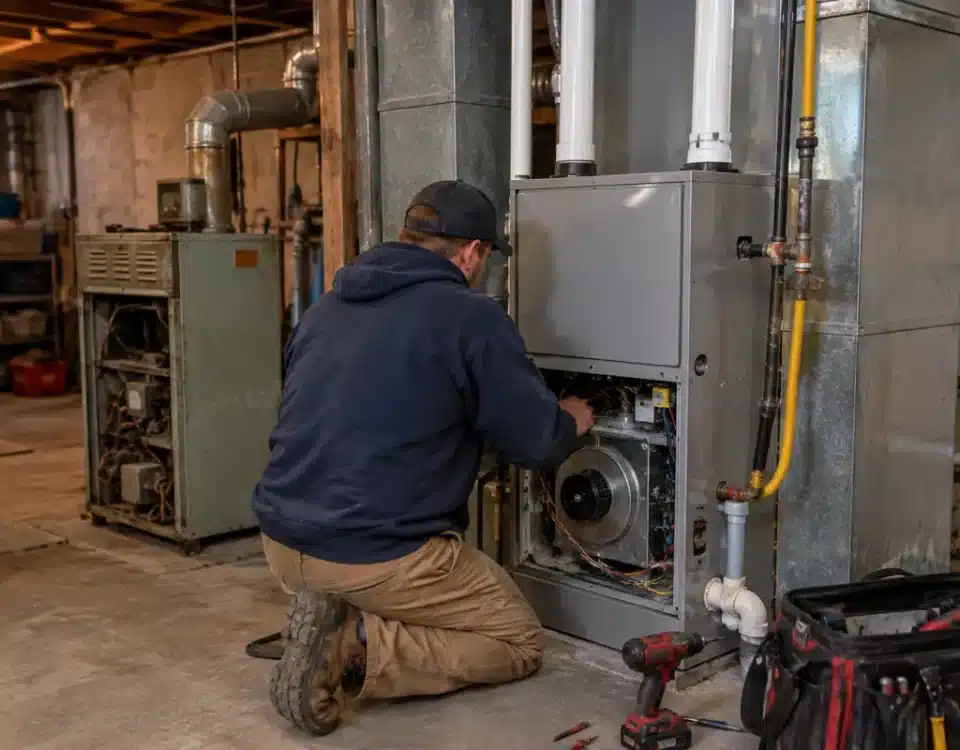
Knowing what to expect helps you prepare and ask good questions. A typical scheduled repair visit follows a consistent pattern.
- Safety check first. The technician checks for gas leaks, carbon monoxide, and electrical hazards before touching anything else.
- Diagnosis. The tech tests the thermostat call, ignition sequence, flame sensor, blower operation, and safety switches to isolate the failed component.
- Explanation and estimate. You should get a plain-language explanation of what failed, why, and a cost estimate before any repair work begins.
- Repair or replacement of the part. Common parts replaced include igniters, flame sensors, capacitors, blower motors, control boards, and thermostats.
- Testing and cycle verification. The furnace is run through a full heating cycle to confirm it reaches temperature and shuts off properly.
- Documentation and recommendations. A good technician will tell you if they noticed early warning signs of other problems, such as a weakening heat exchanger or an aging blower motor, so you can plan ahead rather than get surprised later.
Angi recommends sharing the furnace’s make, model, and symptoms when scheduling service because that information can help the technician prepare the appropriate tools and parts.
How Much Does Furnace Repair Cost?
Furnace repair costs vary widely depending on what broke and how urgently you need it fixed. According to Angi, the national average furnace repair cost is around $318, with most homeowners paying between $133 and $505, while emergency or after-hours repairs commonly run $300 to $1,200 due to higher labor rates. These are general industry figures, not a quote from D.K. Sledzik, and your actual cost depends on your specific furnace and the parts needed.
| Repair Type | DIY Guidance | What Drives the Price |
|---|---|---|
| Filter replacement or basic airflow fix | Replacing a correctly sized filter is generally DIY-safe; persistent airflow problems need professional diagnosis | Filter size, access, and whether other airflow issues are found |
| Thermostat replacement or recalibration | Checking settings and replacing batteries is generally DIY-safe; wiring work should be handled by a professional | Smart vs. basic model, wiring complexity |
| Igniter or flame sensor replacement | Professional service is recommended because the repair involves ignition components and may involve gas or electrical hazards | Part cost, furnace brand, and labor time |
| Blower motor or capacitor repair | Professional service is recommended because motors and capacitors involve electrical and mechanical hazards | Motor size, whether the whole assembly needs replacing |
| Heat exchanger repair or related safety work | Not DIY-safe; shut the system down and arrange a professional safety inspection | Furnace age, part availability, extent of damage |
| Emergency or after-hours service call | Do not attempt a hazardous repair to avoid an emergency fee; use professional service for suspected gas, combustion, electrical, or fire risks | Time of day, day of week, and how fast you need a technician on-site |
Angi also recommends budgeting $150 to $200 for a yearly furnace tune-up, which is often the cheapest way to avoid a bigger repair bill later. D.K. Sledzik offers a free service call when a heating repair is completed, and seasonal maintenance plans that can catch small problems before they become expensive ones.
Repair or Replace? How to Decide
Not every furnace problem is worth fixing. A good technician should give you an honest answer, not just a repair bill, when your furnace is getting old or has a history of failures.
| Factor | Favors Repair | Favors Replacement |
|---|---|---|
| Furnace age | Under 12 years old | Over 15 to 18 years old, which is the typical HVAC equipment lifespan range |
| Repair cost vs. value | The repair is modest relative to replacement cost | The repair is costly relative to replacement and the furnace’s remaining service life |
| Repair history | First major repair in several years | Repeated major repairs in a short period |
| Efficiency | Furnace already meets modern efficiency standards | Furnace is a low-efficiency older model running up gas bills |
| Heat exchanger condition | Heat exchanger is intact | Heat exchanger is cracked, which is a safety issue, not just a performance one |
A confirmed cracked heat exchanger is a serious safety issue because combustion gases may escape into the home. The furnace should remain off while a qualified professional evaluates whether an approved component replacement is practical or full furnace replacement is the safer choice. If you are weighing your options, our residential furnace installation page covers what a new system installation involves, and D.K. Sledzik can explain repair and replacement costs, available financing, and current NJ Clean Energy Program rebate terms for qualifying equipment. Details on current rebate terms are on our Upgrade and Save page.
Furnace Safety Limits: What Not to DIY
Basic maintenance, like changing a filter or resetting a tripped breaker, is reasonable for most homeowners to handle. Gas furnaces involve combustion, fuel-gas piping, line-voltage electrical components, and carbon monoxide risk, so internal diagnosis and repair should be left to a licensed professional.
- Never attempt to repair gas valves, gas piping, or ignition systems yourself. New Jersey requires HVACR contractors to hold a license through the State Board of Examiners of Heating, Ventilating, Air Conditioning and Refrigeration Contractors, and gas work specifically should only be handled by a licensed professional.
- Do not bypass a safety switch or limit switch that keeps shutting the furnace off. It is doing its job, and overriding it can create a fire or carbon monoxide hazard.
- Do not attempt electrical repairs on the blower motor, control board, or furnace wiring unless you are a licensed electrician or HVAC technician.
- Do replace filters, check the thermostat, and keep the area around the furnace clear of stored items and debris.
This Old House notes that while DIY furnace troubleshooting can save money on simple issues, professional repair is worth the added cost for anything involving gas, electrical systems, or safety components, because a qualified technician can test gas, electrical, and safety components with the proper equipment; ask what warranty, if any, applies to the repair.
Why Choose a Local Ocean County Furnace Repair Company
D.K. Sledzik Heating & Air Conditioning has been a family-owned HVAC contractor based in Toms River since 1974, serving homeowners throughout Ocean County, including Brick, Lakewood, Jackson, Manchester, Berkeley, Beachwood, Lacey, Whiting, and Point Pleasant. Lynda Sledzik-Browne, who holds a New Jersey Master HVACR license, runs the company today.
Local experience matters here in a few specific ways. Salt air can accelerate corrosion on outdoor HVAC components, while shore and vacation homes may have heating problems that go unnoticed during long vacant periods. For homeowners considering a fuel change, D.K. Sledzik also provides gas-conversion services. D.K. Sledzik is a recommended contractor of New Jersey Natural Gas and has converted thousands of area homes from oil, electric, or propane to natural gas heat over the years.
D.K. Sledzik installs and services HVAC and water-heating equipment from brands listed on its site, including Carrier, Goodman, Bradford White, Weil-McLain, Burnham, and Navien. You can see the full range of equipment on our equipment brands page, review our complete heating and AC services, or read what neighbors have said on our testimonials page. To schedule a repair, visit our online scheduling page or call 732-349-0389, available 24/7.
Frequently Asked Questions
How long does a furnace repair visit usually take?
Straightforward furnace repairs may be completed during the initial visit once the problem is diagnosed, while more involved work can take longer. More involved repairs, such as blower motor replacement or heat exchanger issues, can take longer if parts need to be sourced.
Will my furnace repair be covered under warranty?
It depends on the age of your system and whether the manufacturer’s warranty is still active. D.K. Sledzik states that new furnace and air-conditioning replacement systems it provides include a 10-year manufacturer warranty and a 5-year labor warranty. Coverage for an existing furnace depends on its warranty terms, age, registration, and the failed part.
Can a furnace repair be done the same day in Ocean County?
D.K. Sledzik provides emergency service within 24 hours, seven days a week including holidays, and service is often available the same day. Repair timing depends on diagnosis, technician availability, and whether the required part is available.
Is it normal for a furnace to make noise when it starts?
A soft whoosh or click at startup is normal. Persistent banging, screeching, or rattling can indicate a loose component, blower problem, ignition issue, or another fault that warrants professional inspection; shut the furnace off immediately if you also smell gas, see smoke or soot, or hear a carbon monoxide alarm.
How often should a furnace be serviced to avoid repairs?
Most manufacturers and HVAC professionals recommend one tune-up per year, ideally in early fall before heating season begins. Regular tune-ups catch small issues like worn belts or dirty sensors before they cause a breakdown, and can extend the furnace’s overall service life.
Sources
- Angi: How Much Does the Average Furnace Repair Cost?
- Angi: Most Common Questions & Answers About Furnace Repair
- This Old House: How To Fix a Furnace That’s Not Turning On
- NJ Division of Consumer Affairs: HVACR Contractor Board Laws and Regulations
Talk to a Local HVAC Team You Can Reach
D.K. Sledzik Heating & Air Conditioning, Inc. has served Toms River and Ocean County homeowners since 1974, with service within 24 hours, 7 days a week, including holidays, at 732-349-0389. Schedule service online or contact us with a question about your system.
Written by the team at D.K. Sledzik Heating & Air Conditioning, Inc., a family-owned HVAC contractor in Toms River, NJ since 1974. NJ Master HVACR License #19hc00168400 · NJ Home Improvement Contractor #13VH01401100.