Seasonal HVAC Maintenance Contracts: What Toms River Homeowners Should Know
October 20, 2026
Safe DIY HVAC Maintenance Toms River Homeowners Can Do Between Tune-Ups
November 3, 2026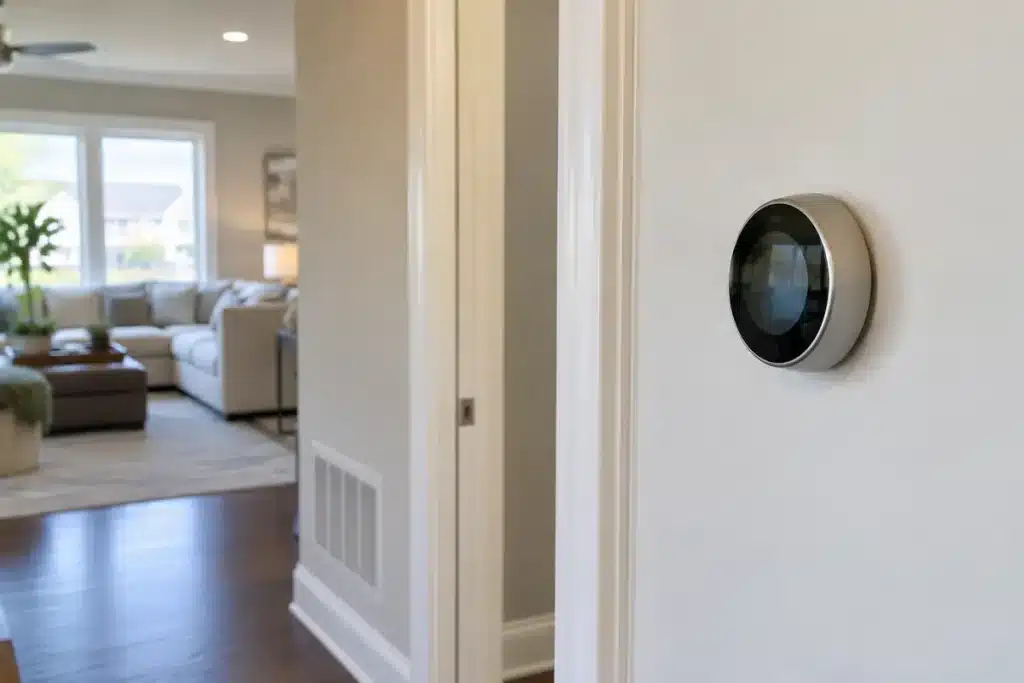
Quick answer: Smart thermostat installation in Toms River typically costs $200–$500 including labor, per HomeAdvisor, though older boilers, multi-stage systems, or missing C-wires can push costs higher. D.K. Sledzik provides thermostat and control services across Ocean County and can check whether a selected model is compatible with your HVAC system.
Key takeaways
- A smart thermostat typically costs $200–$500 installed, according to HomeAdvisor, with price driven by wiring and system complexity.
- ENERGY STAR certified smart thermostats are verified through field data to cut heating and cooling costs, per NJ Clean Energy.
- Older oil boilers may need an adapter, while multi-stage and zoned systems require careful compatibility checks and may need professional installation.
- D.K. Sledzik has served Toms River and Ocean County since 1974 and can confirm compatibility before you buy a thermostat.
- The U.S. Department of Energy advises setting the thermostat as high as is comfortable in summer; setbacks of 7–10 degrees for about eight hours a day may save up to 10% a year on heating and cooling.
What Is a Smart Thermostat and How Is It Different From a Programmable One?
A programmable thermostat lets you set a fixed weekly schedule, but it has no internet connection and no ability to learn your habits. A smart or Wi-Fi thermostat connects to your home network, can be controlled from a smartphone app, and often adjusts itself based on occupancy, weather, and your actual temperature preferences over time.
According to NJ Clean Energy, a smart thermostat is a Wi-Fi enabled device that automatically adjusts heating and cooling settings for optimal performance, while an ENERGY STAR certified model has been independently verified using real field data to deliver energy savings. Not every Wi-Fi thermostat carries that certification, so it is worth checking before you buy.
For Jersey Shore homes, the remote access feature matters beyond convenience. For a shore or vacation property that sits empty at times, remote access can help you monitor indoor temperatures, respond to low-temperature alerts, and adjust the air conditioning before you arrive.
Is My Heating and Cooling System Compatible With a Smart Thermostat?
Compatibility depends on your equipment, not just your preferred thermostat brand. ENERGY STAR notes that smart thermostats work with most forced-air systems installed after 1975, but oil boilers and furnaces often need an adapter, and variable-speed, multi-stage, or zoned systems usually require a professional to select and program a compatible model correctly.
Homes with hot-water boilers, converted heating systems, additions, or multiple zones may need an expert compatibility review before a smart thermostat is selected. These systems are exactly the kind ENERGY STAR flags as needing expert evaluation.
Quick Compatibility Checklist
- Remove your current thermostat cover and look for thin, low-voltage wires rather than thick line-voltage wires.
- Check whether you have a dedicated C-wire (common wire) already run to the thermostat location.
- Note whether your furnace or air handler is single-stage, two-stage, or variable-speed.
- Identify whether your home has multiple heating or cooling zones controlled separately.
- If you have baseboard electric heat or an in-wall heater, most smart thermostats will not work without special equipment.
If you are unsure what any of these terms mean, our common HVAC terms explained page is a good place to start before you shop.
Do I Need a C-Wire, and What Happens If I Don’t Have One?
Most smart thermostats need a C-wire to stay continuously powered for Wi-Fi connectivity and touchscreen displays, unlike basic programmable thermostats that can run on batteries. If your home’s low-voltage wiring bundle does not include a common wire, you may have a few options.
- Add a C-wire: A technician can often run a new wire through existing wall cavities, though this is more involved in finished walls or older plaster construction common along the shore.
- Use a power extender kit: Some thermostat manufacturers sell an adapter that borrows power from existing wires without a true C-wire, though this does not work with every system.
- Choose a model designed for the existing wiring: Some thermostats can operate without a C-wire, but compatibility and power requirements must be verified with the manufacturer.
According to HomeAdvisor, the cost to install a smart thermostat typically falls between $200 and $500, with the final number shaped by your wiring situation, the thermostat brand and model, and whether a C-wire needs to be added. HomeAdvisor also notes that simple installs can take as little as 30 minutes, while jobs requiring new wiring or multi-zone programming can run two hours or more.
Step-by-Step: How Smart Thermostat Installation and Pairing Works
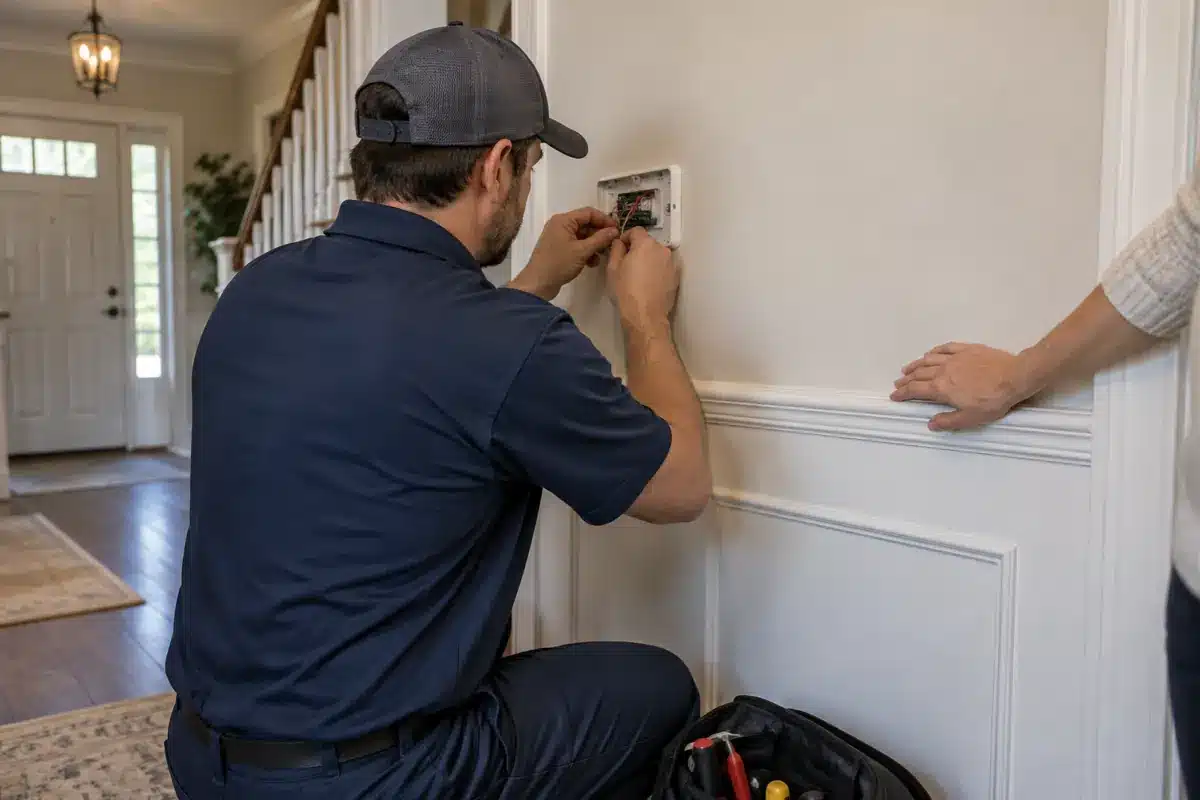
Whether you plan to install the thermostat yourself or have a professional handle it, the general sequence looks similar. Consumer Reports outlines the core steps for a DIY install, which we summarize here along with the setup steps that come after.
- Turn off power to the HVAC system at the breaker before touching any wiring.
- Remove the old thermostat cover and take a photo of the wire terminals before disconnecting anything.
- Label each wire with the terminal letter it was connected to.
- Mount the new thermostat’s backplate, pulling wires through before screwing it to the wall.
- Reconnect each wire to its matching terminal on the new backplate.
- Snap the faceplate onto the backplate and restore power.
- Connect the thermostat to your home Wi-Fi network through the manufacturer’s app.
- Create your account, confirm your system type in the app, and build an initial schedule.
On multi-stage, zoned, or boiler-based systems, step 8 is where many DIY installs run into trouble, because the app settings have to match your actual equipment or the system can short-cycle or fail to heat and cool properly. This is the point where it often makes sense to have a licensed technician confirm the configuration rather than guess.
When Should You Hire a Professional Instead of a DIY Install?
Some manufacturers provide DIY instructions for compatible single-stage forced-air systems with an existing C-wire, but homeowners should follow the model’s instructions and stop if the wiring or equipment configuration is unclear. ENERGY STAR itself notes that variable-speed, multi-stage, or zoned systems will likely need a professional to install a thermostat capable of handling that complexity.
Permit and licensing requirements depend on the wiring voltage and scope of work; ask the local code office or use a qualified HVAC or electrical professional when new wiring is required. Call a licensed professional rather than attempting the job yourself if any of these apply:
- Your system is a hot water boiler, oil-to-gas conversion, or combi unit rather than standard forced air.
- You have multiple heating or cooling zones in the house.
- There is no C-wire and running one means opening finished walls.
- Your furnace or air handler is multi-stage or variable-speed.
- You are not comfortable working near line-voltage electrical connections.
D.K. Sledzik has served Toms River and communities across Ocean County since 1974 and provides service for forced-air, boiler, and multiple-zone systems. If your setup involves a boiler or recent gas conversion, our boiler repair and care page covers how those systems typically pair with thermostats.
How Much Can a Smart Thermostat Actually Save You?
For the average American household, NJ Clean Energy notes that nearly half of the annual energy bill, more than $900 per year, goes toward heating and cooling, which is why thermostat settings matter so much. The U.S. Department of Energy advises setting the thermostat as high as is comfortable in summer and notes that setbacks of 7–10 degrees for about eight hours a day may save up to 10% a year on heating and cooling.
Smart thermostats make that kind of setback schedule easier to stick to because they learn your patterns and apply energy-saving temperatures automatically when you are asleep or away, rather than relying on you to remember to adjust a dial. NJ Clean Energy estimates that if every household used an ENERGY STAR certified smart thermostat, nationwide savings would reach 56 trillion BTUs and $740 million per year.
These are national averages, not a guarantee for any specific home. Your actual savings depend on your system’s efficiency, your home’s insulation and air sealing, local weather, previous thermostat settings, and how consistently you use the scheduling features.
| Thermostat Type | Installation Considerations | Best For |
|---|---|---|
| Basic programmable | Uses a fixed schedule and does not require Wi-Fi or app setup | Homeowners who want a fixed weekly schedule without Wi-Fi or app control |
| Wi-Fi smart thermostat | Check HVAC compatibility and whether reliable power through a C-wire is required | Forced-air homes with a C-wire wanting remote access and usage insights |
| Learning / ENERGY STAR eco thermostat | May include learning capabilities, occupancy sensors, and voice assistant integration | Households wanting automatic setback schedules and verified energy savings |
| Multi-zone smart system | Zoned, variable-speed, and multi-stage systems will likely require professional installation | Homes with two or more heating/cooling zones needing coordinated control |
Cost figures above are estimated national ranges based on HomeAdvisor and ENERGY STAR data, not D.K. Sledzik pricing. A tune-up and thermostat calibration check, which our team includes as part of seasonal service, also helps make sure the thermostat you already have is reading temperature accurately before you invest in a new one.
What About Rebates for Smart Thermostats in New Jersey?
New Jersey residents may qualify for rebates on ENERGY STAR certified smart thermostats through the NJ Clean Energy Program, and New Jersey Natural Gas customers may have access to SAVEGREEN 0% on-bill repayment financing for qualifying high-efficiency equipment upgrades. Program amounts and eligibility change over time, so check current terms directly at NJCleanEnergy.com or SaveGreenProject.com before assuming a specific rebate amount.
D.K. Sledzik is a recommended contractor of New Jersey Natural Gas and has converted thousands of area homes from oil, electric, and propane heat to gas over the years, which means our team is familiar with how thermostat upgrades fit into a broader efficiency or conversion project. Visit our rebates and financing page for a walkthrough of what is currently available, or ask us directly when you schedule service.
Keeping Your Smart Thermostat Working Right Year-Round
A smart thermostat is only as accurate as the system it is reading and controlling. Thermostat miscalibration can cause inaccurate readings, while dirty filters or aging HVAC equipment can reduce comfort and system performance; seasonal maintenance still matters after a thermostat upgrade.
- Replace or check your furnace and AC filters regularly, since clogged filters reduce airflow and can cause your system to work harder than the thermostat’s schedule accounts for.
- Have your cooling system tuned up before summer, which typically includes a thermostat calibration check, and your heating system tuned up before winter.
- Keep the thermostat’s firmware and app updated so scheduling and remote-access features continue working correctly.
- Reconfirm your system settings in the app any time you have major HVAC work done, since a technician may need to adjust stage or zone settings.
D.K. Sledzik offers seasonal maintenance plans, and our maintenance contracts for homeowners page explains how a plan can bundle thermostat checks with the rest of your system’s annual service. If you are weighing how often your equipment actually needs attention, our guide on how often HVAC maintenance is really needed walks through that in more detail, and our spring AC tune-up checklist covers what a seasonal cooling check typically includes.
Frequently Asked Questions
Can I install a smart thermostat myself?
If your system is a simple single-stage forced-air setup with an existing C-wire, many homeowners can install a smart thermostat themselves by following the manufacturer’s instructions. If you have a boiler, multi-stage furnace, zoned system, or no C-wire, hiring a licensed professional reduces the risk of wiring mistakes or improper configuration.
Will a smart thermostat work with my old boiler?
It depends on the boiler and controls. ENERGY STAR notes that some older systems, including oil boilers, may need an adapter to work with a smart thermostat, and hydronic or multi-zone boiler setups often require a technician to select a compatible model and wire it correctly.
How long does smart thermostat installation take?
HomeAdvisor reports that simple installations can take as little as 30 minutes, while more complex jobs involving new wiring, multiple zones, or multi-stage equipment can take two hours or more. Most technicians also charge a minimum service call fee regardless of job length.
What is the difference between a smart thermostat and an eco thermostat?
“Eco thermostat” is a marketing term rather than a standardized thermostat category. Look for ENERGY STAR certification if you want a model whose energy performance has been independently evaluated using field data.
Do smart thermostats work with multi-zone heating systems?
Yes, but ENERGY STAR notes that zoned systems typically need a professional to install a thermostat built to handle multiple zones, since each zone may require its own thermostat or a controller that coordinates them. A technician can confirm which setup matches your existing zoning hardware.
Sources
- Smart Thermostats | NJ Clean Energy Program
- Smart Thermostats | ENERGY STAR
- How Much Does Smart Thermostat Installation Cost in 2026? | HomeAdvisor
- How to Install a Smart Thermostat | Consumer Reports
Talk to a Local HVAC Team You Can Reach
D.K. Sledzik Heating & Air Conditioning, Inc. has served Toms River and Ocean County homeowners since 1974, with service within 24 hours, 7 days a week, including holidays, at 732-349-0389. Schedule service online or contact us with a question about your system.
Written by the team at D.K. Sledzik Heating & Air Conditioning, Inc., a family-owned HVAC contractor in Toms River, NJ since 1974. NJ Master HVACR License #19hc00168400 · NJ Home Improvement Contractor #13VH01401100.