Central Air Replacement Cost Guide for Toms River & Ocean County Homeowners
August 11, 2026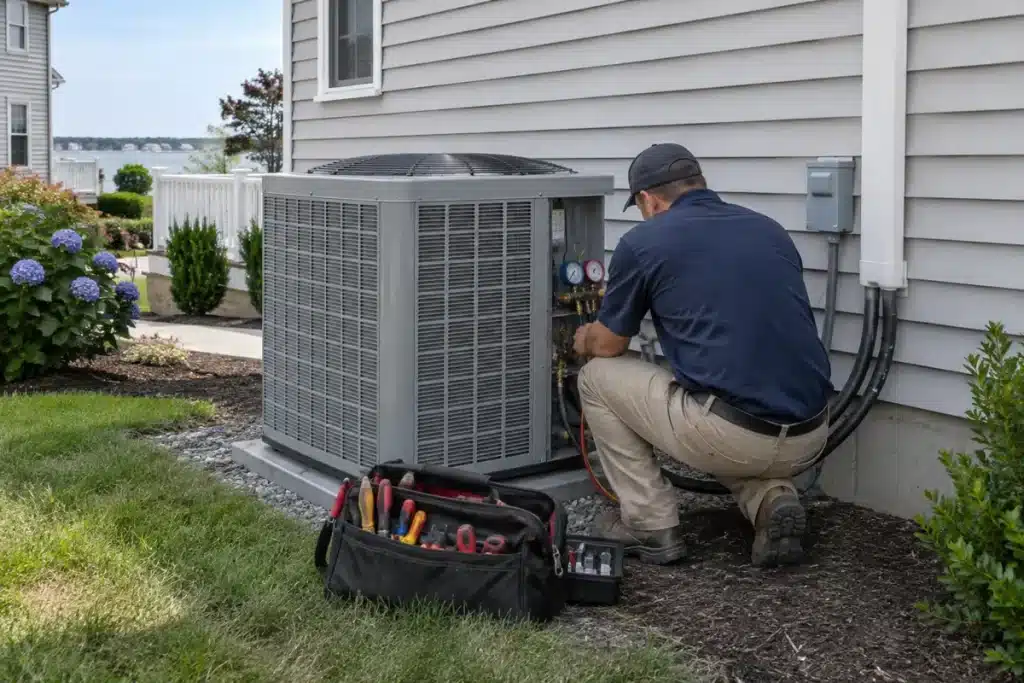
Quick answer: Professional central air installation involves a Manual J load calculation, ductwork inspection, proper refrigerant line sizing, permits, and system commissioning. Skipping these steps leads to short-cycling, humidity problems, and higher bills. D.K. Sledzik offers free estimates for Toms River and Ocean County homeowners, plus a 10-year manufacturer warranty and 5-year labor warranty with new furnace and air conditioning replacements.
Key takeaways
- A correct Manual J load calculation prevents the oversizing mistakes that cause short cycling and clammy, humid indoor air.
- Existing ductwork built for heating often needs resizing or sealing before it can handle cooling loads efficiently.
- Permit and inspection requirements depend on the project scope and are administered by the local enforcing agency under New Jersey’s Uniform Construction Code; ask whether the contractor will handle the paperwork.
- D.K. Sledzik has served Ocean County since 1974 and backs new furnace and AC replacements with a 10-year manufacturer warranty and 5-year labor warranty.
- Salt air and humid summers at the Jersey Shore make proper line set protection and coil selection especially important for long-term reliability.
What Does a Quality Central Air Installation Actually Include?
A central air installation is more than setting a condenser outside and running some copper lines. Done correctly, it is a sequence of engineering checks and physical work that helps your home cool evenly and avoid hot spots, humidity problems, and unnecessarily high bills.
The core steps include a room-by-room load calculation, an inspection of your existing ductwork (or a plan for new ducts), proper refrigerant line sizing and protection, electrical verification, permitting, and a final commissioning process that confirms the system is actually performing to spec. Skipping any one of these steps is how homeowners end up with an AC that technically runs but never quite feels right.
A free estimate gives Ocean County homeowners an opportunity to discuss system sizing, ductwork, installation scope, and equipment options before work begins. You can see the full range of heating and cooling work we handle on our heating and AC services page.
Why Does System Sizing (Manual J) Matter So Much?
The single biggest mistake in central air installation is guessing at equipment size instead of calculating it. A bigger unit is not a better unit. An oversized air conditioner cools the air quickly but shuts off before it has run long enough to pull humidity out of your home, leaving rooms that feel cold and clammy at the same time. It also short-cycles, meaning it turns on and off far more often than it should, which wastes electricity and wears out components faster.
Consumer Reports recommends that contractors size cooling equipment using the Residential Load Calculation Manual, commonly known as Manual J, published by the Air Conditioning Contractors of America (ACCA). This calculation accounts for your home’s square footage, insulation levels, window orientation, ceiling height, and local climate data, rather than relying on a rough per-square-foot rule of thumb.
Central Air Sizing Checklist
- Total conditioned square footage, measured room by room, not just the whole-house footprint
- Insulation levels in the attic, walls, and crawlspace or basement
- Window count, size, and orientation (south and west-facing glass adds cooling load)
- Ceiling height and any vaulted or cathedral spaces
- Number of occupants and major heat-generating appliances
- Local climate data for the Jersey Shore’s humid summer conditions
- Existing ductwork condition, layout, and whether it was designed for heating only
If you want a refresher on terms like SEER, tonnage, or load calculation before your consultation, our common HVAC terms page is a useful starting point.
Does Your Existing Ductwork Need to Be Checked or Replaced?
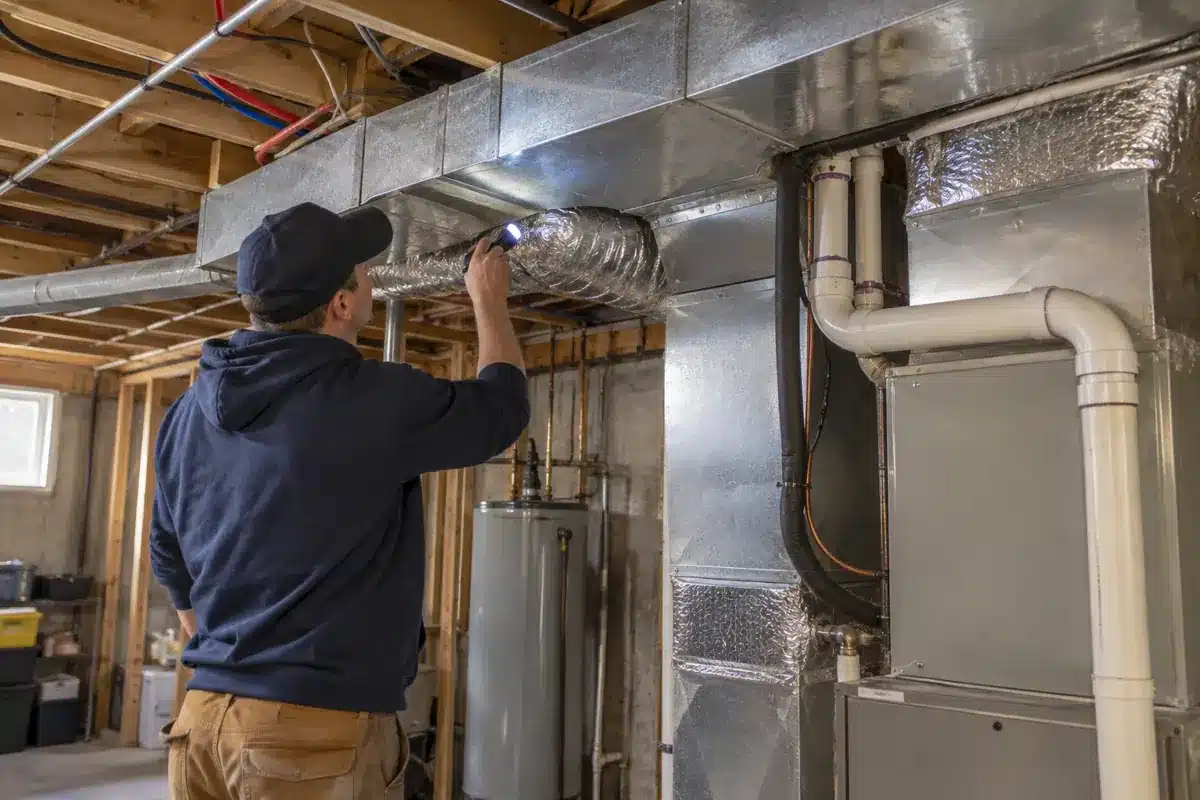
Many Ocean County homes, especially older houses near the shore, have ductwork that was originally sized for heating, not cooling. A heating-only duct layout may need different airflow capacity, register placement, or other modifications to distribute cooled air properly. This Old House notes that homes without adequate existing ductwork often need duct modification as part of a central air installation, which is one of the larger variable costs in the project.
A quality installer inspects your ducts for proper sizing, leaks, and insulation before ever quoting equipment. Consumer Reports points out that leaky, unsealed ducts can waste 20 to 30 percent of the energy used to run your system, which shows up directly on your utility bill every summer. In salt-air coastal environments, duct insulation and sealing also help control condensation and humidity infiltration, which matters more here than in drier inland climates.
If your current system already has central air but it is not keeping up, the issue may be ductwork or an aging component rather than something that requires full replacement. Our article on why your central air isn’t cooling walks through the most common causes before you commit to a new installation.
What Happens to Refrigerant Lines, Electrical, and Permits?
Once sizing and ductwork are settled, the physical installation involves several technical steps that a licensed HVAC contractor is trained to handle safely.
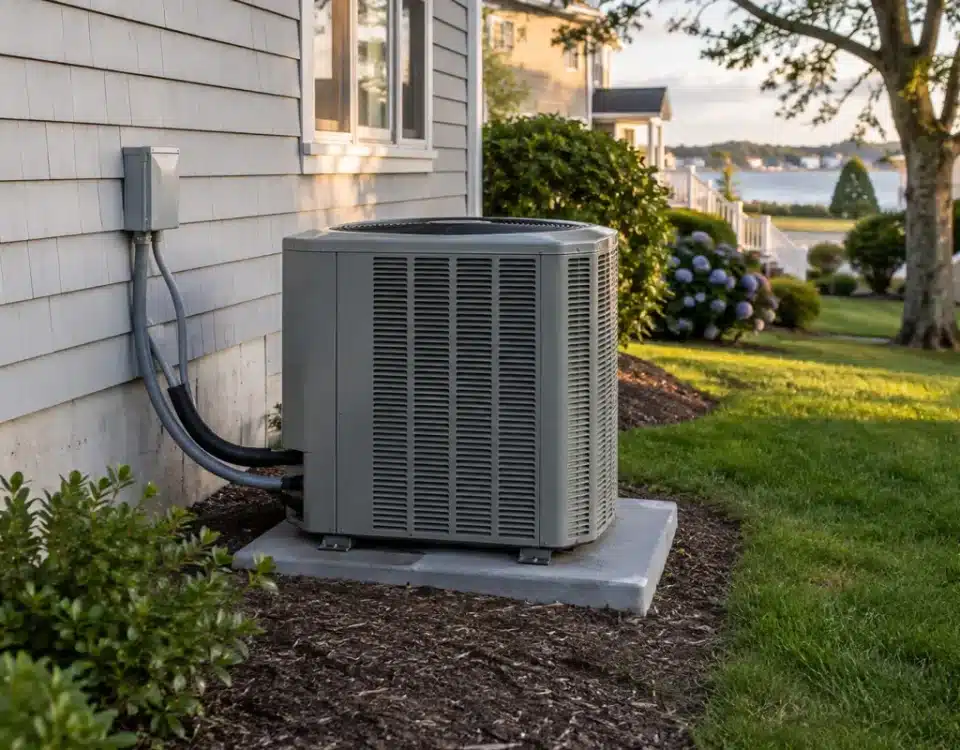
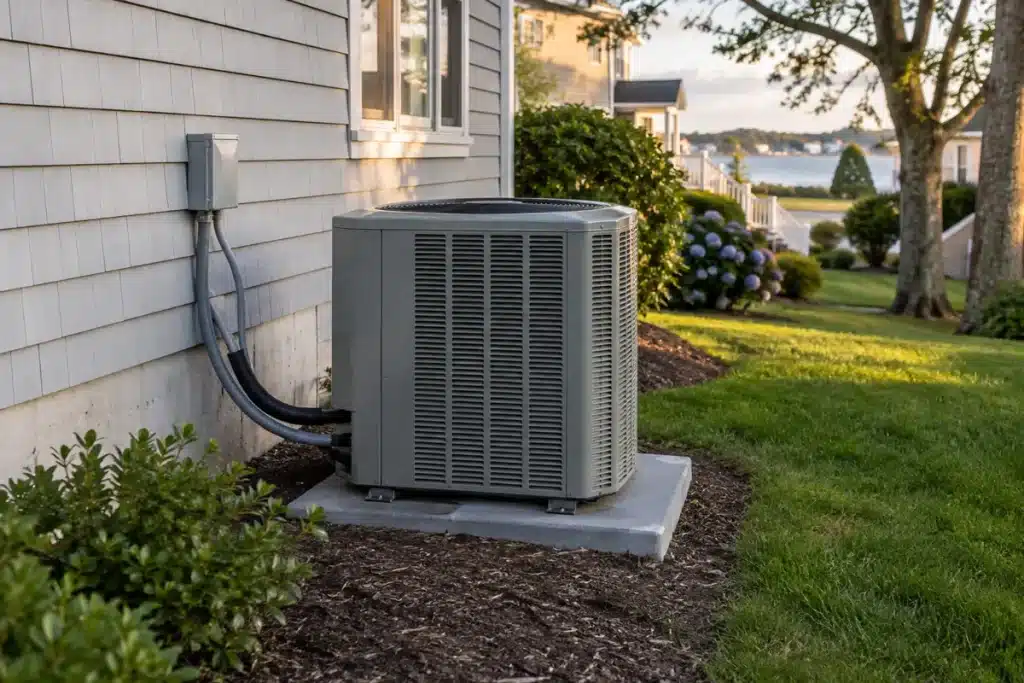
- Refrigerant line set installation: Copper lines connecting the outdoor condenser to the indoor coil must meet the equipment manufacturer’s diameter, insulation, routing, length, and refrigerant-charge requirements.
- Electrical verification: Older homes sometimes need panel or circuit upgrades to safely support a new condenser and air handler, especially homes that have been updated piecemeal over the decades.
- Condensate drainage: A properly sloped drain line and overflow safety switch prevent water damage, which is a common issue we discuss in detail on the site.
- Permits and inspection: New Jersey’s Uniform Construction Code requires heating and cooling equipment to be installed according to manufacturer instructions and applicable subcodes. Permit and inspection requirements should be confirmed with the local enforcing agency for the project’s scope.
- Startup and commissioning: The technician checks refrigerant charge, airflow, static pressure, and thermostat operation before calling the job complete.
Refrigerant handling and electrical work both carry real safety risks, which is why this is not a do-it-yourself project. New Jersey generally requires an HVACR contracting business to operate through a licensed Master HVACR contractor. D.K. Sledzik is run by Master HVACR license holder Lynda Sledzik-Browne.
How Long Does Central Air Installation Take?
Timelines vary by home and scope of work, but a straightforward replacement with reusable ductwork and no electrical upgrades is generally faster than a first-time installation. Installations that require new or modified ductwork, electrical panel work, or structural changes generally take longer and should be scheduled after an on-site assessment.
| Scenario | Scheduling Consideration | Common Added Work |
|---|---|---|
| Straightforward replacement, ducts reusable | Generally faster because existing ductwork can remain in service | Removal of old unit, line set and coil swap, commissioning |
| First-time central air install with existing furnace ductwork | Allow time to verify duct sizing, register placement, and electrical capacity | Duct modification, new supply registers, electrical check |
| Older home, no usable ductwork | Plan for a longer project because duct design, installation, and possible electrical work must be coordinated | Full duct design and installation, possible electrical panel upgrade |
| Shore or vacation home with limited access | Schedule around property access, seasonal occupancy, and equipment placement constraints | Coordination around seasonal occupancy, site access, and corrosion-conscious equipment placement |
When a permit and inspection are required, application processing and inspection scheduling can affect the overall project timeline. Scheduling around pre-season timing can also help, since many contractors, including D.K. Sledzik, offer discounts for pre-season air conditioning installations booked before the summer rush.
What Does a Typical Central Air Installation Cost?
Central air installation pricing depends on equipment efficiency, ductwork condition, electrical needs, and home size, so any number you see online is a starting point, not a quote. According to This Old House, installing central air conditioning typically runs between roughly $6,000 and $11,500 including equipment and labor, with ductwork modification and electrical upgrades pushing costs toward the higher end of that range.
These are national estimates, not D.K. Sledzik’s pricing, and the factors that move your actual cost are specific to your home: square footage, current ductwork condition, panel capacity, and the efficiency tier of equipment you choose. For a deeper breakdown of what drives installation and replacement costs in Ocean County, and a full discussion of financing and rebate programs, see our companion guide on central air replacement costs.
D.K. Sledzik offers free estimates so you get a number specific to your home before committing to anything. Financing is also available on request, and the rebates and financing page explains current NJ Clean Energy Program rebates and NJNG SAVEGREEN 0% on-bill repayment options for qualifying high-efficiency equipment. Program amounts change periodically, so check current terms there or ask us to walk you through it during your estimate.
What Warranty Comes With a New Central Air System?
A warranty is part of what you are paying for with professional installation, not just the equipment itself. D.K. Sledzik provides a 10-year manufacturer warranty and a 5-year labor warranty with new furnace and air conditioning replacements; ask for the written terms, coverage, and exclusions for your system.
Manufacturer warranties typically require proof of professional installation and registration within a set window after the job, so keep your paperwork and invoice. Labor warranties are less standardized industry-wide and worth asking about directly, since some companies only warranty parts and charge separately for the technician’s time.
We install and service equipment from established manufacturers including Carrier, Goodman, Bradford White, Honeywell, Navien, Burnham, and Weil-McLain. You can review the full lineup of equipment brands we work with on our products page.
Choosing a Central Air Installation Contractor in Ocean County
Consumer Reports advises homeowners to find a trustworthy, licensed contractor before anything else when installing or replacing central air, since the quality of the installation affects performance and lifespan as much as the equipment itself. In New Jersey, HVACR contractors must hold a license issued by the State Board of Examiners of HVACR Contractors, and it is worth asking to see that license number before signing a contract.
Quick Checklist Before You Hire
- Confirm the contractor is licensed and insured in New Jersey (ask for the license number)
- Ask whether they perform a Manual J load calculation, not a rule-of-thumb estimate
- Get a written scope covering ductwork inspection, permits, and commissioning steps
- Ask about warranty terms for both parts and labor, in writing
- Request a free estimate so you can compare scope, not just price
D.K. Sledzik has been family-owned and serving Toms River and all of Ocean County, including Brick, Lakewood, Jackson, Manchester, Berkeley, Beachwood, Lacey, Whiting, and Point Pleasant, since 1974. We are a recommended contractor of New Jersey Natural Gas and hold current NJ Home Improvement Contractor and Master HVACR licenses. You can read about our history on our company page or see what past customers have said on our testimonials page.
Once your system is installed, a seasonal tune-up keeps it running efficiently and helps you catch small issues before they become expensive repairs. You can schedule service online or call the 24/7 line at 732-349-0389 to request an estimate.
Frequently Asked Questions
Do I need a permit to install central air in Ocean County, NJ?
Permit and inspection requirements depend on the installation scope and are administered by the local enforcing agency under New Jersey’s Uniform Construction Code. Ask your contractor which approvals apply and whether permit and inspection coordination is included in the written scope.
Can I install central air without existing ductwork?
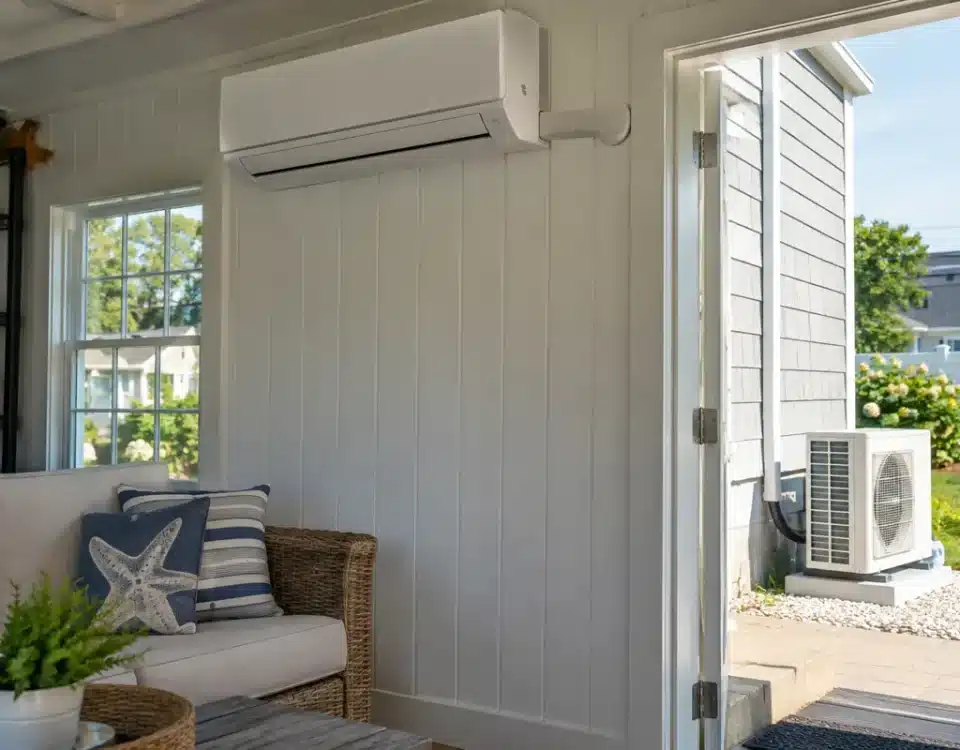
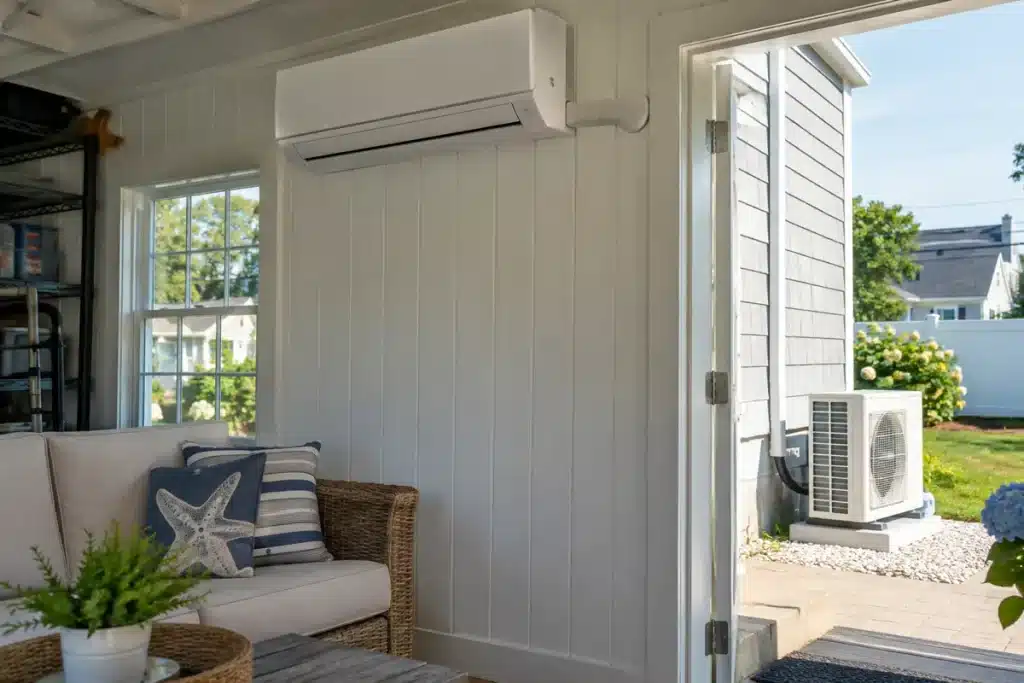
Yes, but it adds significant cost and time since ducts need to be designed and installed from scratch, often routed through closets, attics, or soffits. Ductless mini-split systems are a common alternative for homes without ductwork, since they avoid duct installation entirely while still providing zoned cooling.
How do I know what size central air unit I need?
The only reliable way is a Manual J load calculation performed by a contractor, which accounts for your home’s square footage, insulation, windows, and layout. Square-footage rules of thumb often lead to oversized equipment, which causes humidity problems and higher energy bills rather than better cooling.
What is the difference between central air installation and replacement?
Installation usually refers to adding central air to a home that doesn’t already have it, which may require new ductwork and electrical work. Replacement swaps an existing system’s components and may reuse suitable ductwork or a compatible line set after inspection, which can make the project faster and less expensive than a first-time installation.
How long does a new central air system typically last?
A central air system often lasts about 15 to 20 years, but climate, salt exposure, runtime, installation quality, equipment condition, and maintenance can shorten or extend its service life. Proper sizing, correct installation, and annual tune-ups are the biggest factors within a homeowner’s control.
Sources
- How To Install Central Air Conditioning – This Old House
- Best Central Air Conditioning Buying Guide – Consumer Reports
- How Much Does AC Replacement Cost? – Angi
- Chapter 14 Heating and Cooling Equipment and Appliances: NJ UCC Dwelling Subcode – UpCodes
- State Board of Examiners of HVACR Contractors – Laws and Regulations
Talk to a Local HVAC Team You Can Reach
D.K. Sledzik Heating & Air Conditioning, Inc. has served Toms River and Ocean County homeowners since 1974, with service within 24 hours, 7 days a week, including holidays, at 732-349-0389. Schedule service online or contact us with a question about your system.
Written by the team at D.K. Sledzik Heating & Air Conditioning, Inc., a family-owned HVAC contractor in Toms River, NJ since 1974. NJ Master HVACR License #19hc00168400 · NJ Home Improvement Contractor #13VH01401100.