What To Do When Your Heat Stops Working: A No-Heat Emergency Guide
November 17, 2026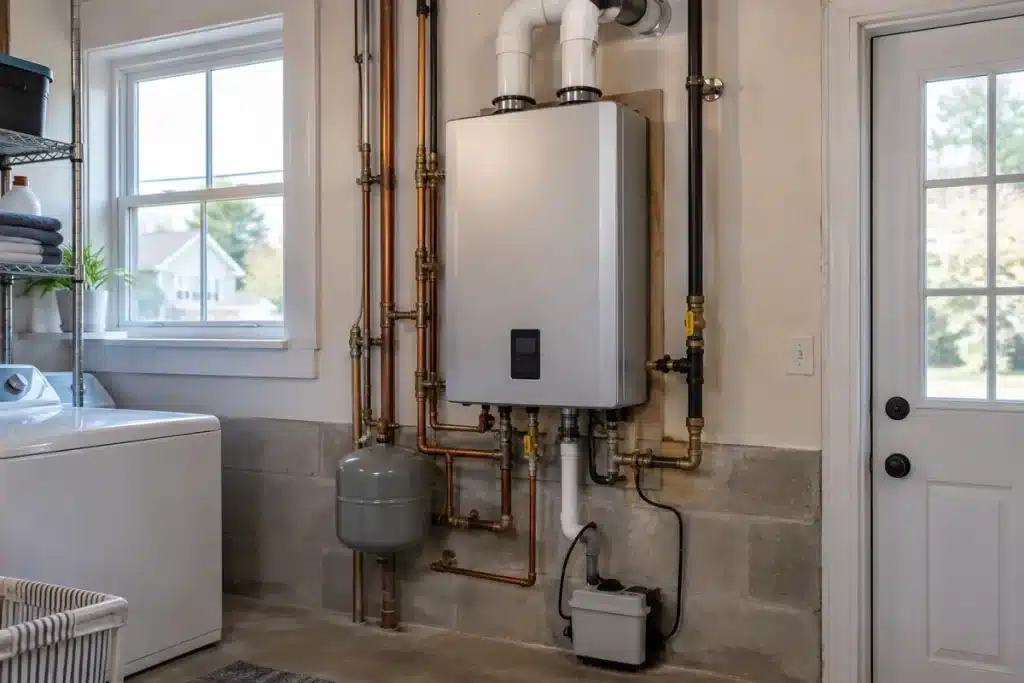
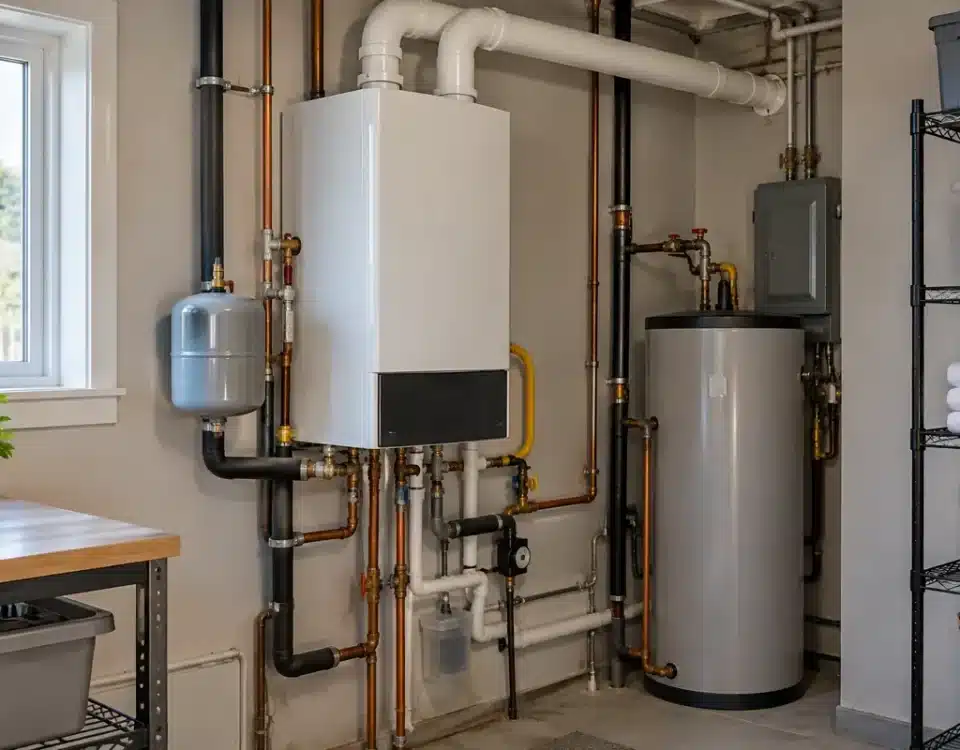
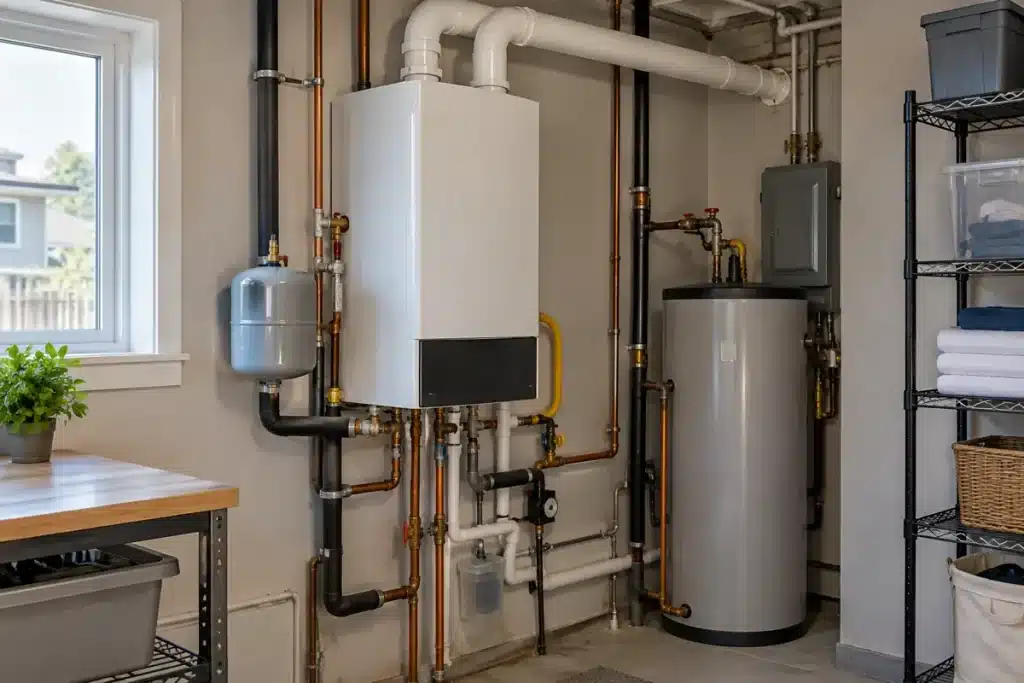
Quick answer: A tankless water heater installation involves sizing a gas unit by flow rate (GPM) and the temperature rise needed for your groundwater, then running proper gas, venting, and condensate lines. For a properly sized Ocean County home, a gas tankless unit from a brand such as Navien can provide continuous hot water within its rated flow capacity and may lower operating costs compared with a storage tank.
Key takeaways
- Tankless water heaters heat water on demand, which eliminates standby heat loss from a storage tank and can lower water heating energy use, according to the U.S. Department of Energy’s Building America Solution Center
- Sizing a gas tankless unit depends on two numbers: peak flow rate in gallons per minute (GPM) and the temperature rise needed between incoming groundwater and your target hot water temperature
- NJ Clean Energy Program FAQs note tankless units typically cost about 200 to 250 percent more to purchase and install than a standard tank water heater, partly due to venting and gas line upsizing
- Descaling and combustion-air inspections, scheduled according to the manufacturer’s guidance and local water quality, can help a tankless system run efficiently
- Navien is one of several brands D.K. Sledzik installs and services, alongside Bradford White and Burnham
What Is a Tankless Water Heater and How Is It Different?
A tankless water heater, also called an on-demand or instantaneous water heater, heats water as it flows through the unit rather than storing 40 to 80 gallons of hot water around the clock. A gas burner or electric heating element heats water as it passes through the heat exchanger when you open a hot water tap, and heating stops when you close it. There is no standby tank losing heat between uses.
This matters because water heating is typically the second largest energy expense in a home, according to the Building America Solution Center, a U.S. Department of Energy resource. Eliminating standby losses from a tank is one of the main reasons tankless units can run more efficiently than conventional storage heaters.
It is worth noting the difference between a stand-alone tankless water heater, which only makes hot water, and a combi boiler, which uses a similar on-demand approach to provide both space heating and domestic hot water from one unit. If you are weighing a combi system instead, our Navien combi boiler guide covers that option in detail.
What Are the Real Benefits of Going Tankless?
The appeal of tankless water heating comes down to a short list of practical advantages, along with a few tradeoffs worth weighing honestly.
Advantages
- Continuous hot water at a set temperature, useful for households that run showers, laundry, and dishwashers back to back
- Lower standby energy losses compared with keeping a full tank hot around the clock
- Smaller footprint, often wall-mounted, which frees up floor space in a utility room or garage
- Longer typical service life than many tank-style heaters when properly maintained
- Can be installed in locations where a standard tank would not fit, according to NJ Clean Energy Program FAQs
Tradeoffs to consider
- Higher upfront cost than a comparable tank heater
- May require a larger gas line or gas meter upgrade to supply enough fuel
- Gas models need venting that complies with the manufacturer’s instructions and applicable codes
- Descaling may be needed at intervals based on water quality, usage, and manufacturer guidance
None of this means tankless is wrong for a given home. It means the decision should be based on your household’s hot water demand, your existing gas service, and your budget, not just the marketing pitch.
How Do You Size a Tankless Water Heater Correctly?
Sizing a tankless unit is different from sizing a tank. Instead of picking a tank capacity, you are matching the unit’s output to two numbers.
- Peak flow rate, measured in gallons per minute (GPM). Add up the GPM of fixtures you might run at the same time, such as two showers and a washing machine.
- Temperature rise, the difference between your incoming groundwater temperature and the hot water temperature you want delivered. Incoming groundwater in New Jersey runs colder in winter, which means a tankless unit has to work harder to reach the same output temperature during the coldest months.
According to NJ Clean Energy Program FAQs, sizing a water heater is similar to sizing a furnace or air conditioner. It should be worked out with a contractor, not estimated from a chart alone, because household size alone does not account for simultaneous use or your specific groundwater temperature. A contractor should review simultaneous hot-water use, incoming-water temperature, and the home’s utilities before recommending a unit size.
The Building America Solution Center checklist also notes that the existing gas service line should be inspected before installation. If the line is undersized for the new unit’s higher fuel demand, it needs to be upsized to deliver enough gas for the burner to perform as rated.
What Does a Proper Gas Tankless Installation Involve?
A quality tankless installation is more than swapping one box for another. Based on U.S. Department of Energy installation guidance, a complete gas tankless installation typically includes:
| Installation Step | Why It Matters |
|---|---|
| Inspect existing water lines for leaks | Prevents hidden damage from being sealed behind new piping |
| Check and upsize gas line if needed | A tankless burner’s peak gas demand may exceed the capacity of the existing line |
| Confirm electrical outlet or hard-wire connection | Most gas tankless units still need power for ignition and controls |
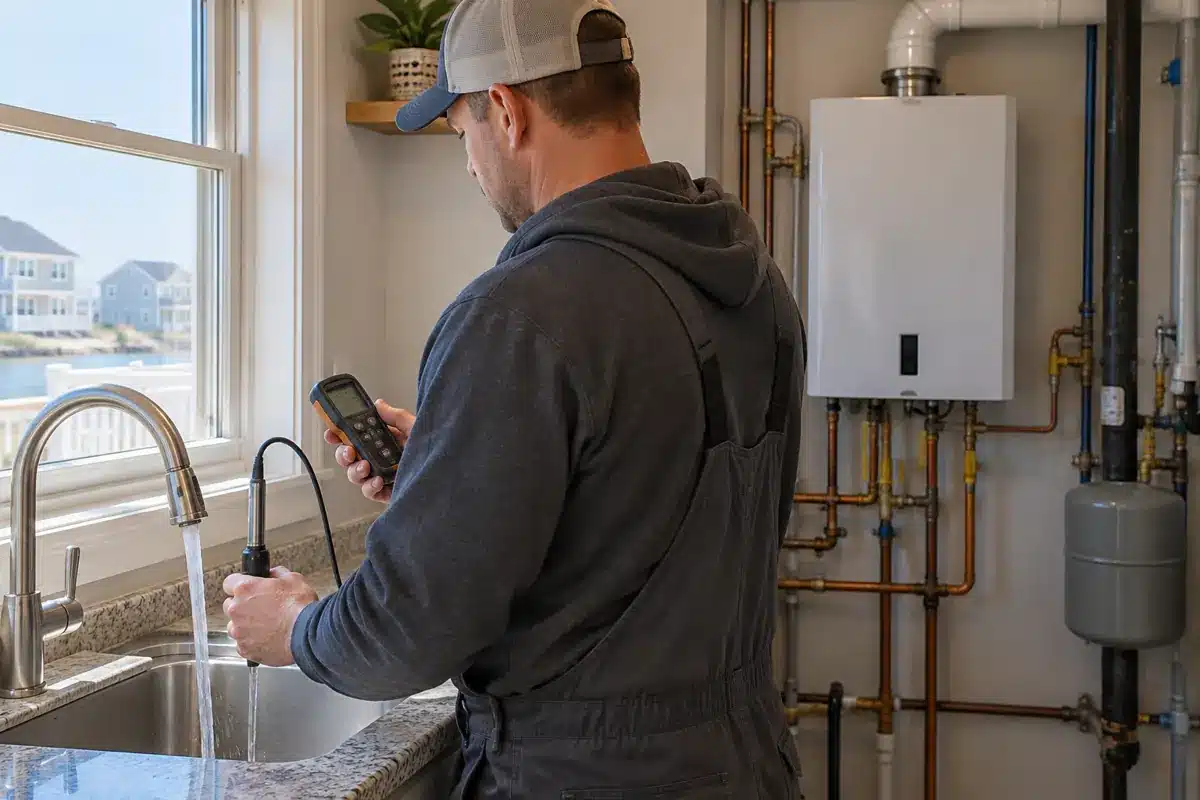
| Test water hardness | Hard water accelerates scale buildup on the heat exchanger |
| Install model-approved venting | Venting materials and configuration must match the unit type, manufacturer’s instructions, and applicable codes |
| Set up combustion air supply | Required for safe, code-compliant combustion |
| Manage condensate drainage | High-efficiency condensing units produce acidic condensate that must drain properly |
New Jersey’s construction codes, administered by the NJ Department of Community Affairs, incorporate the current I-Codes and National Standard Plumbing Code provisions covering water heater installations, so permitted work needs to follow those requirements. This is one reason a tankless swap is not a straightforward do-it-yourself project for most homeowners. If you want a primer on terminology before you call anyone, our common HVAC terms page explains GPM, temperature rise, and other terms in plain language.
Why Do Homeowners Choose Navien?
D.K. Sledzik installs and services several respected water heater and boiler brands, including Navien, Bradford White, and Burnham. Navien is one option worth understanding on its own merits.
Navien’s tankless lineup is known in the industry for condensing technology, which captures additional heat from exhaust gases that a standard tankless unit would vent outside. That extra efficiency step is part of why condensing tankless models generally cost more upfront but can lower operating costs over the unit’s life. Navien also offers models built for higher flow rate demand, which matters in larger households or homes with multiple bathrooms running at once.
The appropriate brand and model should be matched to the home’s gas service, venting conditions, hot-water demand, and budget. You can see the full lineup of equipment brands we install for more detail.
What Does Tankless Maintenance Look Like?
Tankless units trade the simplicity of a tank for a maintenance task most tank owners never think about: descaling. Mineral deposits from hard water build up on the heat exchanger over time, and left unaddressed, scale reduces efficiency and can shorten the unit’s life.
NJ Clean Energy Program FAQs note that tankless water heaters require additional maintenance compared with a conventional tank. A service visit, scheduled according to manufacturer guidance and water quality, may include:
- Flushing the heat exchanger with a descaling solution, especially important in areas with harder water
- Cleaning the inlet water filter screen
- Checking venting and combustion air pathways for obstructions
- Inspecting the condensate line and neutralizer on condensing models
- Testing gas pressure and ignition
Skipping recommended maintenance can contribute to scale buildup, reduced flow, loss of efficiency, or error codes over time. If you already have a maintenance plan for your furnace or AC, it is worth asking whether tankless service can be folded into the same annual visit. Our seasonal maintenance contracts page outlines how that works.
How Much Does a Tankless Water Heater Installation Cost?
Tankless installation costs more upfront than a standard tank, and the gap is real. According to NJ Clean Energy Program FAQs, a tankless water heater typically costs about 200 to 250 percent more to purchase and install than a conventional tank unit, factoring in the higher cost of the unit itself, new venting, and gas line or meter upsizing.
This Old House estimates a broad national tankless installation range of about $1,200 to $3,500, including equipment and labor; local costs can differ substantially based on the home and project scope. These are general industry figures, not D.K. Sledzik pricing, and the final number for your home depends on:
- Whether your existing gas line needs upsizing for the new unit’s fuel demand
- How far the unit sits from existing venting and whether new venting has to be run
- Whether your water is hard enough to call for a softener alongside the new heater
- The specific unit and flow rate capacity you choose
- Removal and disposal of the old tank
We provide free estimates so you can see your actual numbers before committing, and we can walk you through financing options for qualifying installations.
Are There Rebates for Tankless Water Heaters in New Jersey?
High-efficiency gas tankless units may qualify for incentives through the NJ Clean Energy Program and SAVEGREEN 0% on-bill repayment financing offered through New Jersey Natural Gas. D.K. Sledzik is a recommended contractor of New Jersey Natural Gas and has converted thousands of area homes from oil, electric, and propane to gas service,
Program amounts and qualifying equipment change from year to year, so rather than quote a dollar figure here, check current terms directly at NJCleanEnergy.com or savegreenproject.com, or ask us to walk you through what currently applies. Our Upgrade and Save page explains both programs and how financing works alongside them.
Is a Tankless Water Heater Right for Your Ocean County Home?
Tankless makes the most sense for households with steady or growing hot water demand, an adequate existing gas service (or budget to upsize it), and a plan to stay in the home long enough to benefit from lower operating costs over time. It is a particularly good fit for larger families, homes with multiple bathrooms, and shore houses that see heavy weekend and summer guest usage but sit empty during the week, since there is no tank holding hot water (and losing heat) when nobody is home.
It may not be the right call if your existing gas line and venting would need extensive, costly upgrades, or if you plan to sell the home soon and want the lowest-cost like-for-like replacement. A conventional storage water heater may remain a practical, lower-upfront-cost option in those cases.
Whichever direction fits your home, D.K. Sledzik Heating & Air Conditioning has served Toms River, Brick, Lakewood, Jackson, Manchester, Berkeley, Beachwood, Lacey, Whiting, and Point Pleasant since 1974, and our team can walk your home, check your gas service, and give you a straight answer on sizing and cost. You can schedule a consultation online or read more about our full range of heating and AC services.
Frequently Asked Questions
How long does a tankless water heater last compared to a tank unit?
Tankless water heaters can have a longer service life than many storage models when they are properly sized, installed, and maintained. Service life depends on water quality, usage, installation conditions, and following the manufacturer’s maintenance schedule.
Can a tankless water heater run out of hot water?
A properly sized tankless unit delivers continuous hot water rather than running out, unlike a tank that depletes once its stored volume is used. The limiting factor is flow rate: if demand exceeds the unit’s rated GPM at the needed temperature rise, water pressure or temperature can drop at the fixtures.
Do I need a bigger gas line for a tankless water heater?
Sometimes. A gas tankless unit may have a higher peak input than the existing system, so a professional must calculate whether the gas line and meter have enough capacity or need upgrading. A contractor should inspect your current gas service before installation to confirm whether this work is needed.
Is a tankless water heater worth it for a vacation or shore home?
It can be, especially for homes that sit empty during the week but see heavy weekend or seasonal use. A tankless unit avoids the standby energy loss of keeping a full tank hot when nobody is using water, which fits the on-and-off usage pattern typical of Jersey Shore vacation homes.
Can I install a tankless water heater in the same spot as my old tank?
Usually, as long as adequate combustion air and proper venting can be provided, according to NJ Clean Energy Program FAQs. Tankless units are compact and may fit where a storage tank would not, but the location must satisfy the manufacturer’s clearance, combustion-air, venting, drainage, and code requirements.
Sources
- Gas Tankless Water Heater | Building America Solution Center (U.S. Department of Energy)
- Combustion Safety Frequently Asked Questions | NJ Clean Energy Program
- How Much Does Tankless Water Heater Installation Cost? | This Old House
- New Jersey Department of Community Affairs | Current Construction Codes
Talk to a Local HVAC Team You Can Reach
D.K. Sledzik Heating & Air Conditioning, Inc. has served Toms River and Ocean County homeowners since 1974, with service within 24 hours, 7 days a week, including holidays, at 732-349-0389. Schedule service online or contact us with a question about your system.
Written by the team at D.K. Sledzik Heating & Air Conditioning, Inc., a family-owned HVAC contractor in Toms River, NJ since 1974. NJ Master HVACR License #19hc00168400 · NJ Home Improvement Contractor #13VH01401100.