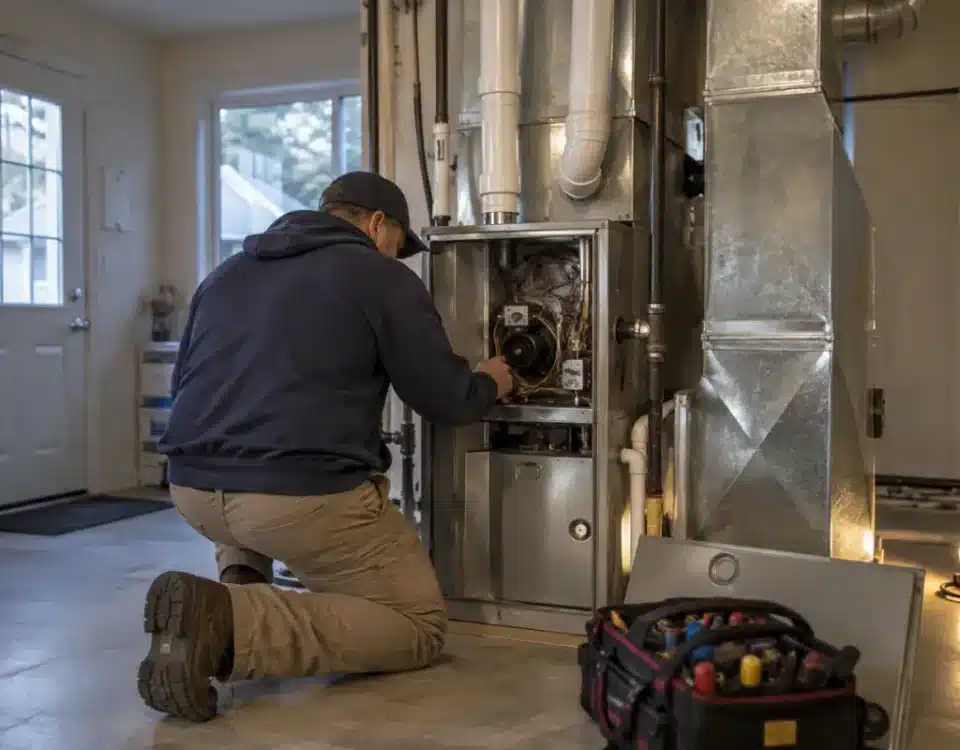
Spring AC Tune-Up Checklist for Toms River and Ocean County Homeowners
August 18, 2026Fall Furnace Tune-Up Checklist for Toms River Homeowners
August 31, 2026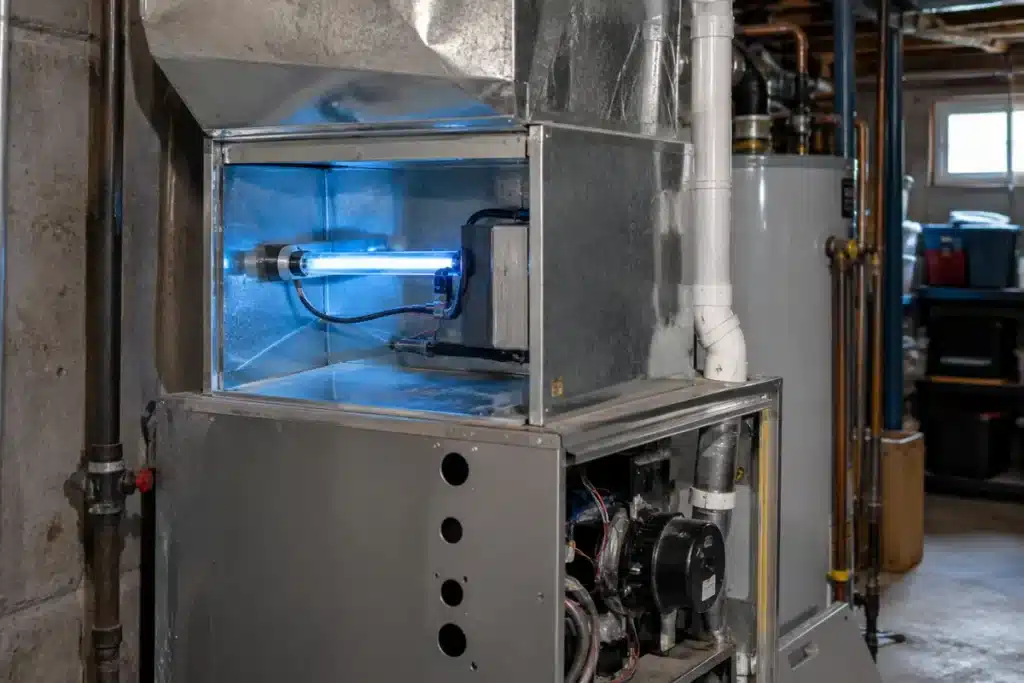
Quick answer: Whole-home UV-C systems mount in ductwork or an air handler and can inactivate susceptible microorganisms on a coil or in moving air when they deliver an adequate UV dose. They do not capture dust or pollen and generally work best as a supplement to filtration, ventilation, and moisture control; they may also reduce odors caused by microbial growth on the treated HVAC surface.
Key takeaways
- Coil-mounted UV lights sanitize the evaporator coil and cost roughly $60 to $280 for the light plus installation, according to Angi; in-duct air-sterilization units that treat moving air cost more, in the $750 to $3,500 range.
- UV-C kills or deactivates mold, bacteria, and some viruses on surfaces and in the air stream, but it does not capture dust, pollen, pet dander, or odors, so it is not a substitute for a mechanical filter.
- The U.S. Department of Energy’s GUV guidance and the CDC both note germicidal UV works best as a supplement to proper ventilation and filtration, not a stand-alone air quality fix.
- Ocean County’s humid summers can contribute to moisture on cooling coils, where a properly selected coil-mounted UV system may help control microbial growth.
- UV products marketed with claims about killing or inactivating viruses or bacteria must comply with applicable FIFRA requirements. Ask the manufacturer for compliant labeling, the EPA establishment number where applicable, and credible test data for the specific product.
How Does a Whole-Home UV Air Purifier Work?
A whole-home UV air purification system installs in compatible ductwork or an air handler and uses short-wave ultraviolet light, commonly called UV-C, to damage the genetic material of susceptible microorganisms, reducing their ability to reproduce or remain infectious when the delivered dose is sufficient. Unlike a portable room unit, an in-duct system treats air that passes through the illuminated section of compatible central HVAC equipment; results throughout the home depend on airflow, UV dose, system design, and installation.
There are two main configurations used in residential HVAC systems. Coil-mounted (coil sterilization) lights point a small UV bulb directly at the evaporator coil, where moisture and dust create ideal conditions for mold and bacterial growth. Air-stream (in-duct) systems are hardwired into the duct itself and irradiate the moving air as it passes through, which requires a more involved installation but treats a larger volume of air.
According to Angi, coil sterilization lights are the more common and less expensive option, with light units running roughly $60 to $280 before installation and bulb replacement, while full in-duct air-sterilization units typically run $80 to $400 for the unit alone. Installed system costs, including labor, are discussed further below.
What UV-C Can and Cannot Do for Your Air Quality
It helps to be clear-eyed about what UV-C air purification actually accomplishes, because marketing claims often overstate its reach. UV-C is effective at reducing microbial growth on coils and, to a lesser degree, pathogens passing through the light’s effective zone. The U.S. Department of Energy’s germicidal UV (GUV) guidance states plainly that GUV should always be applied as a supplemental measure alongside proper building ventilation and filtration, not as a replacement for either.
What UV-C does well
- Can reduce susceptible microbial growth on an irradiated air-conditioning coil and help keep the treated surface cleaner
- Helps limit the recirculation of some airborne bacteria and viruses that pass directly through the light’s beam
- Addresses musty, mildew-type odors that come from microbial growth inside the system itself
What UV-C does not do
- Capture or remove dust, pollen, pet dander, or other particulates — that is a job for mechanical filtration
- Eliminate cooking, pet, or chemical odors, which require carbon-based filtration instead
- Guarantee protection against every pathogen, since effectiveness depends on exposure time, bulb strength, and proper placement
This is why most HVAC professionals recommend pairing UV-C with a quality filter rather than treating it as a stand-alone solution. If you are not sure what is actually affecting your air quality, a good first step is reviewing our HVAC FAQ or scheduling an indoor air quality assessment before choosing equipment.
Is UV Air Purification Safe? Ozone and Exposure Concerns
Properly designed and installed UV-C systems that use the correct wavelength and housing produce little to no ozone, but not all products on the market are built or certified the same way. The U.S. Environmental Protection Agency has issued a compliance advisory explaining that UV lights marketed with claims about killing or inactivating viruses and bacteria are regulated under federal pesticide law (FIFRA) and must meet applicable production, labeling, and other compliance requirements.
In practice, homeowners should ask whether the UV source is safely enclosed, whether the labeling complies with applicable EPA requirements, whether the device is designed to avoid ozone production, and whether credible test data support its specific germicidal claims. Direct skin or eye exposure to UV-C light is a real hazard, which is one reason these systems are designed to be fully enclosed and why bulb replacement or servicing should always be done with the power off and by someone trained to do it.
Because UV-C can injure the eyes and skin and poor placement can reduce effectiveness, a duct-mounted system should be selected and installed in accordance with the manufacturer’s instructions by a qualified professional.
Who Actually Benefits From a Whole-Home UV System?
UV-C air purification is not necessary for every household, but it tends to make the most sense in specific situations common to our part of the Jersey Shore. Ocean County’s humid summers can increase latent cooling loads and moisture problems; microbial growth is more likely where HVAC surfaces remain damp or condensate drainage and humidity control are inadequate.
- Homes with a history of musty odors or visible mold on the evaporator coil or in the ductwork
- Households considering UV-C after discussing health concerns with a medical professional and addressing filtration, ventilation, and moisture control
- Shore and vacation homes that sit closed up for stretches of time, allowing humidity and mold to build between visits
- Homes with compatible forced-air ductwork where an inspection identifies persistent moisture or microbial growth at the coil
Homes that are already well filtered, well ventilated, and free of moisture problems may see only a modest benefit from adding UV-C, and that money might be better spent on improving filtration or humidity control first. A UV add-on is unlikely to provide much value when there is no identified microbial or moisture problem; it is a supplemental technology, not a cure-all.
UV Air Purifier Types and Typical Costs Compared
Whole-home UV systems vary widely in price depending on configuration, bulb life, and installation complexity. The table below summarizes typical ranges reported by national cost-estimating sites, with the caveat that your actual cost depends on duct layout, accessibility, and the condition of your existing HVAC equipment.
| System Type | Typical Equipment Cost | What It Treats | Best For |
|---|---|---|---|
| Coil sterilization UV | $60–$280 (light unit only, per Angi) | Mold and bacteria growing directly on the evaporator coil | Homes with coil odor, mold, or recurring moisture issues |
| In-duct air-sterilization UV | $750–$3,500 installed (per Angi and HomeAdvisor) | Airborne bacteria and some viruses passing through the duct | Households wanting broader pathogen reduction |
| Mechanical filter (paired with UV) | $100–$250 for a flat filter or $500–$1,000 for an extended media filter (per Angi) | Dust, pollen, pet dander, and other particulates | Anyone with allergy or particulate concerns, used alongside UV |
Ranges are national estimates from Angi and HomeAdvisor; local quotes differ.
HomeAdvisor notes that HVAC labor for installing a whole-home air purification component generally runs $100 to $250 per hour, and installation time can range from one to six hours depending on duct access and home layout. If your ductwork or air handler needs repair or modification first, that adds to the project cost, which is one reason a brief in-home consultation is more useful than a generic number. For context on how air purification fits alongside a full system, see our guide on professional central air installation or our central air replacement cost guide.
Installing a UV Air Purifier: What the Process Looks Like
Whole-home UV systems are not a DIY weekend project. They involve working inside live ductwork or an air handler cabinet, often with electrical connections, and improper placement can reduce effectiveness or create a safety risk from UV exposure.
- An HVAC technician inspects your duct system, air handler, and coil condition to confirm the system is a good fit for UV-C and to identify the best mounting location.
- The technician selects a coil-mounted or in-duct air-stream configuration based on your goals, budget, and existing equipment.
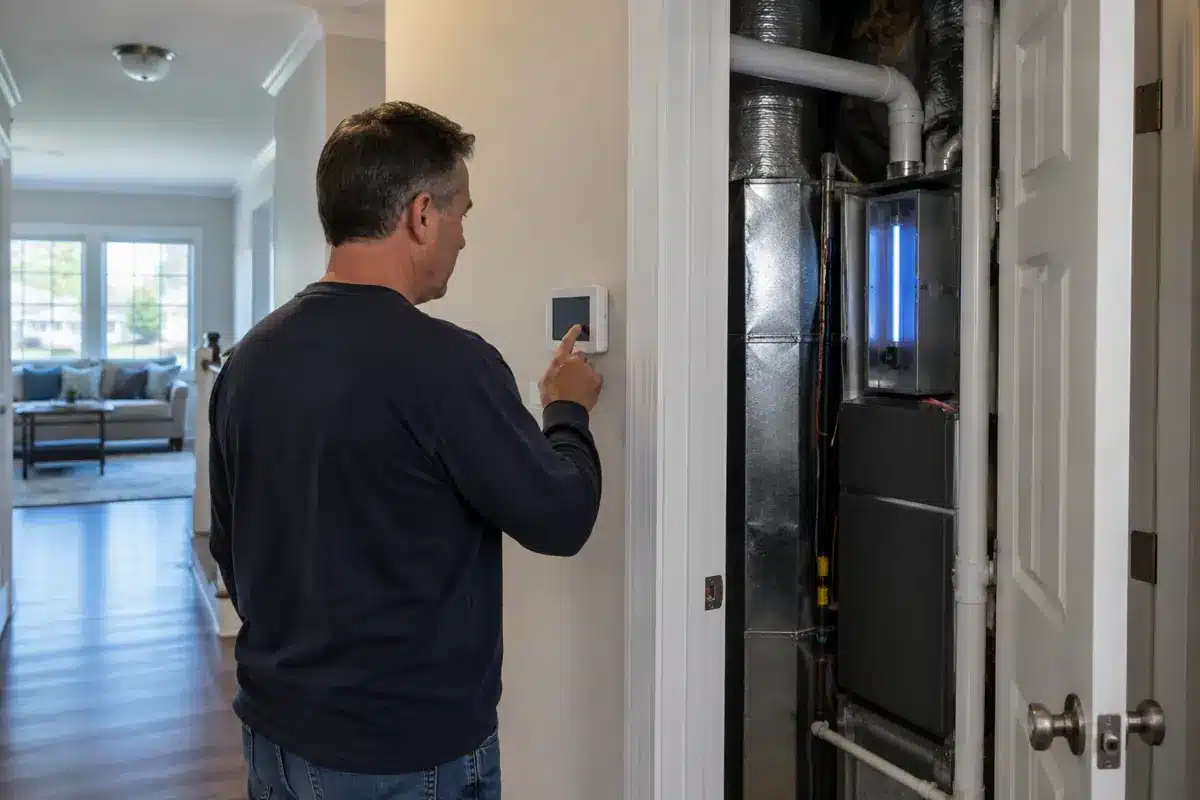
- The UV fixture is connected according to its listing and manufacturer instructions and positioned so the UV source is safely enclosed within the duct or cabinet. Air-stream units may be interlocked with blower operation, while coil-treatment units are often designed for continuous irradiation.
- The system is tested for proper operation, and the technician reviews bulb replacement intervals and basic safety practices with the homeowner.
Because this work touches your home’s electrical and HVAC systems at the same time, it should be done by a licensed contractor. D.K. Sledzik Heating & Air Conditioning has served Toms River and Ocean County since 1974 and offers air cleaners and humidifiers alongside central AC, furnace, and boiler services.
Maintenance: Keeping a UV System Working Over Time
UV bulbs lose intensity over time even if they still appear to be lit, which is why manufacturers specify a replacement schedule rather than a simple burnout indicator. Replacement intervals vary by product, operating conditions, and lamp type, so follow the UV-system manufacturer’s schedule even if the lamp still appears lit.
- Replace bulbs on the schedule recommended by the manufacturer, even if the light still appears to glow, since UV-C intensity fades well before the bulb visibly fails.
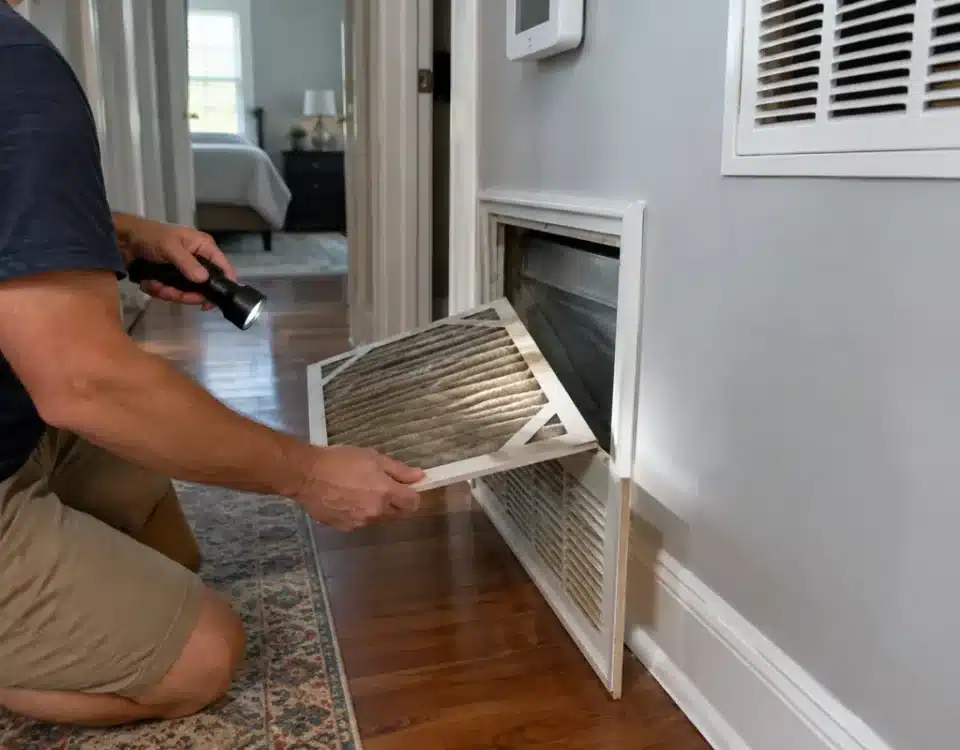
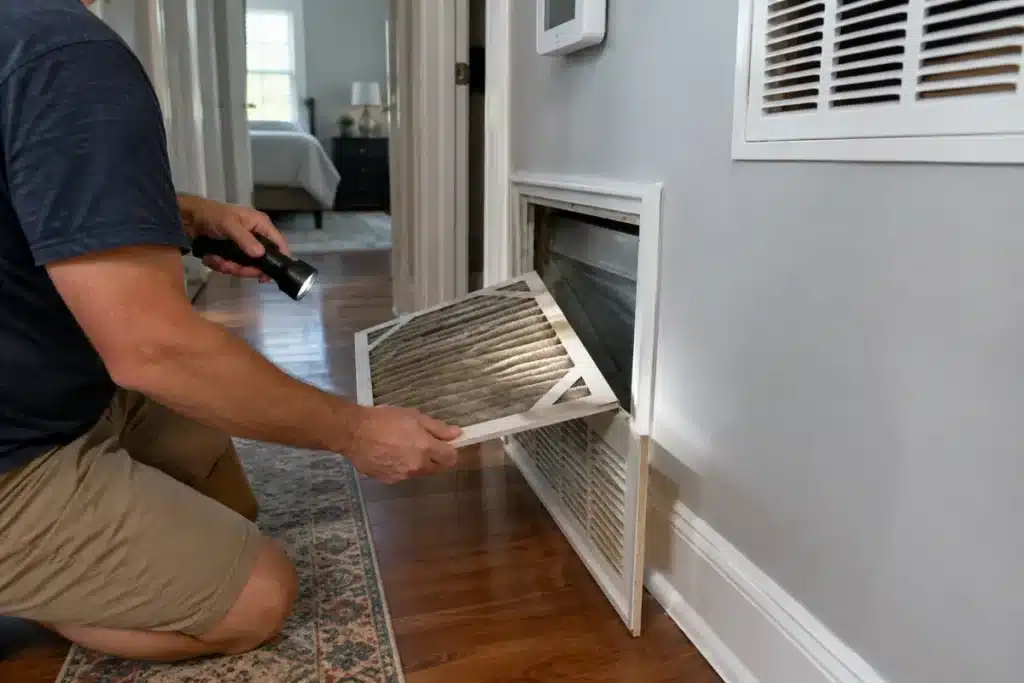
- Have the fixture inspected during your regular seasonal HVAC tune-up, since dust accumulation on the bulb reduces its output.
- Always power down the unit before any filter change, coil cleaning, or duct work near the fixture.
- Pair UV maintenance with routine filter changes, since a clogged filter restricts airflow and reduces how much air actually passes the UV light.
Rolling UV bulb checks into an existing seasonal plan is usually the simplest way to stay on schedule. If you already have a spring AC tune-up or a fall furnace check scheduled, ask your technician to inspect the UV fixture at the same time rather than tracking it separately.
Pairing UV-C With Filtration and Humidity Control
Because UV-C does not capture particles, most HVAC professionals recommend treating it as one layer of a broader indoor air quality plan rather than the whole plan. A pleated or media filter handles dust, pollen, and dander, while UV-C addresses the microbial growth that filters alone cannot reach.
Humidity control matters just as much in our area. During humid weather, proper air-conditioning operation, condensate drainage, air sealing, and, where appropriate, dehumidification can help control moisture that supports microbial growth. A properly controlled whole-home humidifier serves a different purpose during dry winter conditions and should not be used to address summer humidity. Before adding any equipment, it is worth having your home’s heating and air conditioning system and ductwork reviewed as a whole, since a leaky duct or oversized system can undercut the benefits of any single add-on, including UV.
If you are unfamiliar with the terminology used in these discussions, our page on common HVAC terms is a useful reference before you meet with a contractor.
Choosing a UV System and Getting It Installed Correctly
Not every UV light sold for HVAC use is engineered or certified the same way, so a few questions during the buying process can save you from an underperforming or unsafe installation.
| Question to Ask | Why It Matters |
|---|---|
| Is the bulb fully enclosed within the duct or cabinet? | Prevents UV exposure to skin and eyes during normal operation |
| Does the product have compliant labeling and credible test data for its germicidal claims? | UV devices making pesticidal claims must comply with applicable FIFRA requirements, but an EPA establishment number does not mean EPA has approved the device or verified its efficacy |
| What is the rated bulb life, and is replacement straightforward? | Determines ongoing maintenance cost and how easy upkeep will be |
| Will it be installed alongside existing filtration? | UV alone will not address dust, pollen, or odor complaints |
D.K. Sledzik Heating & Air Conditioning is a family-owned contractor based in Toms River, holds NJ Master HVACR license #19HC00168400, and offers free estimates for its listed HVAC services, including air cleaners and humidifiers. As a recommended contractor of New Jersey Natural Gas, the company also works with homeowners converting older heating systems, where ductwork and air handler condition are often part of the same conversation. You can review current equipment brands on our products page or schedule a service visit online to start with an inspection.
Frequently Asked Questions
Do UV air purifiers help with allergies?
Only indirectly. UV-C does not capture pollen, dust, or pet dander, which are the main allergy triggers, so it will not reduce allergy symptoms on its own. Pairing UV-C with a quality mechanical filter addresses both the particulates that cause allergies and the microbial growth UV targets.
Can I install a UV light in my ductwork myself?
It is not recommended. These systems require electrical wiring, precise placement for effectiveness, and enclosure to prevent UV exposure. A licensed HVAC technician can size, place, and wire the unit correctly and verify it is working safely once installed.
How long do UV bulbs last in a whole-home system?
UV-C bulb life varies by system, lamp type, and operating conditions, so follow the manufacturer’s replacement schedule even if the bulb still glows. The bulb can still glow after losing most of its germicidal strength, so follow the manufacturer’s schedule rather than visual inspection alone.
Will a UV air purifier get rid of musty odors in my house?
It can help with odors caused specifically by mold or bacterial growth on coils or in ductwork, since reducing that growth removes the odor source. It will not address odors from cooking, pets, or chemicals, which require carbon-based filtration instead of UV-C.
Does UV air purification produce ozone?
Properly designed systems using the correct UV-C wavelength and fully enclosed housings produce little to no ozone, but product quality varies. Ask whether the system is designed and independently evaluated to avoid ozone production, review credible evidence for its germicidal claims, and confirm that the UV source is safely enclosed.
Sources
- CDC — About Germicidal Ultraviolet (GUV)
- EPA Compliance Advisory on UV Light Claims
- U.S. DOE — GUV Air Treatment: Overview, Types, and Technologies
- Angi — Whole House Air Purifier Cost
- Angi — Pros and Cons of UV Light in HVAC Systems
Talk to a Local HVAC Team You Can Reach
D.K. Sledzik Heating & Air Conditioning, Inc. has served Toms River and Ocean County homeowners since 1974, with service within 24 hours, 7 days a week, including holidays, at 732-349-0389. Schedule service online or contact us with a question about your system.
Written by the team at D.K. Sledzik Heating & Air Conditioning, Inc., a family-owned HVAC contractor in Toms River, NJ since 1974. NJ Master HVACR License #19hc00168400 · NJ Home Improvement Contractor #13VH01401100.